Why Are House Sparrows Common
You've probably seen them a thousand times, those small, brown, chirpy birds that seem to be everywhere, from busy city streets to quiet suburban gardens. Ever wondered why are house sparrows common, to the point of being practically unavoidable? It's not just luck; these birds have become incredibly successful by mastering the art of living alongside us.
Our research indicates that house sparrows, scientifically known as Passer domesticus, have a global population estimated to be well over a billion individuals. This widespread presence is largely due to their remarkable adaptability and a long history of close association with human settlements and activities. They've found that our world is a pretty good place to live.
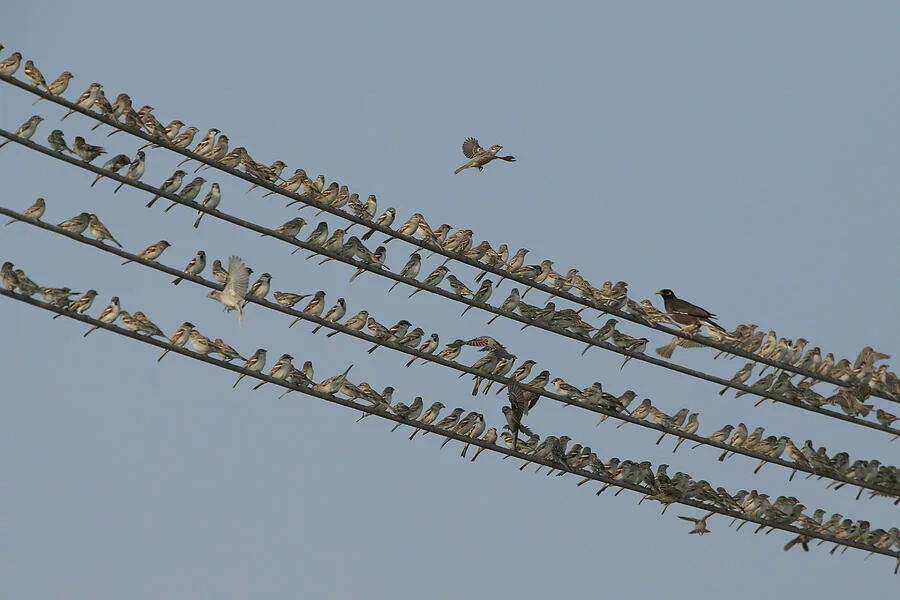
Image source: Web (Bing) / fineartamerica.com (Web image (fair-use with source credit))
Quick Answer
House sparrows are common because they've expertly adapted to human environments. They thrive on our food scraps, use our buildings for shelter and nesting, and reproduce prolifically. Their broad diet and resilience allow them to survive in diverse human-altered landscapes worldwide.
The "Perfect Storm" for Sparrow Success: Adapting to Us
House sparrows haven't just managed to survive near humans; they've actively capitalized on the opportunities we create. Think of them as feathered opportunists who saw our growing civilizations and thought, "This is the place for me!" This success isn't random; it’s a combination of traits and circumstances that have aligned perfectly. They’ve become experts at urban and suburban living, turning our built environments into their own personal ecosystems.
Tough Survivors and Food Fanatics
These birds are incredibly hardy and can tolerate a wide range of conditions, which helps them live in many different climates. Their diet is also a major advantage. House sparrows are omnivores, meaning they eat pretty much anything.
This includes seeds, grains, fruits, insects, and, crucially, the discarded food scraps humans leave behind. This dietary flexibility means they can find a meal no matter how scarce natural food sources might be in an urban setting.
Masters of Reproduction
Part of why you see so many house sparrows is their impressive ability to reproduce. They can have multiple broods of young each year, often raising three to five chicks per nest. Some pairs may even attempt to nest and raise young again if the season is long enough and resources are plentiful.
This high reproductive rate allows their populations to grow quickly and fill any available niches. For instance, according to ornithological data, a single pair can potentially raise up to 25 young in a single breeding season under ideal conditions.
A Bird That Followed Humanity's Lead
The story of the house sparrow's commonality is deeply intertwined with human history. They didn't just happen to evolve in our backyards; in many parts of the world, humans played a direct role in their spread. This species is a prime example of how human expansion and development can dramatically influence the success and distribution of other species, for better or worse.
Understanding their history sheds a lot of light on their current ubiquity.
Accidental or Intentional Introductions
House sparrows are native to Europe, North Africa, and much of Asia. However, they’ve been intentionally introduced to many other continents, including North America, Australia, and New Zealand, largely during the 19th century. People brought them over for various reasons, often to recreate familiar parkland or even to control insect populations, although their effectiveness in the latter is debatable.
These introductions were remarkably successful, and the birds quickly established themselves.
Thriving in Human Landscapes
Because they are so adaptable, house sparrows have excelled in habitats altered by people. Our cities, towns, and agricultural areas provide them with consistent food sources and numerous safe places to nest. They readily build nests in building crevices, under eaves, in signs, and even in the engine blocks of unused vehicles.
This close association with human structures is a key reason they are so visible and widespread. As reported by the U.S. Department of Agriculture, Passer domesticus is one of the most widely distributed bird species globally, found on every continent except Antarctica.
House Sparrows: Features That Drive Their Commonality
When we look at why are house sparrows common, it's really about a specific set of biological traits and behaviors that make them incredibly successful in human-dominated environments. These aren't just passive survivors; they're active exploiters of the niche we've inadvertently created for them. Their physical characteristics and how they interact with their surroundings give them a distinct advantage.
Dietary Flexibility: Eating Almost Anything
One of the most significant factors in the house sparrow's widespread success is its incredibly varied diet. These birds are omnivores, and their food preferences are highly adaptable. They readily consume seeds and grains, which are abundant in agricultural areas and around human food sources.
Beyond that, they are adept at foraging for insects, spiders, and other small arthropods, especially during their breeding season when protein is vital for chicks. They will also scavenge for human food scraps, making them common visitors to outdoor cafes, picnic areas, and garbage bins. This ability to find sustenance in so many different forms and locations is a cornerstone of their commonality.
Nesting Habits: Making Homes in Our Structures
House sparrows are highly synanthropic, meaning they have a strong preference for living in close proximity to humans. Their nesting habits perfectly illustrate this. They don't build elaborate nests in trees or bushes like many native birds.
Instead, they seek out cavities and sheltered spots within human-made structures.
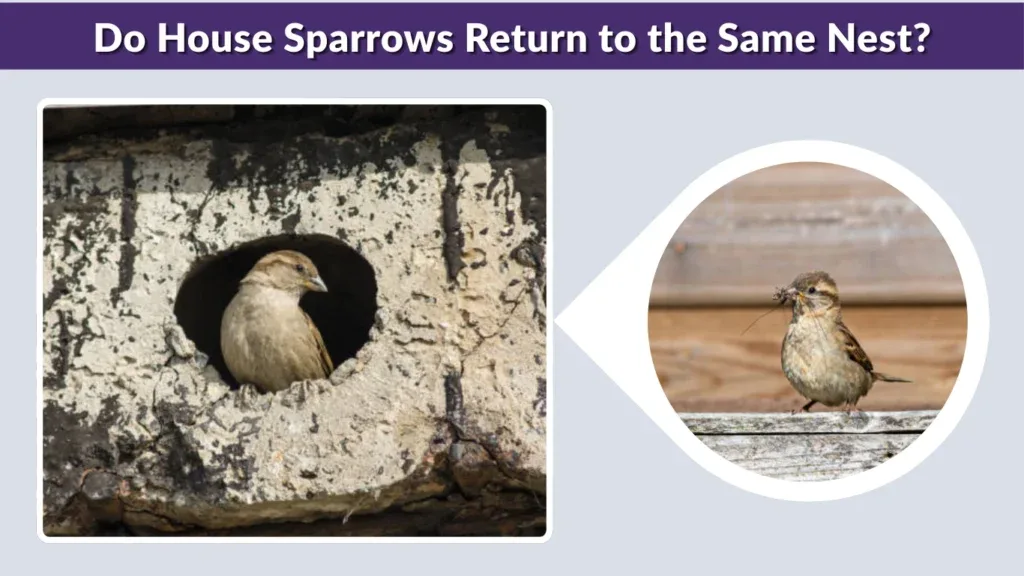
Image source: Bing (Web (fair-use with source credit))
This includes:
- Gaps and crevices in walls and roofs
- Under bridges and overpasses
- Inside ventilation shafts
- In holes in brickwork
- Even in street lights or traffic signals
These sheltered locations offer protection from predators and the elements, providing ideal conditions for raising young. The sheer abundance of these nesting opportunities in urban and suburban areas directly contributes to their high population densities.
Social Butterflies: Living in Groups
House sparrows are inherently social birds. They often forage in flocks and can nest in loose colonies. This social behavior offers several advantages.
Foraging in groups can help them locate food sources more effectively and provide a "safety in numbers" benefit against predators. When one sparrow finds food, others in the flock can quickly join in. Similarly, nesting in loose proximity can create a vigilant community, with more eyes and ears alert to danger.
This gregarious nature means that where you find one house sparrow, you're likely to find many more nearby, reinforcing their perceived commonality.
The Upshot: Why You See Them Everywhere
So, when you boil it all down, the reason house sparrows are so common is simple: they're incredibly good at living with us. They don't need pristine wilderness; they thrive in the environments we've built. Our cities, farms, and even our backyards provide them with all the essentials, food, shelter, and safe places to raise their young.
They're not shy, they reproduce quickly, and they can eat almost anything, making them perfectly suited to a human-dominated world. This strategic adaptation is why they've successfully colonized nearly every corner of the globe, making them one of the most familiar birds we encounter daily.
Common House Sparrow Questions Answered
Are House Sparrows a Problem?
House sparrows can sometimes be considered a nuisance. Their tendency to nest in building crevices can lead to clogged gutters or nesting materials blocking vents. In agricultural settings, they can sometimes damage crops by feeding on seeds and grains, though their impact varies.
Their droppings can also be unsightly and, in large concentrations, potentially pose a health risk if not managed properly. Organizations like the U.S. Department of Agriculture (USDA) provide guidance on managing bird populations in agricultural and urban areas to minimize negative impacts.
Do House Sparrows Compete with Native Birds?
Yes, house sparrows can compete with native bird species, particularly for nesting sites and food. Because they are so adaptable and reproduce prolifically, they can outcompete smaller native birds for limited cavity nesting spots. This competition can sometimes put pressure on native populations, especially in areas where native species are already struggling.
For example, studies have shown that introduced species like the house sparrow can negatively affect populations of endangered native birds if left unchecked.
How Can I Tell a House Sparrow from Other Sparrows?
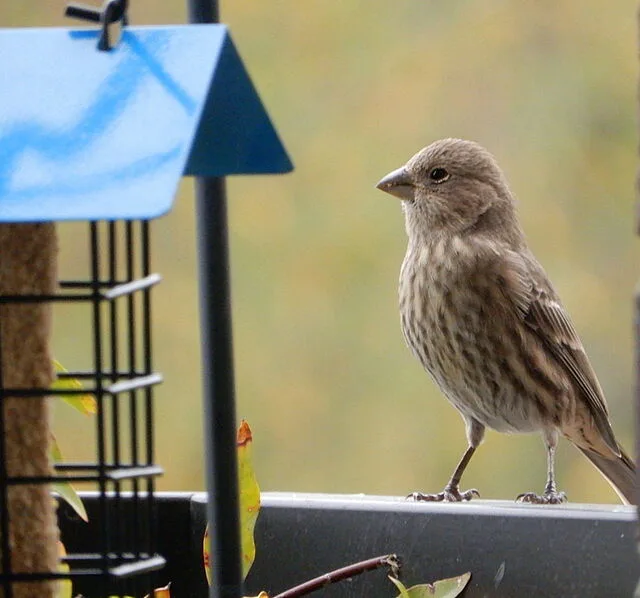
Distinguishing a house sparrow is usually straightforward once you know what to look for. Male house sparrows are quite distinctive: they have a gray crown, black bib on their throat and chest, chestnut and black markings on their wings, and a generally streaky brown back. Females and young birds are more uniformly brownish-gray, but they typically have a pale stripe behind the eye (a supercilium) and a distinctive, somewhat stout bill.
Unlike many native sparrows that have more complex streaking or different head patterns, the house sparrow's combination of a plain face (for the female) and the male's bold markings is a strong indicator.
Real-World Observations: A Sparrow's World
Observing house sparrows in their natural (or rather, our naturalized) habitat provides a clear picture of their success. You'll often see them in mixed-species flocks, especially near food sources like bird feeders, outdoor restaurant patios, or harvested fields. They are frequently seen hopping on the ground, flicking their tails, and foraging with a quick, jerky movement.
Their nesting behavior is also revealing; look for them disappearing into small openings in buildings, often carrying bits of grass, string, or other nesting material. Their constant chirping and chattering are a familiar soundtrack in many urban and suburban areas, a testament to their omnipresence.
Factors Contributing to Their Global Spread
The house sparrow's journey from its native Eurasian range to becoming a near-global species is a testament to its remarkable adaptability. This spread wasn't a slow, natural migration; it was heavily influenced by human activity, both intentional and unintentional. Their ability to adapt to different climates and readily utilize human-provided resources has been key to their widespread success as an introduced species in places like North America, Australia, and South America.
Historical Introductions and Colonization Patterns
Records from ornithological societies confirm that many populations outside their native range were established through deliberate introductions. For example, house sparrows were first intentionally released in North America in the 1850s, and their populations exploded rapidly. They then spread across the continent through both their own dispersal and human transport.
This pattern of introduction and subsequent rapid colonization has been repeated in many parts of the world where they were brought by colonists seeking familiar species or for perceived ecological benefits.
Adaptability to Diverse Climates and Habitats
Unlike many species that are restricted to specific environmental conditions, house sparrows demonstrate impressive climatic tolerance. They can be found thriving in hot, arid deserts, temperate urban centers, and even cooler, more temperate regions. Their ability to adjust their behavior, diet, and nesting strategies to suit local conditions allows them to colonize a vast array of habitats.
This broad environmental tolerance, coupled with their reliance on human infrastructure, means they can effectively settle in areas where other bird species might struggle to survive.
The House Sparrow's Diet: An Opportunist's Menu
A core reason for the house sparrow's widespread success is its incredibly flexible diet. They are not picky eaters and can subsist on a wide variety of food sources, which allows them to thrive in diverse environments, especially those modified by human activity. This dietary opportunism is a hallmark of their species.
Seeds and Grains: A Staple Food Source
Seeds and grains form a significant portion of the house sparrow's diet, particularly outside the breeding season. They readily consume seeds from grasses, weeds, and agricultural crops like wheat, corn, and rice. This preference makes them common visitors to farms, grain storage facilities, and anywhere seeds are readily available.
Their strong, conical beaks are well-suited for cracking open these hard seeds.
Insects and Invertebrates: Essential for Nestlings
During the breeding season, insects and other invertebrates become a crucial part of the diet, providing essential protein for growing chicks. House sparrows will actively forage for caterpillars, beetles, spiders, and other small arthropods. This insectivorous behavior is particularly important in urban and suburban gardens where insect populations can still be significant.
Their ability to switch from a primarily seed-based diet to one rich in insects demonstrates their dietary versatility.
Human Food Scraps: A Convenient Boon
Perhaps one of the most visible aspects of their diet is their reliance on discarded human food. House sparrows are adept at scavenging in urban and suburban areas, frequenting outdoor dining areas, parks, and refuse bins. They will consume bread, pastries, chips, and virtually any organic scraps left unattended.
This access to readily available, high-energy food sources provided by human activity significantly boosts their survival rates and reproductive success, making them a constant presence around human settlements.