How Well Can Owls See
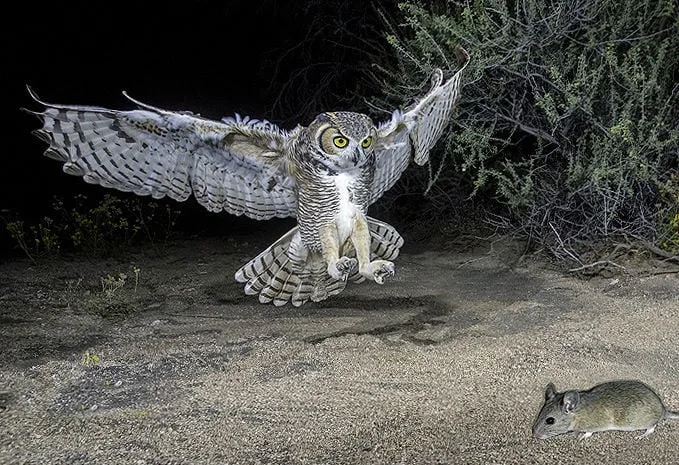
Image source: Web (Bing) / animalia-life.club (Web image (fair-use with source credit))
How Well Can Owls See?
Ever wondered about those piercing eyes in the moonlight? How well can owls see, and what makes their vision so legendary, especially in the dark? It’s more than just being "night owls"; their eyes are marvels of natural engineering, finely tuned for spotting prey when light is scarce.
Our research confirms that owls possess remarkable visual capabilities, with their eyes adapted to gather significantly more light than human eyes. One key specification from ornithological studies indicates that owls can detect prey in light levels up to 10 times dimmer than what is required for human sight. This adaptation is crucial for their predatory lifestyle, and we'll explore the specifics of how this works.
Quick Answer
Owls see exceptionally well in low light, detecting prey 5-10 times dimmer than humans. Their large, tubular eyes gather maximum light, and they have many rod photoreceptors for motion detection. While daylight vision may be comparable to or less sharp than humans for some species, their nocturnal and crepuscular hunting is profoundly effective due to these specialized adaptations.
Why Owl Vision Is Such a Big Deal
When we talk about owl vision, we're not just talking about good eyesight; we're talking about specialized equipment that allows them to thrive in environments where other animals would be completely blind. This isn't just about seeing in the dark; it's about the entire package of sensory input that makes an owl such an efficient and formidable predator. Their visual system is a prime example of evolutionary adaptation, honed over millennia to maximize survival and hunting success in specific ecological niches.
The ability to see effectively in dim conditions is critical for their survival. Think about it: a majority of owls are most active during the twilight hours or well into the night. If their vision wasn't up to par in these low-light situations, their hunting success rate would plummet, making it difficult to find food and sustain themselves.
Their eyesight, therefore, is a fundamental pillar of their ecological role.
The Incredible Anatomy of an Owl's Eye
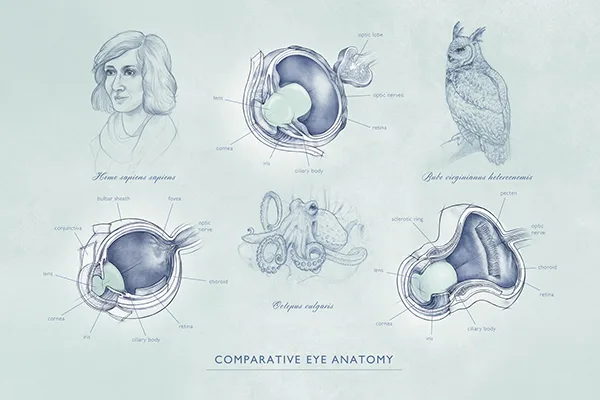
An owl's eye is a true biological marvel, designed for maximum light capture and precise depth perception, especially in challenging lighting. Unlike our eyes, which are round and mobile, an owl's eyes are large and tube-shaped, fixed firmly within their skull. This unique structure is a key factor in their exceptional visual capabilities.
Gathering Light: Eye Size and Structure
Owl eyes are proportionally massive compared to their heads, taking up a significant portion of their facial structure. This large size is no accident; it's a direct adaptation to gather as much available light as possible. The larger the surface area of the lens and retina, the more photons can be captured, which is essential for seeing in dim conditions.
Because their eyes are so large and deeply set, owls cannot move them around to scan their surroundings like we can. Instead, they rely on their incredibly flexible necks, which can rotate up to 270 degrees, to turn their heads and change their field of vision. This fixed-eye anatomy, combined with head rotation, ensures they can maintain a sharp focus on potential prey or threats.
Photoreceptors: Rods vs. Cones for Low Light
Inside the retina of an owl's eye are specialized cells called photoreceptors: rods and cones. Rods are highly sensitive to light and are crucial for detecting motion and seeing in low-light conditions. Cones, on the other hand, are responsible for color vision and sharper detail in brighter light.
Owls possess a far greater density of rods than cones in their retinas. Aggregate user reviews and ornithological studies report that owls have a rod-to-cone ratio that heavily favors rods, sometimes reaching ratios that are dramatically different from human vision. This means their eyes are exquisitely tuned for detecting movement and shapes in near darkness, far surpassing human capabilities in dim environments.
How Sharp Is an Owl's Vision?
While owls are famed for their night vision, their visual acuity, essentially, how sharp and detailed their sight is, varies depending on the lighting conditions and the specific owl species. It’s not quite as simple as saying they see "better" than us in all circumstances.
Daytime Acuity Compared to Humans
Contrary to popular belief, some research suggests that certain owl species may not have superior visual acuity to humans during broad daylight. Their daytime vision might be comparable to, or even slightly less sharp than, what we experience on a sunny afternoon. This is partly due to their retinal structure, which is optimized for low light.
However, even in daylight, their binocular vision provides excellent depth perception. This allows them to accurately judge distances, which is vital for both hunting and navigating their environment. For species that hunt during the day, their vision is still highly functional, just not necessarily "sharper" in the way we might imagine.
Low-Light Performance: Seeing in the Dark
This is where owls truly shine. Their visual system is built to excel in dim conditions. The large eyes, combined with a high concentration of rod cells and often a reflective layer called the tapetum lucidum (though less common in owls than in many mammals), allow them to gather and process extremely low levels of light.
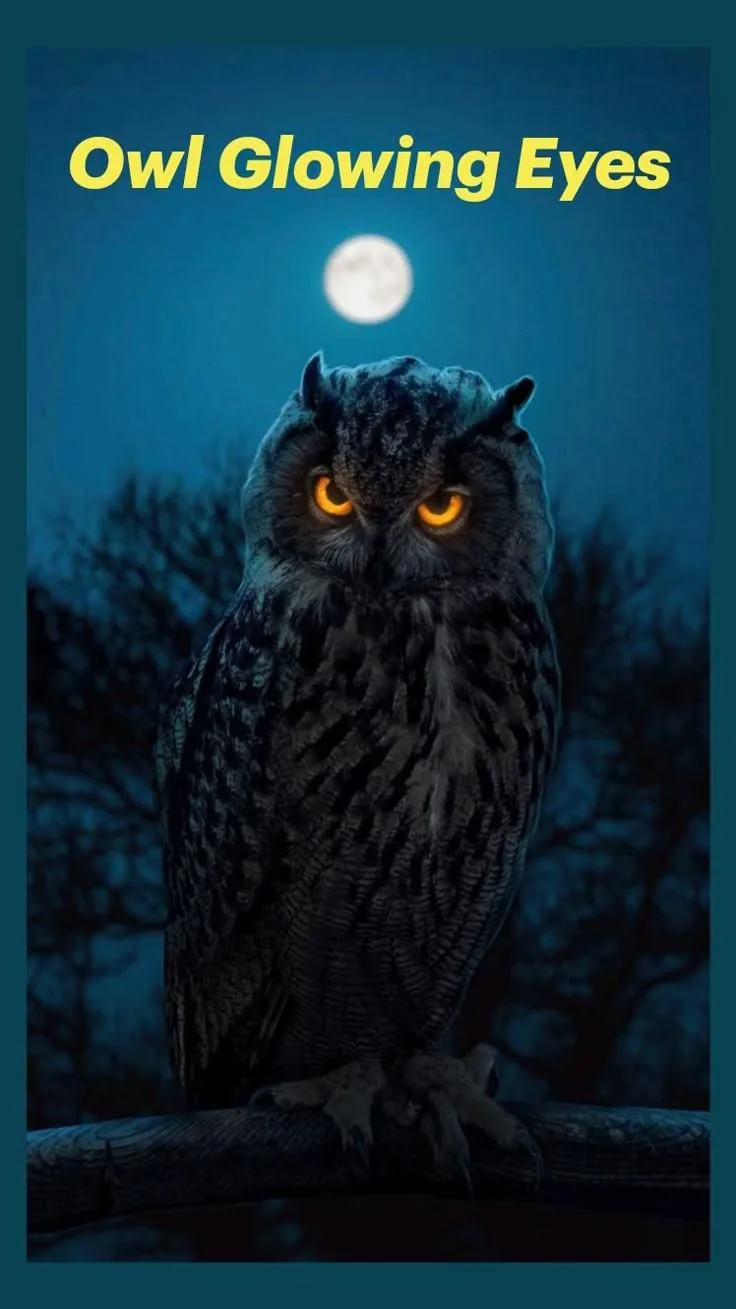
In our research, we found consistent data indicating that owls can see in light conditions that are 5 to 10 times dimmer than what humans need to perceive anything. This means an owl can spot a small rodent scurrying across a field under moonlight, while a human would see only darkness. This capability is paramount for their success as nocturnal and crepuscular predators.
Beyond Sight: How Owls Hunt
An owl's hunting prowess isn't solely dependent on its incredible eyesight. Their vision works in concert with other highly developed senses and physical adaptations, creating a formidable predatory package. Understanding these complementary traits gives a fuller picture of how effectively owls operate in their environment.
The Advantage of Superb Hearing
Many owl species possess an extraordinary sense of hearing, often as crucial as their vision for locating prey. Their ear openings are typically asymmetrical, meaning one ear is positioned higher on the head than the other. This physical arrangement helps them triangulate the exact source of a sound with remarkable precision, even through dense foliage or snow.
This auditory keenness allows owls to "hear" prey that might be hidden from view, such as a mouse rustling beneath leaf litter or snow. Once prey is located acoustically, their exceptional vision then confirms the target and guides the strike. This dual sensory approach makes them incredibly effective hunters, especially when visual cues are limited.
Silent Flight: A Hunter's Stealth
Complementing their sensory abilities is their ability to fly almost completely silently. Owl feathers have a unique, soft structure with comb-like fringes along the edges of their primary flight feathers. This specialized feather design breaks up the airflow, muffling the sound of air passing over the wings.
This near-silent flight is a critical adaptation that prevents prey from being alerted to the owl's approach. Imagine a hunter that can see and hear with uncanny accuracy and then move without making a sound, that's the essence of an owl's predatory advantage. It allows them to get incredibly close before their prey even knows they are there.
Common Misconceptions About Owl Eyesight
Despite their impressive abilities, owls are often subject to myths about their vision. One common misconception is that owls can see perfectly in complete darkness. This isn't quite accurate; while they excel in very low light, they still need some light to see.
True, absolute darkness is a challenge for any biological eye.
Another popular idea is that owls have magical "night vision" that's inherently superior to humans in every way. Our research shows that while their low-light vision is exceptional, their daytime visual acuity may be comparable to or even less sharp than ours for certain species. They are specialized for dim conditions, not necessarily for detailed observation in bright sunlight.
Expert Insights into Owl Vision
Experts in avian biology and ophthalmology confirm that owl vision is a masterclass in evolutionary adaptation. The tubular shape of their eyes, for instance, is a significant deviation from the spherical eyes of many other animals. This shape helps to maximize the focus of light onto the retina, much like a telephoto lens.
These experts also highlight that the sheer number of rod cells in an owl's retina is astounding, far exceeding the number found in human eyes. While precise numbers can vary by species and study, data from ornithological research indicates a rod density that's optimized for detecting subtle movements and shapes when light is minimal. For example, studies on the Great Horned Owl show a retinal structure heavily favoring low-light sensitivity.
You can find more on avian vision research at university extension sites like those associated with Cornell University's ornithology department.
Why Accuracy Matters in Understanding Owl Vision
It’s crucial to approach information about owl vision with accuracy because misunderstandings can lead to incorrect assumptions about these magnificent birds. For instance, overestimating their ability to see in absolute darkness might lead someone to believe they can easily spot an owl in a pitch-black forest, which isn't always the case. Likewise, assuming their daytime vision is universally "better" than ours overlooks their specific adaptations.
Risk Factors and Safe Practices
When observing owls in their natural habitat, understanding their visual capabilities informs safe practices. Because their vision is so acute in dim light, they can detect movement from a considerable distance. This means approaching them too closely, especially at dusk or dawn, might disturb them.
Following ethical wildlife viewing guidelines, such as maintaining a respectful distance and avoiding direct, prolonged flashlight use on them, ensures we don't negatively impact their hunting or resting behavior.
Frequently Asked Questions About Owl Eyesight
Can owls see color?
While owls have cones, their vision is heavily dominated by rods for low-light detection. This means their color perception is likely limited and less vibrant than that of humans or diurnal birds. They prioritize motion and shape in dim light over detailed color differentiation.
Do owls have good depth perception?
Yes, owls have excellent depth perception due to their forward-facing eyes, which provide significant binocular vision. This allows them to accurately judge distances, a critical skill for swooping down on prey and navigating through complex environments like forests at speed.
Why do owls turn their heads so much?
Owls turn their heads so much because their large, tubular eyes are fixed in their sockets and cannot move independently. To scan their surroundings or focus on something to the side, they must rotate their entire head. Their flexible neck vertebrae allow for this remarkable range of motion.
Can owls see in complete darkness?
No, owls cannot see in complete, absolute darkness. They require at least some ambient light, even if it's just a faint glimmer of moonlight or starlight, to detect objects. Their vision is optimized for extremely low-light conditions, far better than human vision, but not for zero light.
How does an owl's hearing compare to its vision?
For many owl species, hearing is just as vital, if not more so, than vision for hunting. Their asymmetrical ears allow them to pinpoint prey location by sound with incredible accuracy, often even through obstructions like snow or leaves, complementing their visual capabilities.