Why Do Rabbits Stand on Their Hind Legs?
Ever seen your bunny suddenly pop up onto their hind legs, looking like a little meerkat? It can be pretty darn cute, but it's not just for show. There's a whole lot going on behind that adorable pose, and knowing what it means can really help you understand your rabbit better.
Think of it like learning their secret language!
As someone who's spent a good chunk of time with these fascinating critters, I can tell you that "standing up" is one of their main ways of communicating. It’s a behavior rooted in instinct, where a better vantage point aids in spotting potential threats or novel stimuli. Understanding these cues is key for responsible pet ownership, as per general animal welfare guidelines from organizations like the USDA.
Quick Answer
Rabbits stand on their hind legs primarily to get a better view of their surroundings. This behavior signals curiosity, alertness, or a desire for attention. They are surveying their environment for potential threats, interesting sights, or to communicate a need to their caregivers.
Bunny on Hind Legs: What Your Rabbit Is Actually Saying
When your rabbit perches on its hind legs, it's actively engaging with its environment. This posture is a fundamental part of their behavioral repertoire, allowing them to stretch their bodies and improve their sensory input. It’s a clear indicator that they are processing what’s happening around them.
As our research shows, this behavior is observed across many domestic rabbit breeds, from the Netherland Dwarf to the Flemish Giant.
Why Visuals Are Key to Understanding Rabbit Stance
While we can describe the physical act of a rabbit standing, truly grasping the nuance of this behavior is best achieved through visual reference. Images and videos allow us to see the subtle differences in ear position, body tension, and eye focus that accompany the hind-leg stance. These visual cues provide context that text alone can't fully convey, offering a richer understanding of the rabbit's emotional state and intent.
For instance, seeing a relaxed rabbit stretch versus an alert rabbit scan the room makes the meaning much clearer.
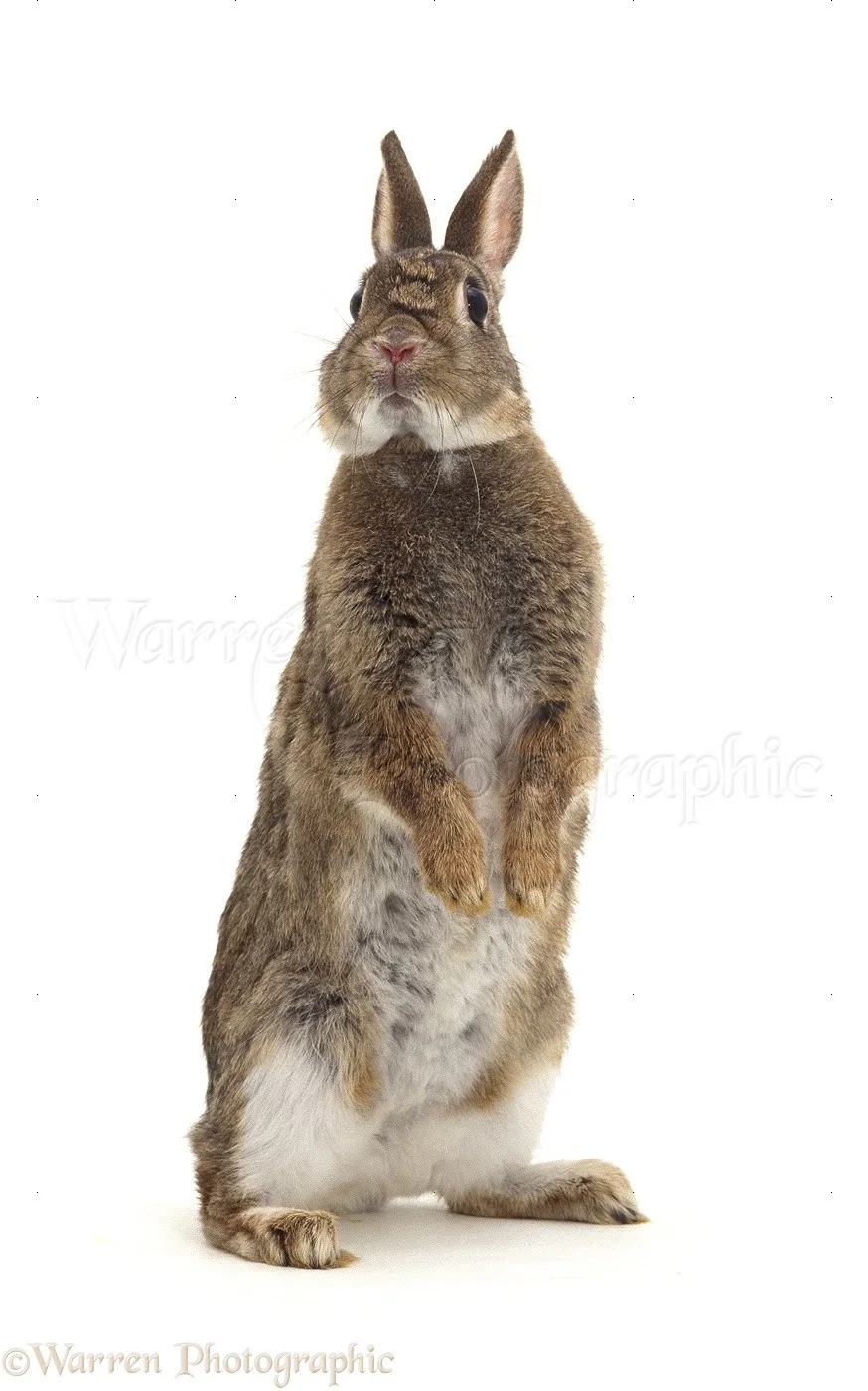
Image source: Web (Bing) / warrenphotographic.co.uk (Web image (fair-use with source credit))
Decoding the Stance: Curiosity vs. Concern
The exact reason a rabbit chooses to stand up can vary. It's rarely a sign of distress in itself, but rather a response to external factors. Distinguishing between these different motivations helps you respond appropriately and ensure your rabbit feels safe and understood.
Curiosity and Exploration Cues
This is arguably the most common reason your bunny will rise up. They're trying to get a better look at something that has piqued their interest. Maybe you’ve just opened a bag of treats, or perhaps a new object has appeared in their living space.
They might also be reacting to a sound you didn't notice or a scent from another room. It's their way of saying, "What's that over there?" or "Tell me more!" This active scanning helps them assess their surroundings for anything new or exciting.
Attention-Seeking Signals
Sometimes, that upright posture is a direct plea for your attention. Your rabbit has learned that standing can get you to notice them, especially if they want something. This could be a nudge for food, a request for playtime, or simply a desire for some affectionate petting.
They know you're a central part of their world and will use various behaviors, including standing, to interact with you. Understanding these cues can significantly improve how you bond with your pet; for more on this, see how do you bond with a rabbit?.
Alertness and Danger Indications
While pet rabbits are generally safe, their wild instincts remain. Standing up gives them a superior vantage point, much like their wild ancestors used to spot predators. If your rabbit suddenly freezes and then stands, especially after a loud noise or the appearance of a stranger, they are assessing a potential threat.
Their ears will likely be swiveling intently, and their nose might twitch rapidly. This alert stance is a precursor to either investigating further or preparing to flee.
Not Just Standing: What Else to Look For
To truly understand why your rabbit is standing on its hind legs, you need to consider the whole picture. The stance itself is just one piece of the puzzle. You've got to look at their entire body language.

Image source: Web (Bing) / hutchandcage.com (Web image (fair-use with source credit))
Ear Positions and Eye Focus
Observe their ears. Are they perked straight up and swiveling to catch every sound? This indicates heightened awareness and interest.
If their ears are relaxed and slightly back, they might be more comfortable, even while standing to stretch. Check their eyes too. Are they wide and scanning the room, suggesting alertness?
Or are their eyes soft and more focused on you, indicating a desire for interaction? The direction of their gaze can also tell you what has captured their attention.
Nose Twitches and Body Tension
A rapidly twitching nose often accompanies alert or curious behavior. It means they are actively taking in scent information from their environment. If their body is rigid and tense, it suggests they might be slightly nervous or on high alert, whereas a more relaxed posture while standing could indicate a simple stretch.
Pay attention to how their tail is held; a tucked tail might signal worry, while a relaxed tail is more common with general curiosity. Their overall demeanor, whether they appear poised to bolt or simply observing, provides crucial context to the hind-leg stance.
Common Misinterpretations to Avoid
It's easy to jump to conclusions about your rabbit's behavior, but sometimes their upright stance isn't what you think. For example, a rabbit might stand up briefly when startled by a sudden noise, but if they immediately return to relaxed foraging, it was likely just an instinctual reaction, not true fear. Over-interpreting this can lead to unnecessary worry.
If a rabbit consistently stands up and seems tense, with wide eyes and ears pinned back, it might indicate a genuine environmental stressor you need to address.
Expert Tips for Reading Your Rabbit's Body Language
Interpreting your rabbit's behavior takes practice and observation. Think of it as learning a new language; the more you listen and watch, the better you'll become at understanding their messages. Pay close attention to the context, what was happening before your rabbit stood up?
Was there a sound, a smell, or a change in their environment? Combining what you see with what you know about your rabbit's personality will give you the clearest picture. For instance, a normally timid rabbit standing might signal something more concerning than the same pose from a bold, adventurous bunny.
Is Standing Up a Sign of a Healthy Rabbit?
Yes, generally, a rabbit standing on its hind legs is a sign of a healthy and engaged animal. It shows they are alert, curious, and interacting with their surroundings. This behavior is perfectly normal, especially in younger rabbits that are still exploring their world.
A lack of interest in their environment, or refusing to stand or explore, could be more indicative of a health issue. If you're concerned about your rabbit's overall well-being, understanding their normal behaviors like standing is a good starting point for spotting deviations. For early care guidance, how do you care for a baby rabbit? can offer essential insights.
When to Be Concerned About the Stance
While standing is typically normal, there are times to pay closer attention. If your rabbit stands up and appears frozen, with rigid muscles, wide eyes, and perhaps even flattened ears, they might be experiencing significant fear or stress. This isn't just curiosity; it's a reaction to perceived danger.
In such cases, identify the source of their anxiety and work to remove it or help them feel secure. If this fear-based stance is persistent, it could indicate an ongoing issue in their environment that needs addressing.
FAQs About Rabbits Standing on Hind Legs
Why Does My Rabbit Stand on Its Hind Legs When I Offer Food?
Your rabbit stands to get a better view of the food you're offering. It's a combination of curiosity and anticipation, allowing them to see exactly what they're about to receive and ensure it's something desirable. This is a common way they express excitement for treats.
Do All Rabbit Breeds Stand on Their Hind Legs?
Yes, this behavior is observed across various domestic rabbit breeds. Whether it's a small Netherland Dwarf or a large Flemish Giant, the instinct to stand for a better view is common. Different what are the different types of rabbit breeds? may exhibit the behavior with slight variations in posture or frequency based on their individual temperament and environmental interactions.
Can Rabbits Use Their Hind Legs for Defense?
While rabbits stand primarily for observation, their powerful hind legs are also crucial for defense. If they feel threatened and cannot flee, they might thump their hind legs as a warning to potential predators or other rabbits. This thumping action signals alarm and is a significant part of how rabbits communicate danger.
You can learn more about how rabbits communicate with each other? to understand these signals better.
Is it Possible My Rabbit Stands to Stretch?
Absolutely. Just like humans stretch, rabbits can stand on their hind legs to extend their muscles and spine. This is often a more relaxed posture than an alert stance, often accompanied by a relaxed body and soft eyes.
It's a way for them to relieve stiffness, particularly after resting.
How Does Standing Relate to a Rabbit's Vision?
Rabbits have eyes on the sides of their heads, giving them a wide field of vision, but they have blind spots directly in front and behind them. Standing on their hind legs helps them overcome these blind spots, allowing them to see more of their immediate surroundings and better assess potential threats or interesting stimuli. This improved visual range is crucial for their survival instincts.


