Bird Social Behavior
Bird social behavior shapes survival, reproduction, and how entire species get protected. Most people picture birds as either solitary or lumped together in undifferentiated flocks. But decades of field research show that avian social life runs on a much deeper system.
Communication, hierarchy, and cooperation drive it.
Research as of 2026 confirms that roughly 90% of bird species practice some form of social monogamy. Yet cooperative breeding, brood parasitism, and complex flock coordination reveal a far messier reality. This article walks through what the field data actually shows, starting with why it matters at all.

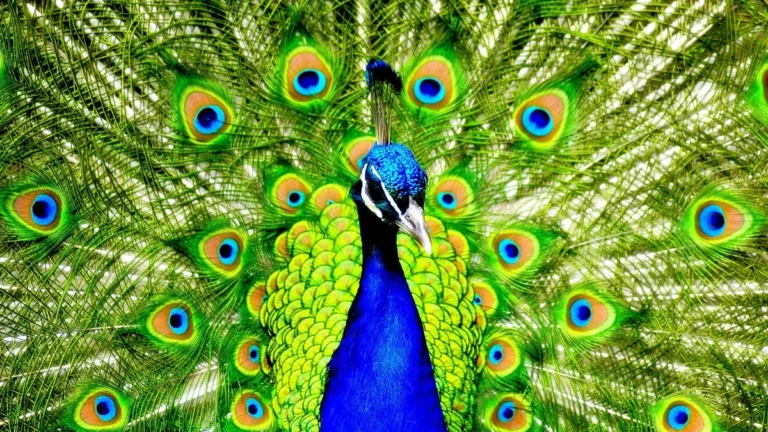
Image source: Web (Bing) / loksatta.com (Web image (fair-use with source credit))
Quick Answer
Bird social behavior describes how birds interact, communicate, and form bonds in the wild. Birds coordinate flocks through vocal calls, body language, and positional cues. Most species form monogamous pair bonds, though some practice cooperative breeding.
Social structure varies widely between species and habitats.
Why Bird Social Behavior Matters More Than You Think
Social behavior isn't just a quirk of bird life. It directly affects how populations survive, how diseases spread through flocks, and how conservation strategies get designed. Understanding bird social behavior shapes how wildlife managers allocate resources and design habitat protections.
Research shows that social complexity correlates with cognitive development. Species living in larger, more dynamic groups, like crows and parrots, demonstrate stronger problem-solving abilities. This link between social living and brain development is the foundation of the social brain hypothesis.
It also matters practically. Conservationists planning habitat restoration need to know whether a species nests alone or in colonies. A colonial nester like a sooty tern needs thousands of pairs in one location.
A solitary species like a great blue heron needs entirely different protections.
Beyond conservation, social data informs:
- Captive breeding compatibility decisions
- Disease surveillance in wild populations
- Bird-safe building design in urban areas
- Migration corridor planning
- Wildlife rehabilitation protocols
Long-term studies at the Cornell Lab of Ornithology have shown that birds raised in social groups develop larger neural structures than isolated counterparts. This finding alone reshaped how we think about avian cognition.
What Bird Social Structure Actually Looks Like in the Wild
Bird social systems fall into distinct categories. Many species blur the lines, but field observation consistently shows five main types.
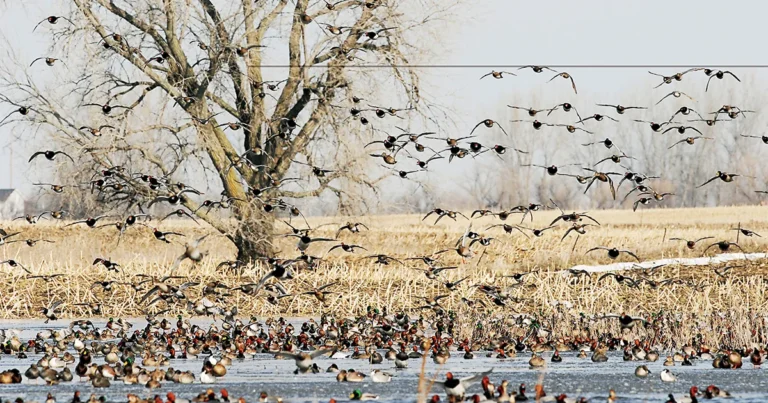
Flocking species like starlings and snow geese coordinate movement through real-time adjustments. Each bird responds to its nearest neighbors. That creates the sweeping murmurations you see at dusk.
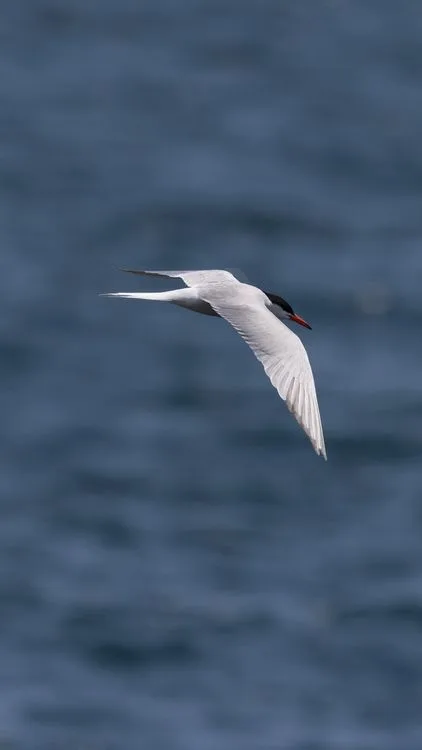
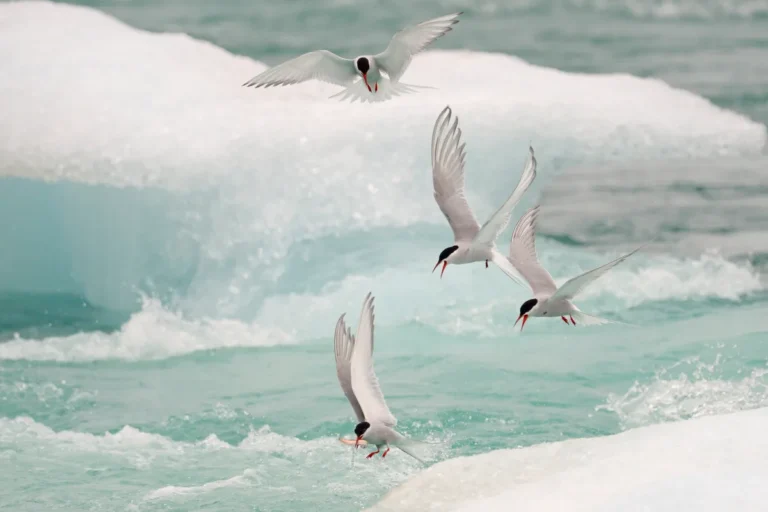
Colonial nesters like terns and seabirds pack thousands of nests into one site. Dense colonies offer predator defense. They also create fierce competition for nesting space and food.
Cooperative breeders represent one of the most studied social systems. Species like the Florida scrub-jay and the Australian superb fairywren help raise the dominant pair's chicks. An estimated 10% of bird species show this pattern.
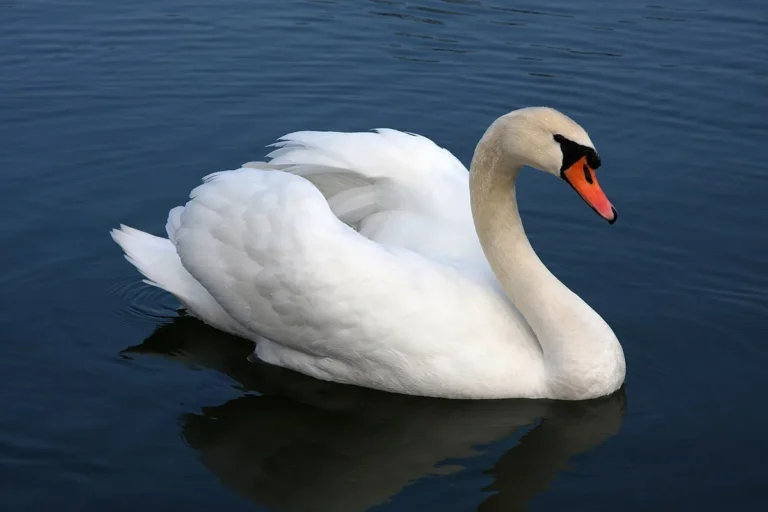
Pair-bonded species like albatrosses form partnerships that can last decades. Laysan albatrosses have been documented staying paired for over 50 years. That makes them among the most stable partnerships in the animal kingdom.
Brood parasites like cuckoos and cowbirds exploit other species' social instincts entirely. A female cuckoo lays her egg in a host nest and lets the other bird raise her chick. It's the ultimate manipulation of avian parental care.
A colonial nesting site like the one shown below packs hundreds of nests into a small area. The scene is dense, competitive, and highly social.

Image source: Wikimedia Commons / TXGemGem (CC BY-SA)
| Social Type | Example Species | Key Trait |
|---|---|---|
| Flocking | Starlings, snow geese | Real-time coordination |
| Colonial nesting | Terns, gulls | Shared nesting sites |
| Cooperative breeding | Scrub-jays, fairywrens | Non-breeding helpers |
| Pair-bonded | Albatrosses, swans | Long-term partnerships |
| Brood parasitic | Cuckoos, cowbirds | Host egg replacement |
Most social structure depends on three variables: food distribution, predator pressure, and habitat availability. Change one, and a species' social system can shift within a few generations.
Case Examples: What Decades of Field Research Really Show
The strongest evidence for bird social behavior comes from long-term field studies, not lab experiments. Here are some of the most concrete findings.
Crows and facial recognition. Research by John Marzluff at the University of Washington tracked American crows for over five years. Captured and banded birds continued to scowl at and mob the same researchers years later. Retention exceeded five years, which is remarkable for a non-human animal.
Starling murmuration mechanics. A 2008 study by the STARFLAG group in Rome measured starling flock coordination. Birds responded to their seven nearest neighbors simultaneously. Flock direction changes propagated through the group in under half a second.
Cooperative breeding in scrub-jays. Long-term research at Florida's Archbold Biological Station tracked scrub-jay groups for over 30 years. Helper birds cut fledgling mortality by roughly 20% compared to pairs raising young without helpers.
Brood parasitism rejection rates. Brown-headed cowbirds parasitize roughly 220 host species. Hosts reject foreign eggs between 25% and 40% of the time. The rate depends on species and population experience with parasitism.
Each of these findings took years or decades to produce. Field research isn't quick, but the data it generates is hard to replicate any other way.
What We Get Wrong About Bird Sociality
Plenty of myths surround bird social behavior. Here are the most common ones.
"Birds in a flock act like one organism." They don't. Each bird makes independent decisions based on its nearest neighbors. The flock emerges from local rules, not top-down commands.
"More social always means more intelligent." Not exactly. Social living may promote certain cognitive skills, but many highly social species don't demonstrate complex tool use or problem solving. Some colonial seabirds show remarkably little behavioral flexibility.
"Pair bonding means birds mate for life." Sometimes, but not always. Genetic studies show that extra-pair mating is widespread among supposedly monogamous species. Many "monogamous" males sire chicks outside their pair bond.
"Young birds learn everything from their parents." Not true. Social learning happens through peer interaction, play, and observation of non-parental adults. Zebra finch studies show that juveniles develop different song dialects depending on which group they're raised in.
"Bird social structure is static." It isn't. Seasonal changes, habitat loss, and population density can shift a species from solitary to colonial behavior within a single generation.
The takeaway: bird social behavior is dynamic, individualistic, and far more nuanced than most field guides suggest.
How Field Researchers Study Flocks, Calls, and Bonds
Studying bird social behavior in the wild takes a toolkit of proven field methods. Each approach brings different strengths.
Banding and telemetry. Researchers band individual birds with uniquely numbered rings or attach GPS transmitters. This lets them track which birds travel together or return to the same roost across seasons. The USGS oversees banding programs that have run since the late 1800s.
Audio recording and playback. Recordings of alarm calls or nest distress vocalizations get played back to wild populations. Researchers measure whether birds respond, how quickly, and with what intensity. This method has been used to test whether starlings distinguish between aerial and ground predator alarms.
Focal animal sampling. A researcher watches one individual continuously, recording every social interaction over a set period. It's labor-intensive but produces detailed behavioral data that aggregate methods miss.
Flock tracking via photography. High-speed video and computer modeling let researchers measure coordination patterns in murmurations. The STARFLAG project used this method to document how fast information moves through a starling flock.
The image below shows a banding operation in progress, one of the most fundamental tools in the field.
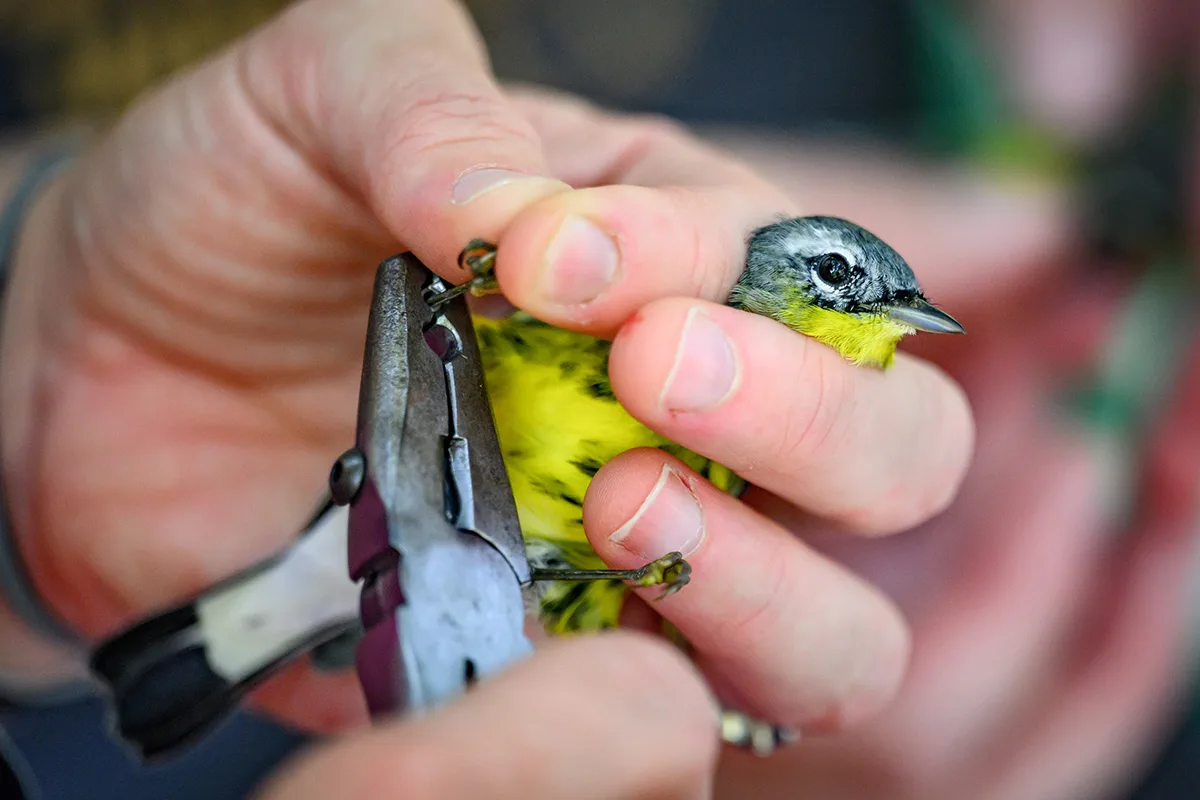
Image source: Bing (Web (fair-use with source credit))
No single method tells the full story. Combining telemetry, playback, and behavioral sampling gives researchers a layered picture of social life that no one technique could reveal alone.
What Bird Social Behavior Reveals About Conservation
Social data shapes how conservation funds get spent. If a species relies on colonial nesting, protecting one large site matters more than scattered small ones. The [U.S.
Fish and Wildlife Service](https://www.fws.gov) uses this logic when designating critical habitat under the Endangered Species Act.
Disease dynamics change everything too. Avian influenza spreads fastest in dense colonial settings. Knowing that helps wildlife managers make hard decisions about culling or isolating sites.
A single colony outbreak can kill tens of thousands of seabirds in weeks.
Captive breeding programs also depend on social data. The California Condor recovery effort required understanding pair bonding, vocal communication, and mate selection cues. Condors raised without social exposure showed poor courtship behavior as adults.
That nearly derailed reintroduction efforts until protocols changed.
Social knowledge drives practical outcomes:
- Habitat corridor design that respects flocking routes
- Nesting site protections calibrated to species density
- Feeding station placement that avoids over-attracting single species
- Collision-prevention architecture based on flight path data
Conservation without social context tends to miss what species actually need.
Expert Tips for Reading Bird Social Behavior in the Field
Field observation of social behavior takes practice, but these fundamentals shorten the learning curve.
Watch for coordination, not uniformity. A well-run flock doesn't move identically. Each bird adjusts based on what it sees around it. Direction changes ripple through the group rather than being decided by one leader.
Listen before you look. Alarm calls give you real-time information. Three sharp notes from a robin means one thing. A chattering mob from several species at once means something very different.
Learn to distinguish the two.
Time your observations. Bird social behavior shifts dramatically by season. Breeding season brings territorial aggression and pair displays. Winter brings mixed-species flocks and communal roosting.
Summer brings juvenile play behavior that adults rarely exhibit.
Note who interacts with whom. Focal animal sampling works best when you track which individuals approach, avoid, or ignore each other over time. Patterns that look random at first often reveal clear social networks once you log enough interactions.
| Observation Tip | What It Reveals | Best Season |
|---|---|---|
| Flock coordination speed | Group decision-making | Any |
| Vocal alarm specificity | Predator awareness | Any |
| Pair greeting displays | Bond strength | Breeding |
| Mixed-species grouping | Resource competition | Winter |
| Juvenile interactions | Social learning | Summer |
The Cornell Lab's eBird platform lets you log behavioral observations alongside species counts. It's a low-effort way to build a personal dataset over time.
Frequently Asked Questions
What is bird social behavior?
Bird social behavior describes how individual birds interact with other members of their species. It includes flocking, mating bonds, cooperative breeding, territorial defense, and vocal communication. Every species has a distinct social pattern shaped by its environment, diet, and predator pressure.
Do all birds live in flocks?
No. Many species are solitary outside the breeding season. Others pair up and defend territories rather than forming large groups.
Flocking behavior is common among starlings, geese, and many raptors, but it depends on species and season.
What is cooperative breeding in birds?
Cooperative breeding happens when non-breeding individuals help raise the young of a dominant pair. Florida scrub-jays and Australian superb fairywrens are well-documented examples. Helper birds improve fledgling survival and reduce the parental burden on the dominant pair.
How do birds communicate social intent?
Birds use vocal calls, body posture, and visual displays. Alarm calls warn of danger. Song advertises territory ownership.
Allopreening signals pair bonding. Each species has its own vocal repertoire, ranging from a handful of syllables in zebra finch to dozens in starlings.
Can bird social behavior change over time?
Yes. Population density, habitat loss, and climate shifts can alter how a species behaves socially. Some species become more colonial when suitable habitat shrinks.
Others shift from pair-bonded to polygamous when resources are abundant and predators are scarce.
How do researchers track individual birds in social groups?
Researchers use banding, GPS telemetry, and DNA sampling. Banding assigns each bird a unique identifier. Telemetry shows movement patterns and flock membership.
DNA sampling reveals parentage and relatedness, which helps explain why certain individuals cooperate with others.
Final Verdict: What Bird Sociality Really Tells Us
Bird social behavior isn't just a field guide footnote. It shapes survival rates, disease spread, conservation strategy, and the evolution of avian intelligence. The field data consistently shows that social living is complex, individualistic, and responsive to environment.
The most reliable insight from decades of field research is this: birds aren't simple. Their social lives are intricate, variable, and far more sophisticated than most people assume. That complexity is exactly what makes the study of bird social behavior worth your time.