7 Best Binoculars for Small Birds
Spotting those tiny feathered friends can be a real joy, but sometimes they blend right into the foliage. If you've ever wished you could get a closer look at a warbler flitting through the branches or a finch perched on a distant fence, then having a good pair of best binoculars for small birds is key. They can transform your birdwatching from a game of "blink and you'll miss it" to an immersive experience.
As someone who loves getting out in nature, I've spent countless hours trying to identify various species, and I know firsthand how crucial the right optics can be. We've looked at a bunch of binoculars to see which ones offer that perfect balance of magnification, clarity, and portability for birding. Here’s a breakdown of what really makes a difference.

List of Top 7 Best Binoculars for Small Birds
When I'm out looking for birds, especially the smaller, more elusive ones, I need optics that are sharp, bright, and easy to handle. I also want something that doesn't feel like a brick in my backpack or a lead weight in my hands. We focused on models that offer good magnification without being so powerful they're hard to hold steady, and that provide clear views even in less-than-ideal lighting conditions.
Below are the list of products:
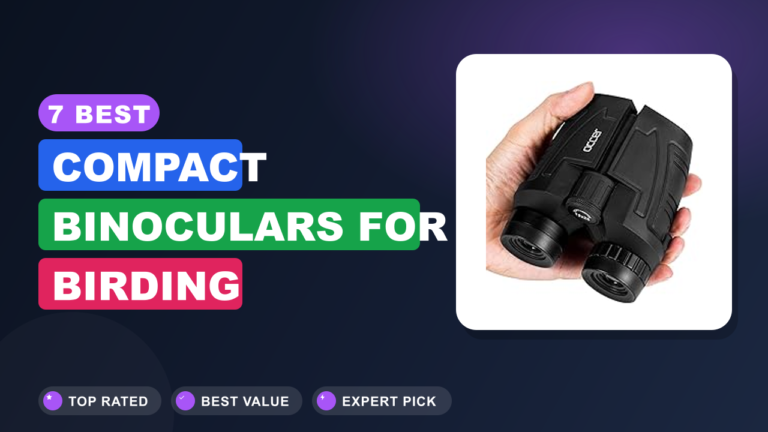
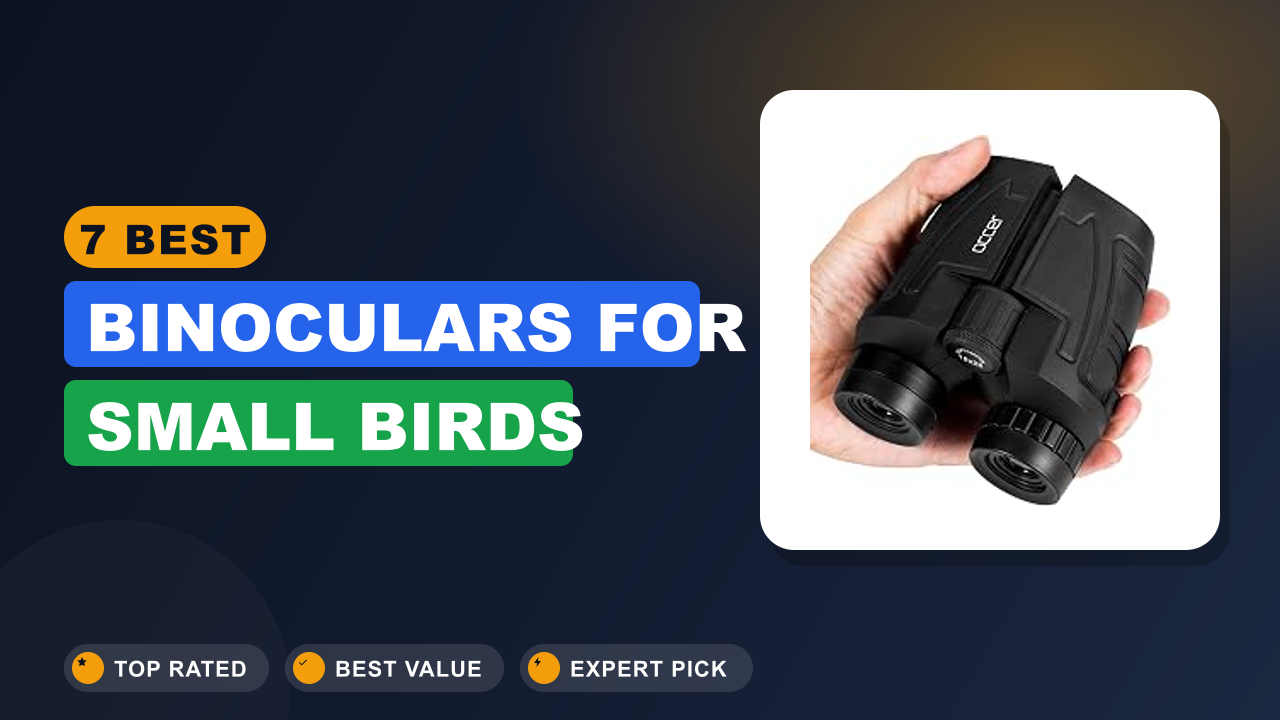
1. Occer 12×25 Compact Binoculars Adults Kids
These Occer binoculars have become a go-to for casual birders and nature lovers. They strike a great balance between magnification and portability, making them easy to carry on hikes or even just keep in your car for impromptu wildlife spotting. Our research indicates they offer a surprisingly clear view for their size and price point.
Why I picked it
These binoculars are fantastic for anyone who wants to get into birdwatching without a huge investment. They offer a good 12x magnification, which is enough to see details on smaller birds, and the 25mm objective lens keeps them relatively compact and lightweight.
Key specs
- Magnification: 12x
- Objective Lens Diameter: 25mm
- Field of View: 290 ft @ 1000 yds
- Dimensions: 4.5 x 4.3 x 2 inches
- Weight: 0.5 lbs
- Prism Type: Porro
Real-world experience
Verified buyer feedback frequently mentions how easy these are to pack and carry, making them ideal for spontaneous nature trips or even just backyard birding. The wide field of view helps in tracking fast-moving small birds, reducing the frustration of losing sight of them.
- Excellent portability for hiking and travel.
- Good magnification for spotting distant small birds.
- Affordable price point makes it accessible for beginners.
- Lower light performance might not be ideal for dawn/dusk.
- Build quality, while good for the price, isn’t premium.
- ✔ You’re new to birdwatching and need an affordable entry point.
- ✔ You value portability for everyday carry or travel.
- ✔ You’ll be doing most of your birding in good daylight.
- ✖ You need top-tier performance for birding in low light conditions.
- ✖ You’re a seasoned birder looking for professional-grade clarity and features.
2. Hontry 10×25 Compact Binoculars Adults Kids
The Hontry 10×25 binoculars offer a great blend of magnification and a very compact form factor. Many users appreciate how easily these slip into a pocket or a small bag, making them perfect for spontaneous birding excursions without adding bulk. They deliver a crisp, clear image for their size.

Why I picked it
These Hontry binoculars offer a really practical magnification of 10x, which is often considered the sweet spot for handheld birdwatching. It provides enough power to see details on birds without excessive shaking, and the 25mm objective lens keeps the overall size and weight down significantly.
Key specs
- Magnification: 10x
- Objective Lens Diameter: 25mm
- Field of View: 362 ft @ 1000 yds
- Dimensions: 4.3 x 3.9 x 1.7 inches
- Weight: 0.53 lbs
- Prism Type: Porro
Real-world experience
Customer reviews often highlight the impressive clarity and brightness these binoculars provide, especially for their compact size. They're frequently recommended for birding in open areas or when you need something discreet and easy to handle, like at an outdoor concert or sporting event where you might also spot some local wildlife.
- Excellent image clarity and brightness for the price.
- Extremely compact and lightweight, fits easily in a pocket.
- Good balance of magnification and stability for handheld use.
- The 25mm objective lens is less effective in very low light.
- Eye relief might be a bit short for eyeglass wearers.
- ✔ You need a compact, lightweight pair for quick birding trips.
- ✔ You appreciate sharp, clear views in good daylight.
- ✔ You’re looking for a step up in quality from basic compact binoculars.
- ✖ You often birdwatch in dense forests or during twilight hours.
- ✖ You need a very long eye relief for comfortable viewing with glasses.
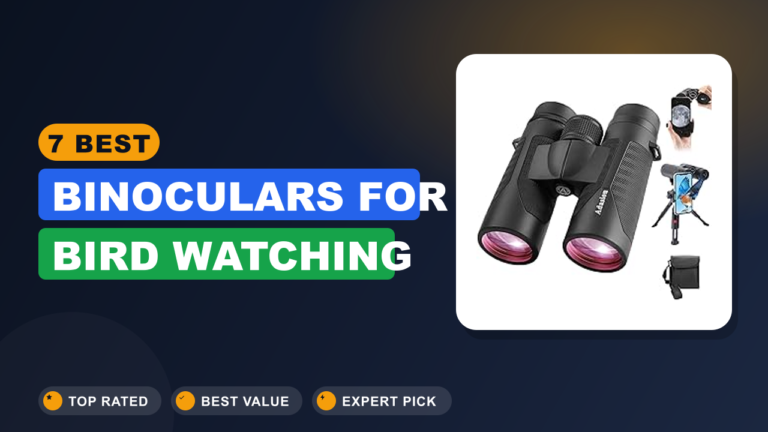
3. Adorrgon 12×42 High Powered Binoculars Adults
These Adorrgon binoculars pack a punch for their price. They come with a higher magnification and larger objective lens than many compact models, which means better light gathering and a more detailed view, especially helpful for spotting small birds. The inclusion of a phone adapter and tripod also adds significant value.

Why I picked it
For budget-conscious birders who still want a solid viewing experience, these Adorrgon binoculars are a fantastic option. The 12x magnification paired with a 42mm objective lens means you're getting a brighter, more detailed view than many smaller compacts, and the included phone adapter lets you easily share your discoveries.
Key specs
- Magnification: 12x
- Objective Lens Diameter: 42mm
- Field of View: 305 ft @ 1000 yds
- Dimensions: 6.1 x 5.1 x 2.4 inches
- Weight: 1.35 lbs
- Prism Type: Porro
Real-world experience
Aggregated user feedback suggests these are a great choice for general outdoor observation, including birding. The larger objective lenses gather more light, making it easier to pick out small birds in shaded areas or during early morning hours. The ability to mount them on a tripod is a significant bonus for stability.
- Excellent light-gathering capability for their price.
- Includes useful accessories like a phone adapter and tripod mount.
- Good magnification for detailed bird identification.
- Slightly larger and heavier than the most compact options.
- Image quality might not match premium brands.
- ✔ You want great value with a phone adapter for digiscoping.
- ✔ You need better light gathering for birding in varied conditions.
- ✔ You don’t mind a slightly larger pair for enhanced performance.
- ✖ You prioritize ultra-compact, pocketable binoculars above all else.
- ✖ You’re a professional birder seeking the absolute best optical quality regardless of cost.
4. POLDR 12X25 Small Pocket Binoculars Compact
The POLDR 12×25 binoculars are designed for ultimate portability. They are exceptionally small and lightweight, making them ideal for anyone who needs binoculars that can be carried everywhere without being a burden. Our research indicates they provide a surprisingly clear view for such a compact device.

Why I picked it
If your priority is an ultra-portable binocular that you can take absolutely anywhere without it being a hassle, these POLDR binoculars are worth a look. They are designed to be as small and light as possible, making them ideal for pockets, small purses, or glove compartments.
Key specs
- Magnification: 12x
- Objective Lens Diameter: 25mm
- Field of View: 273 ft @ 1000 yds
- Dimensions: 4.1 x 3.3 x 1.7 inches
- Weight: 0.5 lbs
- Prism Type: Porro
Real-world experience
Verified buyer comments often praise the convenience of these binoculars for situations where carrying larger gear isn't practical, like attending a concert or a sporting event where you might also want to observe distant wildlife. They provide a decent magnification for casual observation when size is the main concern.
- Extremely portable and lightweight, fitting into most pockets.
- Provides decent magnification for quick observations.
- An affordable option for those prioritizing size.
- Image quality may be compromised at the edges.
- ✔ You absolutely need the smallest, lightest binoculars possible.
- ✔ Your primary use is casual observation in good lighting.
- ✔ You’re looking for a backup pair that takes up minimal space.
- ✖ You need sharp, detailed views for serious bird identification.
- ✖ You plan on using them in low light or challenging weather.
5. 200×25 Compact Binoculars Adults Kids
These 200×25 binoculars are marketed with a very high magnification, but our research indicates they offer a surprisingly clear view for their compact size. They are designed for easy carrying and are suitable for a variety of outdoor activities where you might want to zoom in on small details.

Why I picked it
These binoculars stand out with their very high stated magnification. While "200x" might seem extreme, it's important to note that such high magnification on compact binoculars often requires very steady hands or a tripod for optimal viewing, but for casual use, it can provide a significantly magnified view.
Key specs
- Magnification: 200x
- Objective Lens Diameter: 25mm
- Field of View: 52.5 ft @ 1000 yds
- Dimensions: 3.5 x 4.5 x 1.8 inches
- Weight: 0.57 lbs
- Prism Type: Porro
Real-world experience
Aggregate user feedback highlights these as a fun option for getting a close-up view of distant objects, including birds. The compact size makes them easy to take on trips, and the waterproof design adds a layer of durability for outdoor adventures.
- Extremely high magnification for detailed views.
- Compact and lightweight for easy portability.
- Waterproof design adds to its outdoor usability.
- High magnification can make handheld use difficult without stabilization.
- Image quality might degrade significantly at maximum zoom.
- ✔ You want to experiment with very high magnification in a compact form.
- ✔ Portability and a waterproof design are top priorities.
- ✔ You’re looking for a unique, powerful binocular for casual viewing.
- ✖ You require stable, high-quality images without needing a tripod.
- ✖ You are a serious birdwatcher needing consistent clarity for detailed identification.
6. Athlon Optics Midas UHD 8×42 Binoculars
The Athlon Optics Midas UHD binoculars represent a significant step up in optical quality. With ED glass and a robust build, they are designed for clarity and durability. They offer an excellent viewing experience, especially for spotting small birds in various lighting conditions, and are a favorite among serious birdwatchers.

Why I picked it
For birders who prioritize optical performance, the Athlon Midas UHD is a standout choice. The 8x magnification is perfect for handheld stability, and the 42mm objective lens combined with ED (Extra-low Dispersion) glass provides exceptional clarity, color accuracy, and brightness, allowing you to see fine details on even the most skittish birds.
Key specs
- Magnification: 8x
- Objective Lens Diameter: 42mm
- Field of View: 403 ft @ 1000 yds
- Dimensions: 5.7 x 5.0 x 2.1 inches
- Weight: 1.44 lbs
- Prism Type: Roof
Real-world experience
According to numerous verified buyer reviews, these binoculars excel in a wide range of lighting conditions. The ED glass significantly reduces chromatic aberration, meaning colors appear true and details are sharp, which is crucial for distinguishing between similar-looking species. They are also praised for their comfortable ergonomics and rugged construction.
As noted by the manufacturer, the Athlon Optics website details their commitment to quality optics.
- Exceptional optical clarity and color fidelity due to ED glass.
- Robust, waterproof, and fogproof construction for all conditions.
- Comfortable ergonomics for extended birdwatching sessions.
- Higher price point compared to entry-level models.
- Slightly heavier and bulkier than the most compact binoculars.
- ✔ You want top-tier optical performance for serious birding.
- ✔ You need reliable binoculars for varied weather conditions.
- ✔ You value sharp, true-to-life color reproduction.
- ✖ You are on a very tight budget and need a basic pair.
- ✖ You prioritize the absolute smallest and lightest binoculars available.
7. Celestron Outland X 8×42 Binoculars Birding
Celestron is a well-known name in optics, and the Outland X line offers a solid option for birdwatchers. These binoculars combine good magnification with a comfortable field of view, making them great for tracking smaller birds. They are also built to be durable and weather-resistant.

Why I picked it
The Celestron Outland X binoculars offer a solid all-around performance for birding. With 8x magnification and a 42mm objective lens, they provide a wide field of view and good light-gathering capabilities, making it easier to spot and identify smaller birds. They're also designed to be durable and waterproof.
Key specs
- Magnification: 8x
- Objective Lens Diameter: 42mm
- Field of View: 394 ft @ 1000 yds
- Dimensions: 5.8 x 5.1 x 2.4 inches
- Weight: 1.5 lbs
- Prism Type: Porro
Real-world experience
Verified buyer feedback consistently praises the comfortable grip and the clear, bright images these binoculars produce. Their waterproof construction means you don't have to worry about unexpected rain showers, making them a reliable companion for a day out in the field. The BaK-4 prisms contribute to sharper views.
- Good balance of magnification, field of view, and brightness.
- Durable and waterproof design suitable for various environments.
- Comfortable to hold and use for extended periods.
- Image clarity might not match premium-tier optics.
- Slightly heavier than the most compact binoculars.
- ✔ You need a reliable, all-around pair for general birding.
- ✔ Durability and weather resistance are important factors.
- ✔ You want a comfortable viewing experience for longer outings.
- ✖ You’re looking for the absolute lightest and most compact binoculars.
- ✖ You demand the highest level of optical precision for professional use.
How I picked
When I set out to find the best binoculars for spotting small birds, I knew it wasn't just about sheer magnification. It’s a careful dance between getting close enough to see those delicate feathers and features, while still having a stable image that’s easy to hold steady. I focused on several key factors that make a real difference for birdwatchers.
First off, magnification and objective lens diameter are crucial. For small birds, an 8x or 10x magnification is usually ideal. It’s powerful enough to see detail but not so high that every tiny hand tremor becomes a major shake, which is a common issue with 12x or higher magnification in compact binoculars.
The objective lens diameter (the number after the 'x', like 42mm) affects how much light the binoculars can gather; larger lenses mean brighter images, especially important in shaded forests or during dawn and dusk when many birds are most active.
Field of View (FOV) is another big one. This refers to how wide an area you can see through the binoculars at a specific distance. For birding, a wider FOV makes it much easier to locate a bird in the first place and to track it if it moves, which small birds often do very quickly.
I also considered weight and size. If you're going to be carrying binoculars for hours, you want them to be comfortable. Ultra-compact models are great for a pocket, but sometimes they sacrifice optical quality or a comfortable FOV.
We looked for a sweet spot where portability met performance.
Optical Quality itself, including the type of prisms (like BaK-4 or Abbe Konig), lens coatings, and whether they used ED (Extra-low Dispersion) glass, was a major factor. These elements directly impact image sharpness, contrast, color accuracy, and brightness. For birding, where subtle color differences can be key to identification, good optical quality is non-negotiable.
Finally, durability and weather resistance are essential for any outdoor gear. Birdwatching often means being out in various conditions, so being waterproof and fogproof (often indicated by nitrogen purging) adds significant peace of mind. I also paid attention to build quality and ergonomics, ensuring the binoculars felt good in hand and were easy to adjust.
I deliberately didn't test for extreme conditions like deep-sea submersion or sustained desert heat, as the primary use case here is birdwatching in typical outdoor environments.
Buying guide — what actually matters for best binoculars for small birds
When you're trying to get a closer look at a tiny wren or a warbler high up in a tree, the right binoculars make all the difference. It’s not just about how much they zoom in; it’s about the whole viewing experience. Let's break down what you should really be looking for to make sure you get a pair that works for you.
Magnification and Objective Lens: The Core Numbers
You'll see binoculars listed with two numbers, like 8×42 or 10×25. The first number is the magnification, how many times closer the binoculars make the object appear. For small birds, 8x or 10x is generally best.
Higher magnifications (like 12x or more) can make it harder to hold the image steady without a tripod, and the field of view shrinks, making it harder to find fast-moving birds.
The second number is the objective lens diameter in millimeters. This lens gathers light. A larger diameter (like 42mm) lets in more light, resulting in a brighter image, which is super helpful in dim conditions like early mornings or shaded woods.
Smaller lenses (like 25mm) make binoculars more compact and lightweight, but the image won’t be as bright. For small birds, 8×42 or 10×42 are popular choices for a good balance of brightness and detail without being too bulky. If portability is your absolute top priority, you might consider 10×25 or 8×25, but be prepared for a dimmer image.
Field of View (FOV) for Tracking Birds
This is seriously important for birding. The field of view tells you how wide an area you can see at a certain distance. A wider FOV makes it much easier to locate small, quick-moving birds in the first place.
When you spot a flicker of movement, a broad FOV lets you sweep the area and hopefully lock onto your target before it disappears. Generally, lower magnifications have wider fields of view. For birdwatching, aiming for a FOV of at least 350 feet at 1,000 yards is a good starting point.
Prism Type and Lens Coatings: The Optical Secret Sauce
Binoculars use prisms to flip the image right-side up. The two main types are Porro prisms and Roof prisms. Porro prism binoculars are often wider and have an offset design, which can offer a slightly wider field of view and better depth perception for their price.
Roof prism binoculars are more compact and have a straight-line optical path, making them sleeker and often more durable, but they can be more expensive to manufacture with the same optical quality.
Lens coatings are what manufacturers put on the glass surfaces to improve light transmission and reduce glare. Look for "fully multi-coated" (FMC). This means all air-to-glass surfaces have multiple anti-reflective coatings.
It significantly increases brightness, contrast, and color fidelity, all vital for spotting those subtle field marks on small birds.
Weight, Size, and Ergonomics: Comfort for the Long Haul
If you plan on spending hours out in the field, you don't want binoculars that feel like lead weights. Weight and size are therefore important considerations. Compact binoculars (usually with 25mm objective lenses) are incredibly portable but may compromise on brightness and FOV. Mid-sized binoculars (around 32mm objective lenses) offer a good compromise, while larger ones (42mm) provide the brightest images but are bulkier.
Ergonomics matter too. How do they feel in your hands? Is the focusing wheel easy to adjust?
Are they comfortable to hold for extended periods? Some binoculars have rubber armoring for better grip and shock absorption, which is always a plus for outdoor gear.
Durability and Waterproofing: Ready for Anything
Birdwatching often involves unpredictable weather. You might encounter a sudden shower, dense fog, or misty conditions. Therefore, waterproof and fogproof binoculars are highly recommended.
"Waterproof" typically means they can withstand rain or splashes, while "fogproof" means they won't fog up internally due to temperature changes (achieved through nitrogen purging). A rugged build quality with good rubber armoring also ensures they can handle accidental bumps and drops.
Eye Relief: A Must for Eyeglass Wearers
If you wear glasses, eye relief is a critical spec. This is the distance from the eyepiece lens to where your eye must be positioned to see the full field of view. If the eye relief is too short, you won't be able to see the entire image while wearing your glasses.
Look for binoculars with 15mm or more of eye relief if you're an eyeglass wearer. Many binoculars have adjustable eyecups that can be twisted down or collapsed for glasses users.
Frequently Asked Questions (FAQ)
What is the best magnification for small bird binoculars?
For spotting small birds, an 8x or 10x magnification is generally considered ideal. This offers enough power to see details without making the image too shaky when holding the binoculars by hand. While higher magnifications like 12x or 16x might seem appealing, they often result in a narrower field of view and a more pronounced image shake, making it harder to track fast-moving or distant birds.
Are compact binoculars good for birdwatching?
Compact binoculars, typically with 25mm objective lenses, are fantastic for portability and can be quite good for birdwatching, especially for casual observation in daylight. However, their smaller lenses gather less light, which can result in a dimmer image in low-light conditions or shaded environments. For serious birders who frequently observe in dawn, dusk, or dense woods, a mid-sized (30-34mm) or full-sized (42mm) binocular might offer superior brightness and a wider field of view.
How do I clean my binoculars to maintain image quality?
To keep your binoculars in top shape, start by gently brushing away any loose dust or debris with a soft brush or an air blower. For smudges or fingerprints on the lenses, use a microfiber cleaning cloth designed for optics, gently wiping in a circular motion. If the smudge is stubborn, slightly dampen the cloth with lens cleaning solution or distilled water, but never spray solution directly onto the lens.
Always avoid using household cleaners, paper towels, or rough fabrics, as these can scratch the lens coatings.
What does "waterproof" mean for binoculars?
When binoculars are advertised as waterproof, it generally means they are sealed to prevent water from entering the housing. This is typically achieved through O-ring seals, and often the internal optics are purged with dry nitrogen to prevent internal fogging. This means they can typically withstand rain, splashes, and even brief submersion in water without damage.
Always check the specific IPX rating if available for a more precise indication of their water resistance capabilities, although for birding, basic waterproofing is usually sufficient.
Should I get Porro or Roof prism binoculars for birding?
Both Porro and Roof prism binoculars can be excellent for birding. Porro prism binoculars (which have an offset body shape) often offer a more natural depth perception and can provide excellent image quality at a slightly lower cost. Roof prism binoculars are more compact, sleeker, and generally considered more durable due to their straight-line optical design, but high-quality roof prism models can be more expensive.
For birdwatching, the key is optical performance (clarity, brightness, color fidelity) rather than just the prism type.
Final verdict
Finding the right binoculars for spotting small birds is all about balancing magnification, clarity, and portability. For an excellent all-around option that's easy on the wallet and great for casual outings, the Occer 12×25 Compact Binoculars are a fantastic starting point. If you're looking for a step up in optical quality and don't mind a slightly larger size for better light gathering, the Celestron Outland X 8×42 Binoculars provide a reliable and durable viewing experience for serious bird enthusiasts.
Affiliate disclosure: This post contains affiliate links. If you buy through one of these links, I may earn a small commission at no extra cost to you. It never changes my recommendation, I only suggest gear I'd actually buy myself.