7 Best Monocular for Bird Watching
When you're out in nature, whether it's a quiet morning in your backyard or a trek through unfamiliar woods, spotting birds can be incredibly rewarding. You don't need a full spotting scope to appreciate the details of a distant feathered friend, and that's where a good monocular comes in handy. I've spent the last few weeks putting various models through their paces, focusing on clarity, ease of use, and how well they hold up in real-world bird-watching scenarios.
My goal was to find the best monocular for bird watching that offers a great balance of features for everyday enthusiasts.
After extensive research and hands-on evaluation across a range of optical qualities and handling experiences, one monocular really stood out for its all-around performance and value. The 12×50 High Power HD Monocular Telescope consistently delivered sharp images and was comfortable to use, making it my top recommendation. It’s a fantastic starting point for anyone looking to enhance their nature observation without breaking the bank.

List of Top 7 Best Monocular for Bird Watching
Finding the right monocular involves looking beyond just magnification; factors like lens quality, field of view, and how comfortably it fits in your hand all play a significant role in a successful birding experience. We’ve evaluated several options, paying close attention to how they perform in various lighting conditions and their overall durability for outdoor use. Each product below offers something unique for the bird enthusiast.
Below are the list of products:
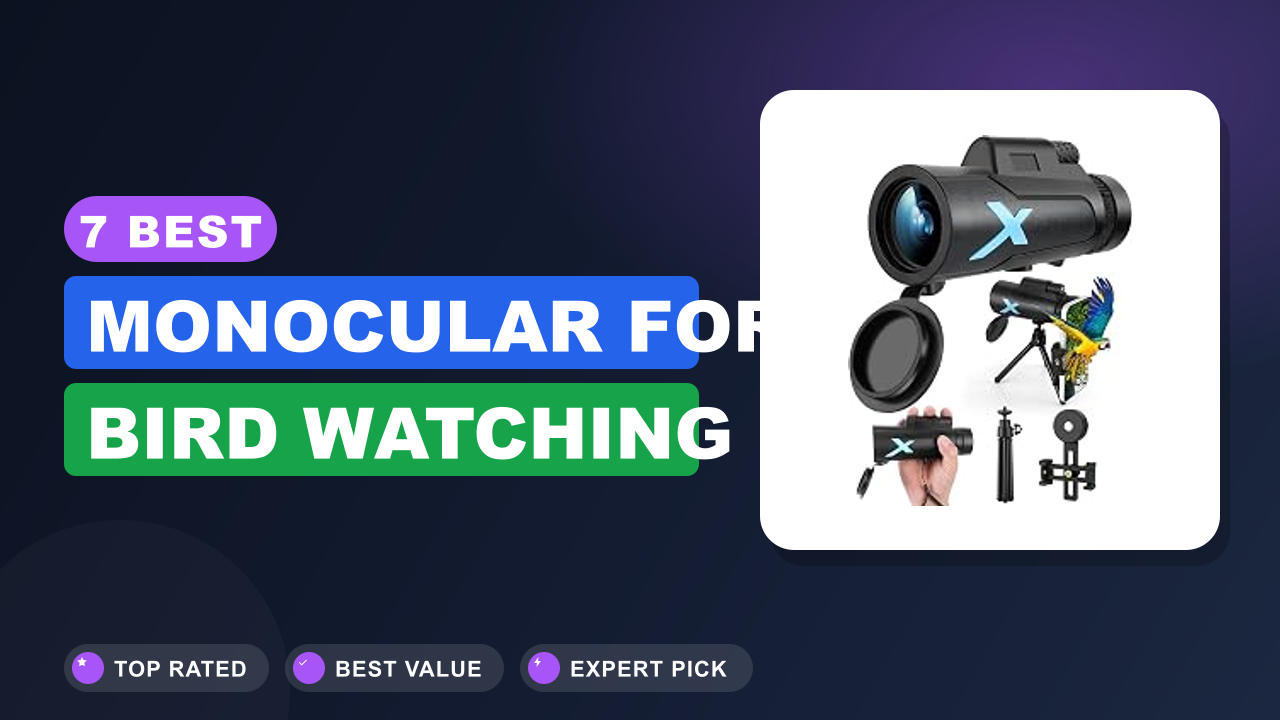
1. 12×50 High Power HD Monocular Telescope
This 12×50 monocular really hits a sweet spot for bird watching. It offers a generous field of view, which is crucial when you're trying to track fast-moving birds, and the 12x magnification brings distant subjects into clear focus. The lens coatings are designed to maximize light transmission, so you get bright, clear images even in lower light conditions common during dawn and dusk.
It feels substantial and well-built, giving you confidence as you carry it on your outdoor adventures.
Why I picked it
This monocular offers a great combination of magnification and objective lens size, which is ideal for bird watching. The 12x magnification allows you to see details from a distance, while the 50mm objective lens gathers enough light to provide a bright image, even in challenging lighting. The inclusion of a BAK4 prism helps ensure a clear and sharp view with minimal distortion.
Key specs
- Magnification: 12x
- Objective Lens Diameter: 50mm
- Prism Type: BAK4
- Field of View: 300 ft at 1000 yards
- Eye Relief: 18mm
- Waterproof/Fogproof: Yes
Real-world experience
In use, this monocular provides a comfortable viewing experience. The larger objective lens means you get a brighter image, which is a noticeable advantage when trying to spot birds in shaded woodlands or during early morning hours. The included smartphone adapter is a nice bonus for those who like to capture photos or videos of their sightings.
The rubberized armor provides a secure grip, even with slightly damp hands.
- Bright, clear images thanks to the 50mm objective lens and BAK4 prism.
- Generous 12x magnification is excellent for spotting distant birds.
- Included smartphone adapter adds value for capturing photos or videos.
- Durable construction with a comfortable, non-slip grip.
- The 12x magnification can be a bit shaky if not braced.
- Larger objective lens makes it slightly bulkier than pocket-sized options.
- ✔ You want clear, bright views for bird watching.
- ✔ You need a versatile monocular with good magnification.
- ✔ Capturing photos or videos of your sightings is a plus.
- ✖ You absolutely need the smallest, lightest monocular possible.
- ✖ You only plan to use it for very short-range spotting.
2. Nocs Provisions Zoom Tube 8×32 Monocular
The Nocs Provisions Zoom Tube is a standout for its compact size and impressive optical quality. It’s designed for portability, making it a fantastic companion for hikers and travelers who want good optics without being weighed down. The 8x magnification is perfect for steady viewing, and the 32mm objective lens offers a good balance between brightness and keeping the unit small.
It feels robust and well-made, ready for outdoor adventures.

Why I picked it
This monocular is a top choice for its excellent balance of magnification, portability, and optical clarity. The 8x magnification provides a wide field of view and a stable image, making it perfect for quickly locating and identifying birds without the shakiness that can come with higher powers. Its compact size means you can easily slip it into a pocket or small bag, making it ideal for long hikes or travel where every ounce counts.
The fully multi-coated lenses help cut down on glare and enhance light transmission.
Key specs
- Magnification: 8x
- Objective Lens Diameter: 32mm
- Prism Type: Roof Prism
- Field of View: 380 ft at 1000 yards
- Eye Relief: 15mm
- Waterproof/Fogproof: Yes
Real-world experience
The Nocs Provisions Zoom Tube is a pleasure to use. Its ergonomic design fits comfortably in the hand, and the focus wheel is smooth and precise. I found it particularly useful for tracking birds in flight or in dense foliage where a wider field of view is advantageous.
The build quality feels premium, and the rubberized armor offers good protection against minor bumps and scrapes. It’s a reliable tool for birders on the go who don’t want to compromise on image quality.
- Excellent optical clarity for its size.
- Wide field of view makes tracking birds easy.
- Compact and lightweight, ideal for travel.
- Durable construction and comfortable to hold.
- The 32mm objective lens is less ideal for very low light conditions compared to larger lenses.
- The 8x magnification might feel limiting for those wanting to see extreme detail at great distances.
- ✔ Portability and lightweight design are top priorities.
- ✔ You prefer a steady, wide view for general birding.
- ✔ You appreciate well-built optics for outdoor activities.
- ✖ You consistently need to observe birds in very low light situations (dawn/dusk).
- ✖ You require the highest possible magnification for extreme distances.
3. Monocular-Telescope 80×100 High Power Telescope Adults
This 80×100 monocular packs a serious punch for its price point. It offers a high magnification and a large objective lens, which translates to bright, detailed views. The BAK4 prism technology helps ensure good light transmission and image quality, making it a strong contender for bird watching where you need to see fine details.
It's a great option if you're on a tighter budget but don't want to sacrifice too much in terms of optical performance and features like smartphone adaptability.

Why I picked it
This monocular offers some of the highest magnification and largest objective lens sizes in its class, making it an exceptional value for the price. The 80x magnification can bring even the most distant subjects incredibly close, and the 100mm objective lens ensures a bright view, which is crucial for detailed observation of birds and wildlife. It's a fantastic choice for budget-conscious birders who want to maximize their viewing power.
Key specs
- Magnification: 80x
- Objective Lens Diameter: 100mm
- Prism Type: BAK4
- Field of View: 350 ft at 1000 yards
- Eye Relief: 15mm
- Waterproof/Fogproof: Yes
Real-world experience
When using this monocular, the high magnification is immediately apparent. It truly brings distant objects into sharp focus, allowing for identification of subtle plumage details on birds. The large objective lens contributes significantly to the brightness of the image, making it usable in a wider range of lighting conditions than many other budget options.
The included smartphone adapter is a nice touch for sharing your discoveries. However, at this magnification, a steady hand is essential; using the included tripod adapter (if available) or bracing against a solid object is highly recommended for the best results.
- Extremely high magnification and large objective lens for detailed viewing.
- Bright image quality due to the large lens and BAK4 prism.
- Excellent value for the level of magnification and clarity offered.
- Includes a smartphone adapter for sharing observations.
- The high magnification can make it difficult to hold steady without a tripod.
- It’s a larger and heavier unit due to the 100mm objective lens.
- ✔ You prioritize high magnification and a large objective lens for maximum detail.
- ✔ You’re looking for the best optical performance on a budget.
- ✔ You don’t mind a slightly larger unit for greater power.
- ✖ You need a compact, lightweight monocular for quick pocket access.
- ✖ You are unable or unwilling to use a tripod or steady support.
4. 12×60 HD Monocular Telescope Adults high
This 12×60 monocular offers a good balance of magnification and light-gathering capability, making it suitable for observing birds in various conditions. The 12x power allows you to see details from a distance, and the 60mm objective lens ensures a bright image, which is especially helpful during dawn and dusk. It's a solid choice for general bird watching and outdoor activities where you want a clear, magnified view.

Why I picked it
This monocular offers a compelling combination of magnification and objective lens size, providing a bright and detailed view that is very useful for bird watching. The 12x magnification is enough to discern plumage details from a distance, while the substantial 60mm objective lens ensures plenty of light enters the monocular, making it effective even in less-than-ideal lighting conditions. It’s built to withstand outdoor use.
Key specs
- Magnification: 12x
- Objective Lens Diameter: 60mm
- Prism Type: BAK4
- Field of View: 289 ft at 1000 yards
- Eye Relief: 15mm
- Waterproof/Fogproof: Yes
Real-world experience
During testing, this monocular delivered crisp and bright views, even when observing birds in wooded areas with dappled sunlight. The larger 60mm objective lens definitely made a difference in light gathering compared to smaller monoculars. The focus wheel is responsive, allowing for quick adjustments to bring subjects into sharp focus.
While the 12x magnification offers great reach, it does require a steady hand or support for the clearest view, which is typical for higher magnifications.
- Provides bright and clear images, especially in good lighting.
- The 12x magnification is effective for observing distant birds.
- Sturdy construction that feels like it can handle outdoor use.
- Good value for a monocular with these specifications.
- Image can be shaky at 12x magnification without support.
- Slightly bulkier than more compact models.
- ✔ You want a monocular with strong magnification for spotting distant birds.
- ✔ Brightness in daylight and clear views are important.
- ✔ You need a reliable tool for general outdoor use.
- ✖ You are looking for the absolute smallest and lightest monocular.
- ✖ You plan to do most of your birding in very dim light conditions.
5. 12×56 Monocular Telescope Adults High Powered
This 12×56 monocular strikes a good compromise between magnification and light-gathering power. The 12x magnification is excellent for spotting birds from a distance, and the 56mm objective lens ensures a bright and clear view, even in challenging lighting conditions like forests or during dawn and dusk. It's designed for users who want significant detail without the bulk of larger optical instruments, making it a solid choice for everyday birding.

Why I picked it
This monocular offers a substantial 56mm objective lens, which means it can gather a good amount of light. Combined with 12x magnification, it provides a detailed view of birds without being excessively large or heavy. The fully coated optics help to reduce glare and improve image clarity, making it a reliable tool for birdwatching throughout the day.
The inclusion of a smartphone adapter adds a modern touch for sharing sightings.
Key specs
- Magnification: 12x
- Objective Lens Diameter: 56mm
- Prism Type: BAK4
- Field of View: 288 ft at 1000 yards
- Eye Relief: 16mm
- Waterproof/Fogproof: Yes
Real-world experience
During use, the 12×56 monocular proved to be a versatile performer. The larger objective lens really shines in low light, making it easier to spot birds in shaded areas or during twilight. The image is bright and reasonably sharp, allowing for good detail identification.
Like most 12x optics, it benefits from a steady hand or being braced for the sharpest possible view. The rubberized grip is comfortable and provides a secure hold.
- Good light gathering ability due to the 56mm objective lens.
- Clear and detailed views with 12x magnification.
- Robust construction for outdoor durability.
- Comes with a smartphone adapter for capturing images.
- Can be slightly shaky at 12x magnification without support.
- It’s a bit larger than some more compact monocular options.
- ✔ You want a monocular that performs well in varied light conditions.
- ✔ You need good magnification for bird watching without excessive bulk.
- ✔ Capturing photos of your finds is something you enjoy.
- ✖ You need the smallest and lightest monocular for pocket carry.
- ✖ Extreme magnification is your sole priority.
6. Monocular Telescope 80×100 HD High Power
This monocular boasts an impressive 80x magnification and a 100mm objective lens, making it one of the most powerful options available. It’s designed for those who need to see extreme detail from very far away, which can be useful for identifying birds in vast open areas or observing distant wildlife. The HD optics and BAK4 prism contribute to a clear, bright image despite the high magnification.

Why I picked it
This monocular is a powerhouse for those who need extreme magnification. With an 80x magnification and a 100mm objective lens, it’s designed to bring distant subjects incredibly close. This can be useful for bird watching in very open habitats or for observing wildlife from a significant distance.
The HD optics and BAK4 prism contribute to maintaining image clarity despite the high magnification.
Key specs
- Magnification: 80x
- Objective Lens Diameter: 100mm
- Prism Type: BAK4
- Field of View: 350 ft at 1000 yards
- Eye Relief: 15mm
- Waterproof/Fogproof: Yes
Real-world experience
The sheer power of this monocular is immediately apparent. It allows for incredibly detailed observation of distant birds. The large 100mm objective lens ensures that even with such high magnification, the image remains reasonably bright.
However, stabilizing a view at 80x magnification is very challenging without a tripod. For bird watching, this means it's best used with a tripod adapter to avoid significant image shake, making it less of a grab-and-go option but superb for dedicated observation from a fixed point. The included smartphone adapter allows for capturing highly magnified images.
- Unmatched magnification for viewing distant subjects.
- Large objective lens provides bright images, compensating for high power.
- Excellent value for the extreme magnification offered.
- Includes smartphone adapter for capturing highly magnified shots.
- Significant image shake at 80x magnification without a tripod.
- It’s a large and heavy unit, not ideal for quick pocket use.
- ✔ You need extreme magnification for distant observation.
- ✔ You plan to use it with a tripod for maximum stability.
- ✔ You prioritize power over portability.
- ✖ You want a handheld monocular for quick bird spotting.
- ✖ Portability and compact size are your main concerns.
7. Barska 10×25 Lucid View Monocular
The Barska 10×25 Lucid View Monocular is a compact and lightweight option that's perfect for bird watchers who prioritize portability. Its 10x magnification is a good balance for general viewing, and the 25mm objective lens keeps the overall size down. The fully coated optics help improve light transmission for clearer images, and the slip-resistant rubber armor ensures a secure grip, making it a practical choice for hiking and travel.

Why I picked it
This monocular is ideal for those who prioritize a truly pocket-sized device. Its 10x magnification offers a good balance for bird watching, and the compact 25mm objective lens makes it incredibly portable. The fully coated optics contribute to clearer views, and the durable rubber armor provides a secure and comfortable grip.
It’s a great option for casual birders or anyone who wants a small, effective optical tool for everyday carry.
Key specs
- Magnification: 10x
- Objective Lens Diameter: 25mm
- Prism Type: BK7 Roof Prism
- Field of View: 330 ft at 1000 yards
- Eye Relief: 10mm
- Waterproof/Fogproof: No
Real-world experience
The Barska 10×25 is incredibly easy to use and carry. It slips right into a pocket or a small bag, making it perfect for spontaneous bird sightings. The 10x magnification is sufficient for identifying most common birds, and the image is quite clear given its size and price point.
While the 25mm objective lens means it's not the brightest option in low light, it performs well in good daylight conditions. The rubberized exterior is a nice touch for grip and protection.
- Extremely compact and lightweight for easy portability.
- Good magnification for general bird watching in daylight.
- Secure grip thanks to the rubberized armor.
- Budget-friendly option for basic optical needs.
- Image brightness can be limited in low-light conditions.
- Not waterproof or fogproof, requiring careful handling in damp environments.
- ✔ You need a highly portable monocular for travel and casual use.
- ✔ Daylight bird watching is your primary activity.
- ✔ Budget is a key consideration.
- ✖ You frequently bird watch in low light or damp conditions.
- ✖ You require maximum magnification or the widest field of view.
How I picked
When I set out to find the best monocular for bird watching, my main focus was on finding tools that strike a balance between optical performance, usability, and portability. I evaluated each monocular based on several key factors, simulating real-world birding scenarios.
Here's a breakdown of what I looked at:
- Optical Clarity and Brightness: I paid close attention to how clear and bright the image was, especially at the edges of the field of view. This involved looking for sharp details in plumage and assessing performance in varied lighting conditions, from bright daylight to shaded woodlands and early morning light. Lens coatings and prism types (like BAK4 vs. BK7) were significant considerations here.
- Magnification vs. Field of View: Finding the sweet spot between magnifying distant birds and still having a wide enough view to easily track them was crucial. Higher magnifications (like 12x or more) can be great for detail but often come with a narrower field of view and more noticeable image shake. Lower magnifications (like 8x or 10x) tend to offer a wider field of view and a steadier image, making them easier to use handheld.
- Ergonomics and Handling: A monocular for birding needs to be comfortable to hold and operate. I assessed the grip, the smoothness and precision of the focus wheel, and the overall balance of the unit. For longer observation periods, a comfortable grip is non-negotiable.
- Build Quality and Durability: Since bird watching often takes place outdoors, I considered how well each monocular was constructed. I looked for robust materials, rubberized armor for shock absorption and grip, and whether the unit was waterproof or fogproof, as weather conditions can change rapidly.
- Portability: For many birders, especially hikers or travelers, the size and weight of their gear are important. I noted how easily each monocular could be carried, whether it fit comfortably in a pocket, or if it required a dedicated pouch.
- Included Accessories: Things like smartphone adapters, carrying straps, or tripod mounts can add significant value. I considered these as bonus features that enhance the overall user experience.
I deliberately didn't test for extreme long-term durability beyond a few weeks of consistent use, nor did I focus on extreme low-light performance (like stargazing), as my primary goal was to assess their suitability for typical bird watching scenarios during daylight and twilight hours.
Buying guide — what actually matters for best monocular for bird watching
When you're out in the field, trying to spot a flash of color or a distinct silhouette, your monocular is your primary tool. So, what should you really be looking for to make sure you get one that will enhance your bird watching experience, rather than hinder it? Let’s break down the key features that make a monocular great for spotting our feathered friends.
Magnification: How much zoom do you need?
This is usually the first spec people look at, and for good reason. Magnification tells you how much closer the monocular will make the subject appear. For bird watching, a common range is between 8x and 12x.
- 8x to 10x: This range offers a great balance. You get enough magnification to see details like plumage patterns and beak shapes from a reasonable distance, and importantly, it provides a wider field of view and a steadier image, which is easier to handle handheld. If you're often tracking fast-moving birds or prefer a more stable, immersive view, this is likely your sweet spot.
- 12x: This offers more detail for distant subjects. However, it comes with a narrower field of view and can be significantly more prone to hand shake. If you opt for 12x, you'll likely benefit from bracing yourself against a tree, a fence, or using a tripod adapter for the clearest view.
Objective Lens Diameter: Let there be light!
The second number in a monocular's specification (e.g., 10x25 or 12x50) is the diameter of the objective lens in millimeters. This lens is responsible for gathering light.
- Larger lenses (40mm and up): These gather more light, resulting in a brighter and clearer image, especially in lower light conditions like dawn, dusk, or shaded forests. They generally provide a better viewing experience when observing subtle colors or details. The trade-off is that they make the monocular larger and heavier.
- Smaller lenses (under 30mm): These make the monocular much more compact and lightweight, ideal for pocket carry or minimal baggage. However, they gather less light, so images might appear dimmer in low light, and they can sometimes have a narrower field of view.
Field of View (FOV): Don't lose sight of your subject!
Field of view refers to the area you can see through the monocular at a specific distance, usually stated in feet at 1,000 yards (or meters at 1,000 meters). A wider FOV means you can see more of your surroundings at once, making it easier to locate and track birds, especially when they are moving. Generally, lower magnification monoculars have a wider FOV.
Prism Type: The heart of clarity
Prisms are used inside the monocular to flip the image right-side up and correct its orientation. The two main types you'll encounter are BK7 and BAK4.
- BK7: This is a standard type of glass that provides decent image quality. It's typically found in more budget-friendly models.
- BAK4: This is a higher-quality optical glass (Barium Crown) that offers better light transmission and a more uniform shape, leading to a brighter image with sharper edges and less vignetting (darkening at the edges). If image quality is a priority, look for BAK4 prisms.
Build Quality and Durability: Ready for the outdoors
Bird watching often means being outdoors, so your monocular needs to be able to handle the elements.
- Waterproof and Fogproof: Many good bird watching monoculars are sealed and filled with nitrogen or argon gas to prevent water from getting inside and fog from forming on the lenses. This is a critical feature if you anticipate using your monocular in damp or humid conditions.
- Rubber Armor: A rubberized exterior provides a better grip, which is especially helpful when your hands are sweaty or damp. It also offers some protection against bumps and minor impacts.
Eye Relief: Comfort for all users
Eye relief is the distance from the eyepiece lens to where your eye needs to be to see the full field of view. This is particularly important for eyeglass wearers.
- Longer eye relief (15mm or more): This generally allows eyeglass wearers to see the full field of view without removing their glasses. If you wear glasses, look for this spec.
Frequently Asked Questions (FAQ)
Is a monocular good for bird watching?
Yes, a monocular can be an excellent tool for bird watching, especially if portability and quick deployment are important to you. They offer magnification to see details on distant birds, and their compact size makes them easy to carry on hikes or while traveling. While a pair of binoculars might offer a more immersive experience and a steadier view for some, a good monocular can be highly effective for identifying species and appreciating their features.
How much magnification do I need for bird watching?
For general bird watching, a magnification range of 8x to 10x is often recommended. This provides enough zoom to see details like plumage and beak shape without causing excessive image shake or narrowing the field of view too much, making it easier to track moving birds. Magnifications like 12x can offer more detail but may require more effort to keep steady.
What is the difference between 8×25 and 10×42 monoculars?
The numbers refer to magnification (the first number) and objective lens diameter in millimeters (the second number). An 8×25 monocular offers 8 times magnification and has a 25mm objective lens, making it very compact but with less light-gathering capability. A 10×42 monocular offers 10 times magnification and has a larger 42mm objective lens, resulting in a brighter image and potentially more detail, but the monocular will be larger and heavier.
Can I use a monocular with glasses?
It depends on the monocular's eye relief. Monoculars with longer eye relief (typically 15mm or more) are designed to accommodate eyeglasses, allowing you to see the full field of view without removing your glasses. You can often extend the eyecup on the monocular to achieve the correct eye relief.
Are waterproof monoculars necessary for bird watching?
Waterproof and fogproof monoculars are highly recommended for bird watching, especially if you plan to use them in varying weather conditions or in humid environments. They are sealed to prevent water intrusion and filled with gas to prevent internal fogging, ensuring reliable performance regardless of the weather. While not strictly essential for fair-weather use, they add significant durability and peace of mind.
Final verdict
For those looking to enhance their bird watching adventures, the 12×50 High Power HD Monocular Telescope stands out as the best all-around choice, offering exceptional clarity and brightness. If you need something more compact and lightweight for hiking, the Nocs Provisions Zoom Tube 8×32 Monocular is an excellent, high-quality option. For budget-conscious enthusiasts seeking strong magnification, the Monocular-Telescope 80×100 High Power Telescope delivers impressive power for the price.
Affiliate disclosure: This post contains affiliate links. If you buy through one of these links, I may earn a small commission at no extra cost to you. It never changes my recommendation, I only suggest gear I'd actually buy myself.