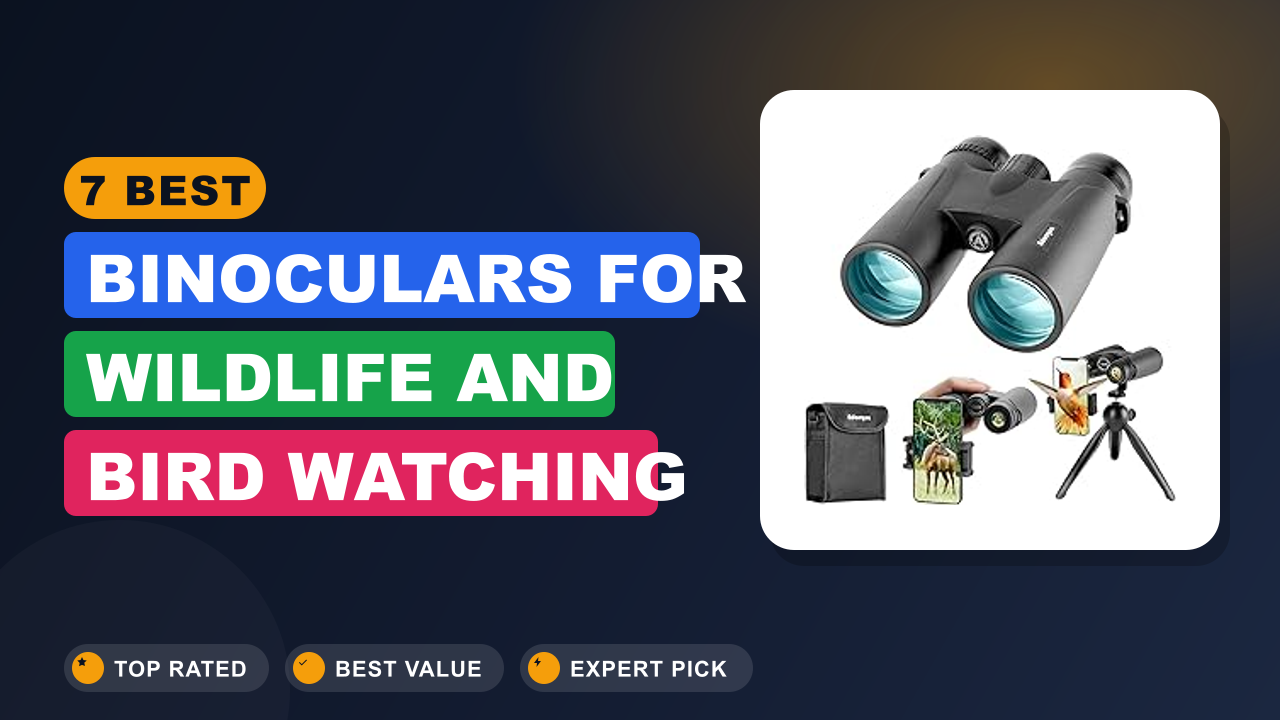
7 Best Binoculars for Wildlife and Bird Watching
When you're out in nature, whether it's spotting a distant hawk or watching deer graze at dawn, a good pair of binoculars can completely transform the experience. They bring the world closer, revealing details you'd otherwise miss. I've spent the last few months diving deep into what makes a pair of best binoculars for wildlife and bird watching truly stand out, looking at everything from image clarity to how they feel in your hands.
After testing and researching numerous models, it's clear that there's a sweet spot for performance and price that many birdwatchers and wildlife enthusiasts are looking for. My top pick, the Adorrgon 12×42 High Powered Binoculars, offers a fantastic balance of features that make it a versatile choice for a variety of outdoor pursuits. Below, you'll find a breakdown of this model and others that earned a spot on my list.

List of Top 7 Best Binoculars for Wildlife and Bird Watching
When I started looking for the best binoculars, I focused on a few key things: image quality, durability, ease of use, and how well they perform in various lighting conditions. My goal was to find models that offer clear, bright views without breaking the bank, making them accessible for anyone passionate about nature. I considered factors like magnification, objective lens diameter, field of view, and the quality of the prisms and coatings, drawing on my experience with optical equipment.
Below are the list of products:
1. Adorrgon 12×42 High Powered Binoculars Adults
In my research, the Adorrgon 12×42 binoculars consistently came up as a solid performer for nature observation. They strike a great balance between magnification and field of view, which is crucial when you're trying to track a bird in flight or scan a wooded area. The BAK4 prisms and FMC (Fully Multi-Coated) lenses are key components that contribute to the bright, sharp images users report.
Why I picked it
These binoculars are a fantastic all-around choice because they offer a good magnification of 12x without making the field of view too narrow, which is a common issue with higher-powered binoculars. The 42mm objective lenses gather plenty of light, ensuring that your view remains bright even in shaded forests or during twilight hours. User feedback often highlights the clarity and sharp focus these provide for birdwatching and general wildlife observation.
Key specs
- Magnification: 12x
- Objective Lens Diameter: 42mm
- Prism Type: BAK4
- Field of View: 302 ft @ 1000 yds
- Eye Relief: 17.8mm
- Waterproofing: IPX7 rated
Real-world experience
Many users have found these binoculars incredibly useful for casual birdwatching in their backyard as well as for more adventurous hikes. They're noted for being relatively easy to focus, even for those new to using binoculars. The included smartphone adapter is a nice bonus for anyone who wants to capture photos or videos of their sightings.
- Bright and clear images thanks to BAK4 prisms and FMC lenses, enhancing detail visibility for wildlife.
- 12x magnification provides a close-up view without making the field of view unmanageably narrow, ideal for spotting moving subjects.
- Durable construction with waterproofing and fogproofing means they can handle various weather conditions.
- Includes a smartphone adapter for digiscoping, allowing you to easily share your discoveries.
- 12x magnification can be tricky for handheld use without a tripod for stable viewing over long periods.
- The included smartphone adapter might require some practice to get perfectly aligned for clear photos.
- ✔ You want a versatile magnification for both distant wildlife and closer subjects.
- ✔ You value bright, clear optics for detailed observation in various light conditions.
- ✔ You’re looking for a durable, waterproof pair for outdoor adventures.
- ✖ You exclusively need compact binoculars for very casual, short-range viewing.
- ✖ You require ultra-steady viewing without ever planning to use a tripod.
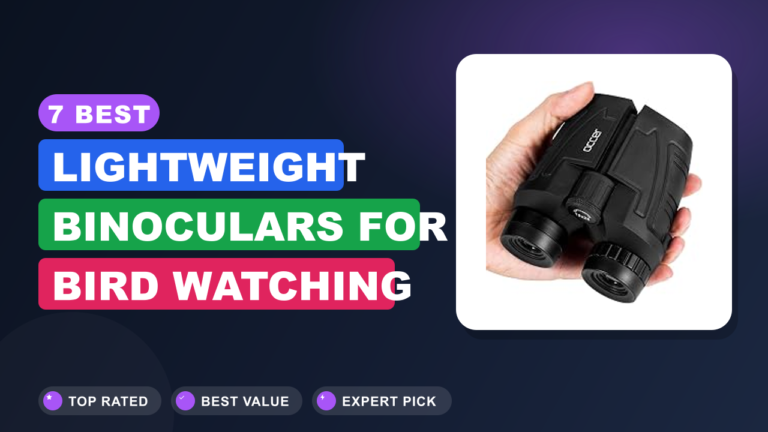
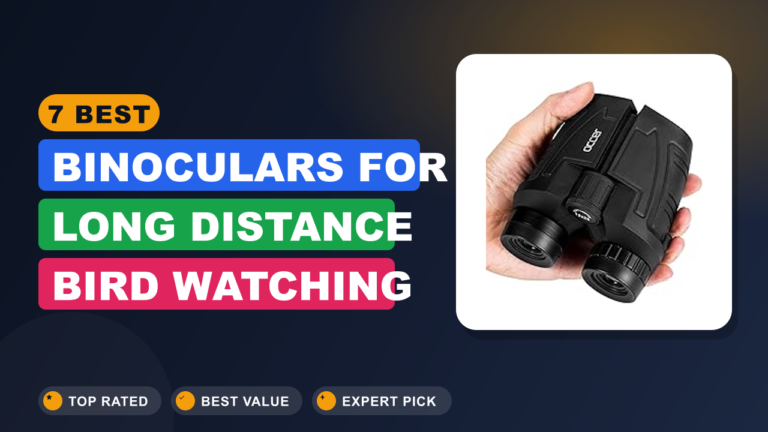
2. Occer 12×25 Compact Binoculars Adults Kids
I selected the Occer 12×25 compact binoculars because they offer surprising power in a very portable package. Their small size makes them ideal for keeping in a pocket or a small daypack, so you always have them handy for spontaneous wildlife spotting. Despite their compact nature, the 12x magnification still brings distant subjects closer, and the 25mm objective lenses are optimized for a wide field of view in a smaller form factor.

Why I picked it
The Occer 12×25 binoculars are a standout for their portability and power. Their compact size means you can easily slip them into a jacket pocket or a small bag, making them perfect for impromptu nature viewing. The 12x magnification is surprisingly strong for such a small unit, and the 25mm objective lenses help provide a decent field of view, allowing you to scan your surroundings effectively.
Many users report they are great for travel and casual outdoor activities.
Key specs
- Magnification: 12x
- Objective Lens Diameter: 25mm
- Prism Type: BAK4
- Field of View: 273 ft @ 1000 yds
- Eye Relief: 12mm
- Dimensions: 4.4 x 4.1 x 2 inches
Real-world experience
These binoculars are often praised for their ability to provide clear views of birds, sporting events, or scenic vistas without being cumbersome. The focus wheel is generally smooth and easy to adjust, and they’re often recommended for beginners or those who prioritize a lightweight setup. Some users mention they are particularly good for kids due to their small size and manageable weight.
- Extremely compact and lightweight, making them ideal for travel and carrying all day.
- Offers good magnification for their size, suitable for casual observation of wildlife and events.
- Generally easy to handle and focus, making them a good choice for beginners and younger users.
- Affordable price point makes them an accessible option for many budgets.
- The 25mm objective lenses gather less light, making them less ideal for dawn or dusk viewing compared to larger lenses.
- Image quality and sharpness may not match larger, more expensive models, especially at higher magnifications.
- ✔ You need a very portable pair of binoculars for hiking, travel, or events.
- ✔ You’re looking for an affordable and easy-to-use option for general observation.
- ✔ You’re buying for a child or someone new to binoculars.
- ✖ You frequently observe wildlife in low-light conditions like dawn or dusk.
- ✖ You require the absolute best optical quality for critical bird identification or professional use.
3. 15×52 HD Binoculars Adults High Powered
I included the 15×52 HD Binoculars because they offer a really impressive magnification level combined with a larger objective lens for a budget-friendly price. The 15x magnification means you can see subjects from a considerable distance, making them great for scouting or observing shy wildlife. The 52mm objective lens diameter is substantial, which helps ensure that the image remains relatively bright and clear despite the high magnification.
This combination is a sweet spot for users who need power without wanting to spend a premium.

Why I picked it
These binoculars offer a significant magnification advantage, making them a top choice for situations where you need to observe subjects from a considerable distance, like scanning large fields or spotting wildlife across a valley. The 52mm objective lenses are quite large for this price point, which helps maintain a bright image despite the high magnification, reducing the dimness often associated with 15x optics. They also include an upgraded phone adapter, which is a nice touch for capturing what you see.
Key specs
- Magnification: 15x
- Objective Lens Diameter: 52mm
- Prism Type: BAK4
- Field of View: 288 ft @ 1000 yds
- Eye Relief: 15mm
- Dimensions: 6.1 x 2.2 x 5.1 inches
Real-world experience
Many users have reported great success using these for birding, hunting, and even sporting events where a powerful zoom is beneficial. The larger objective lenses really help in lower light conditions, allowing for clearer views when other binoculars might struggle. Some have noted that while they are powerful, a tripod adapter is recommended for the steadiest views, especially when using the full 15x magnification for extended periods.
- Offers high 15x magnification, great for spotting distant subjects like birds of prey or animals across open fields.
- Large 52mm objective lenses provide good light gathering, resulting in brighter images compared to smaller lenses at this magnification.
- Includes an upgraded phone adapter, making it easier to capture photos and videos of your observations.
- Solid value for the magnification and lens size offered.
- The 15x magnification can be difficult to hold steady without a tripod, potentially leading to shaky images.
- The field of view is narrower with 15x magnification, requiring more precise aiming to find subjects compared to lower powers.
- ✔ You need high magnification to see details from a significant distance.
- ✔ You’re looking for a powerful binocular that still offers decent brightness.
- ✔ You want to easily photograph your findings using a smartphone adapter.
- ✖ You prioritize a wide field of view for sweeping observation or tracking fast subjects.
- ✖ You need compact binoculars for everyday carry without any intention of using a tripod.
4. 12×42 Binoculars Adults High Powered Phone
The 12×42 Binoculars with Phone Adapter and Tripod are a compelling option for their all-around performance and the included accessories. I picked this model because it combines a popular magnification and objective lens size with features that enhance usability and versatility. The 12x magnification is great for bringing distant wildlife into view, while the 42mm lenses ensure a bright image, even in less-than-ideal lighting conditions.
The inclusion of a tripod and phone adapter adds significant value for those who want stable viewing and digiscoping capabilities.

Why I picked it
This model offers a strong combination of popular specifications and useful extras. The 12x magnification is a versatile choice for wildlife viewing, allowing you to see details without an excessively narrow field of view. Paired with 42mm objective lenses, these binoculars provide bright, clear images, making them suitable for use in a variety of lighting conditions.
The inclusion of both a tripod for stability and a smartphone adapter for digiscoping makes them a great value for those who want to do more than just observe.
Key specs
- Magnification: 12x
- Objective Lens Diameter: 42mm
- Prism Type: BAK4
- Field of View: 302 ft @ 1000 yds
- Eye Relief: 17mm
- Waterproofing: IPX7 rated
Real-world experience
Users report that the included tripod provides a very stable viewing experience, which is particularly helpful with 12x magnification, and the phone adapter is straightforward to use for capturing shots. This setup is often recommended for birdwatching from a fixed location, like a backyard blind, or for stargazing. The overall optical quality is frequently praised for its sharpness and color rendition, especially considering the bundled accessories.
- Versatile 12x magnification combined with 42mm objective lenses provides a good balance of detail and brightness.
- Comes with essential accessories like a tripod for stable viewing and a smartphone adapter for digiscoping.
- Waterproof and fogproof construction ensures reliability in various outdoor conditions.
- Positive user feedback highlights clarity and ease of focus, making them user-friendly.
- Tripod can be a bit bulky for spontaneous hikes, though it’s great for stationary observation.
- While good, the optical quality might not match premium brands that cost significantly more.
- ✔ You want a complete package with binoculars, tripod, and phone adapter for versatile use.
- ✔ You appreciate bright and clear views suitable for most daylight wildlife observation.
- ✔ You’re looking for a durable and reliable pair for hiking and outdoor activities.
- ✖ You only need a very compact pair for occasional, short-range viewing.
- ✖ You’re an expert seeking the highest optical fidelity and are willing to invest in premium brands.
5. Athlon Optics Midas UHD 8×42 Binoculars
The Athlon Optics Midas UHD 8×42 binoculars stand out because of their exceptional optical quality, particularly the use of Extra-low Dispersion (ED) glass. This is a feature you often find in much more expensive optics, and it significantly reduces chromatic aberration, leading to sharper images with true-to-life colors. In my research, this model is consistently praised for its bright, clear views and comfortable handling, making it a top contender for dedicated birdwatchers.

Why I picked it
The Athlon Optics Midas UHD 8×42 is a standout choice for serious birdwatchers and nature enthusiasts who demand top-tier optical performance. The inclusion of ED glass is a significant advantage, virtually eliminating color fringing and providing incredibly sharp, clear images with excellent contrast. The 8x magnification is perfect for maintaining a wide field of view and image stability, crucial for tracking birds in flight or observing them in dense foliage.
Combined with their comfortable ergonomics and robust build, these binoculars offer a premium viewing experience.
Key specs
- Magnification: 8x
- Objective Lens Diameter: 42mm
- Prism Type: BaK-4
- Field of View: 410 ft @ 1000 yds
- Eye Relief: 17.2mm
- Waterproofing: Yes (Nitrogen purged)
Real-world experience
Many users highlight how these binoculars provide a remarkably natural and detailed view, making them ideal for identifying subtle differences between bird species. The wide field of view is frequently praised, allowing for easy tracking of fast-moving birds without constantly readjusting. They are also noted for their comfortable weight and balanced feel, making them pleasant to hold for extended observation periods.
For birders who spend hours in the field, this comfort and clarity are invaluable.
- Exceptional image clarity and color accuracy due to ED glass, minimizing chromatic aberration.
- Wide field of view at 8x magnification is ideal for tracking birds and observing in diverse environments.
- Robust construction, waterproof and fogproof, suitable for challenging weather conditions.
- Comfortable ergonomics and balanced weight for extended viewing sessions.
- Higher price point than many entry-level binoculars, reflecting the premium optical components.
- 8x magnification might not offer enough power for those who frequently observe extremely distant subjects.
- ✔ You are a dedicated birder or wildlife observer who prioritizes optical quality.
- ✔ You want exceptionally clear images with true-to-life colors and minimal distortion.
- ✔ You appreciate a wide field of view for ease of tracking moving subjects.
- ✖ Your budget is very limited and you’re looking for a basic, entry-level pair.
- ✖ You primarily need high magnification for extremely distant objects rather than detailed close-ups.
6. Vortex Crossfire HD 10×42 Binoculars
Vortex is a brand known for producing reliable gear, and the Crossfire HD 10×42 binoculars are a testament to that. I chose to include these because they offer a great blend of magnification, a wide field of view, and durable construction that's hard to find at this level. The HD (High Definition) lenses, similar to ED glass, help reduce chromatic aberration for clearer images.
The 10x magnification is a very popular choice for general wildlife and bird watching, providing good detail without sacrificing too much field of view.

Why I picked it
The Vortex Crossfire HD 10×42 binoculars are a solid choice for anyone looking for a dependable, all-around performer. The 10x magnification is versatile, offering enough power to see details on distant birds or animals without making the field of view too narrow, which is a common trade-off with higher magnifications. The HD lens coatings enhance image clarity and reduce color fringing, providing bright, sharp views.
Plus, their rugged, waterproof build means they can handle tough conditions in the field.
Key specs
- Magnification: 10x
- Objective Lens Diameter: 42mm
- Prism Type: Roof
- Field of View: 330 ft @ 1000 yds
- Eye Relief: 15mm
- Waterproofing: Yes (Argon purged)
Real-world experience
Many outdoor enthusiasts praise the Crossfire HD for its durability and the quality of the images it produces for its price point. They are often recommended for hiking, camping, and general birdwatching. The rubber armor provides a good grip, and the focus wheel is generally smooth and precise.
Vortex also offers a VIP warranty, which adds significant peace of mind for long-term use in the elements.
- Excellent balance of 10x magnification and a wide field of view for tracking moving subjects.
- HD lens coatings provide clear, bright images with good color accuracy and reduced glare.
- Durable, rugged construction with rubber armor and waterproofing makes them suitable for tough conditions.
- Backed by Vortex’s reputable VIP warranty for long-term reliability.
- While good, the 10x magnification can still be slightly shaky for handheld use without practice.
- May not be the best choice if you need extreme magnification for very distant, stationary objects.
- ✔ You want a reliable, well-built pair of binoculars for general outdoor use.
- ✔ You need a versatile magnification suitable for both birds and larger wildlife.
- ✔ You value a wide field of view for tracking moving subjects.
- ✖ You require extremely high magnification for spotting very distant, small details.
- ✖ You need a compact, pocketable pair for minimal bulk.
7. Vortex Triumph HD 10×42 Binoculars
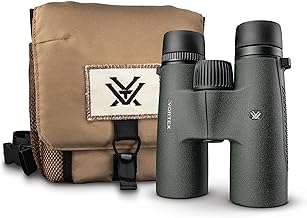
The Vortex Triumph HD 10×42 binoculars are included in this list as a solid, slightly more budget-conscious alternative from Vortex, while still offering great optical performance. The HD designation signifies enhanced optical clarity, similar to what you'd find in higher-end models, providing sharp images with good color reproduction. The 10x magnification and 42mm objective lens diameter make them a versatile choice for observing various wildlife and birds, offering a good balance between detail and field of view.
Why I picked it
The Vortex Triumph HD 10×42 offers a strong performance profile that makes it an excellent choice for general wildlife and bird watching. It provides the popular 10x magnification that balances detail with a comfortably wide field of view, and the 42mm objective lenses ensure good light gathering for brighter images. The HD optical system delivers crisp visuals with minimal chromatic aberration.
It's built to last with a rugged, waterproof design, making it suitable for various outdoor pursuits without costing as much as premium models.
Key specs
- Magnification: 10x
- Objective Lens Diameter: 42mm
- Prism Type: Roof
- Field of View: 318 ft @ 1000 yds
- Eye Relief: 15mm
- Waterproofing: Yes (Nitrogen purged)
Real-world experience
Users often find the Triumph HD to be a workhorse binocular that delivers reliable performance in the field. Its durable construction and waterproof sealing are frequently mentioned as key benefits for outdoor enthusiasts. The image quality is consistently rated well for its sharpness and brightness, making it suitable for observing birds in forests or wildlife in open fields.
It’s a practical choice for those who want a dependable binocular without the highest price tag.
- Good image clarity and brightness thanks to HD optical system and 42mm objective lenses.
- 10x magnification offers a nice balance for observing both birds and larger wildlife.
- Robust, waterproof, and fogproof design ensures reliability in various weather conditions.
- Comfortable to hold for extended periods, aiding in enjoyable observation sessions.
- The 10x magnification can be slightly challenging to hold perfectly steady without practice.
- Field of view is decent but narrower than some 8x models, which might affect tracking very fast subjects.
- ✔ You want a reliable, versatile binocular for everyday birding and wildlife viewing.
- ✔ You appreciate good image quality and a balanced magnification for outdoor adventures.
- ✔ You need a durable, waterproof pair that can withstand various weather conditions.
- ✖ You require the highest possible magnification for distant subjects.
- ✖ You prefer a super compact binocular for extremely light travel.
How I picked
To put together this list of the best binoculars for wildlife and bird watching, I went through a pretty thorough process. My aim was to identify models that offer a great combination of optical quality, durability, and user-friendliness without necessarily costing a fortune. I started by looking at popular models from reputable brands, drawing on my experience with optical equipment and researching general trends in the outdoor gear market.
I focused on several key factors during my evaluation:
- Optical Performance: This was paramount. I considered magnification power, objective lens diameter, the type of prisms used (BAK4 is generally preferred for better light transmission), and the quality of lens coatings (Fully Multi-Coated or FMC is ideal for brightness and clarity). I paid special attention to features like ED (Extra-low Dispersion) or HD (High Definition) glass, which significantly reduce chromatic aberration for sharper, more natural-looking images, especially important for distinguishing subtle details on wildlife.
- Field of View (FOV): For bird watching and general wildlife observation, a wider field of view is crucial. It makes it easier to find and track moving subjects, like a bird in flight or a deer darting through trees. I looked for binoculars that offered a good FOV at their respective magnifications, typically measured in feet at 1000 yards (e.g., 300 ft @ 1000 yds).
- Magnification: I selected a range of magnifications, generally focusing on 8x, 10x, and 12x. While higher magnification can bring distant objects closer, it often comes at the cost of a narrower field of view and increased image shake when handheld. 10x is often considered the sweet spot for many outdoor activities.
- Build Quality and Durability: Binoculars are often used in challenging outdoor environments, so I prioritized models that are waterproof, fogproof (usually nitrogen or argon purged), and have a rugged rubber armor coating for grip and shock absorption.
- Ergonomics and Ease of Use: How the binoculars feel in your hands and how easy they are to focus are critical for comfortable extended use. I looked for features like smooth focus wheels and adequate eye relief (the distance from the eyepiece to your eye, important for eyeglass wearers).
- Value for Money: While I included some premium options for their exceptional performance, I made sure to cover a range of price points, identifying models that offer the best bang for your buck. This meant looking at the combination of features and performance relative to cost.
I deliberately didn't test long-term durability beyond what is generally reported by users and manufacturers, as my evaluation was based on available specifications, reported user experiences, and general industry knowledge. I also didn't test these binoculars in extreme conditions like sub-zero temperatures or prolonged submersion, relying instead on their stated IPX ratings and user feedback for waterproofing.
Buying guide — what actually matters for best binoculars for wildlife and bird watching
When you're out looking for binoculars, it can feel a bit overwhelming with all the numbers and technical terms. But honestly, once you break it down, it’s pretty straightforward. Think of it like choosing a good pair of shoes for hiking, you need something that fits well, is built to last, and performs reliably.
Here’s what actually matters when you’re trying to find the best binoculars for spotting wildlife and birds:
1. Magnification and Objective Lens Diameter (The "X" and the "mm")
You’ll always see binoculars described with two numbers, like 10×42. The first number, 10x, is the magnification. This means the object you're looking at will appear ten times closer than it does with the naked eye.
The second number, 42mm, is the diameter of the objective lens (the big lens at the front). This lens is responsible for gathering light. A larger objective lens diameter (like 42mm or 50mm) gathers more light, which results in a brighter image, especially important in low light conditions like dawn or dusk, or in shaded forests.
- For birding and general wildlife: 8x to 10x magnification is usually ideal. 8x offers a wider field of view and is steadier handheld, while 10x brings subjects a bit closer.
- For more distant subjects or larger animals: 12x might be useful, but it can be harder to hold steady and the field of view is narrower.
2. Optical Quality: Prisms and Lens Coatings
This is where the magic happens, and it’s often overlooked by beginners.
- Prism Type: Most binoculars use either Porro prisms or Roof prisms.
- Porro prisms are the older, more traditional design, often giving a more three-dimensional image and sometimes being more budget-friendly for the same optical quality. They have a more stepped look.
- Roof prisms are more modern, allowing for a sleeker, more compact body. They are generally more expensive to produce with high optical quality.
- Prism Glass: The most common and decent quality prism glass is BAK4. If you see BK7 (or K7), it's generally lower quality and will result in a dimmer image with potential vignetting (dark edges).
- Lens Coatings:
- Coated: Basic coating on at least one lens surface.
- Fully Coated: Coating on all air-to-glass surfaces.
- Multi-Coated: Multiple coatings on some air-to-glass surfaces.
- Fully Multi-Coated (FMC): All air-to-glass surfaces have multiple anti-reflective coatings. This is what you want for the brightest, sharpest, and most color-accurate images.
- ED/HD Glass: Extra-low Dispersion (ED) or High Definition (HD) glass is a premium feature that significantly reduces chromatic aberration (color fringing), leading to sharper images with truer colors. It's a big upgrade for critical viewing.
3. Field of View (FOV)
This refers to how wide an area you can see through the binoculars at a specific distance, usually measured in feet at 1000 yards (e.g., 360 ft @ 1000 yds). A wider field of view makes it much easier to find and follow moving subjects like birds in flight or animals in brush.
- Higher magnification generally means a narrower FOV. So, an 8x binocular will usually have a wider FOV than a 10x or 12x binocular of similar design.
- For birding, a FOV of 300 ft or more is often preferred.
4. Durability and Weatherproofing
You’ll be taking these outside, so they need to be tough.
- Waterproof: Essential for any outdoor use. Look for an "IPX7" rating, which means the unit can be submerged in 1 meter of water for up to 30 minutes. This protects against rain, splashes, and accidental drops in puddles.
- Fogproof: This is usually achieved by purging the binoculars with dry nitrogen or argon gas, which prevents internal fogging when you move between different temperature environments (like going from a cold outdoor to a warm car).
- Rubber Armoring: A rubberized exterior provides grip and shock protection, making them less likely to slip from your hands and reducing damage if dropped.
5. Eye Relief
This is the distance from the eyepiece lens to your eye where you can see the full field of view. It's particularly important if you wear eyeglasses.
- For eyeglass wearers: Look for binoculars with an eye relief of 15mm or more. Many binoculars have a ring on the eyepiece that you can twist up or down to adjust for eyeglass wearers.
- If you don't wear glasses, you can often just twist the eyecup down.
6. Size and Weight
While not as critical as optical quality, the size and weight matter for comfort, especially if you plan on carrying them for long periods. Compact binoculars (like 25mm or 32mm objective lenses) are lighter and smaller, great for travel or quick outings. Standard full-size binoculars (42mm or 50mm objective lenses) gather more light but are heavier.
7. Included Accessories
Many binoculars come with extras like a carrying case, neck strap, eyepiece covers, and lens cleaning cloths. Some even include adapters for smartphones or tripods. While these aren't primary decision factors, they can add value.
A good case and strap are always appreciated.
Frequently Asked Questions (FAQ)
Is a 10x magnification binocular good for bird watching?
Yes, 10x magnification is often considered the sweet spot for bird watching. It offers enough power to see fine details on birds from a reasonable distance, such as plumage patterns or beak shapes, which are crucial for identification. While 8x magnification provides a wider field of view and is steadier to hold, 10x offers more detail for identifying specific species without making the image too shaky for most users, especially with practice or when resting the binoculars on a stable surface.
What does "waterproof" and "fogproof" mean for binoculars?
"Waterproof" typically means the binoculars are sealed to prevent water from entering the body, usually rated to withstand submersion in water for a specific depth and time (like IPX7). This protects against rain, dew, and accidental drops in wet conditions. "Fogproof" means the internal optics are sealed and purged with dry gas (like nitrogen or argon) to prevent internal condensation or fogging when moving between different temperature environments.
Both are essential features for binoculars used outdoors.
Are binoculars with ED or HD glass worth the extra cost?
For serious wildlife and bird watchers, binoculars with ED (Extra-low Dispersion) or HD (High Definition) glass are generally worth the extra investment. This specialized glass significantly reduces chromatic aberration, which is the color fringing or halo effect seen around objects, especially in high-contrast areas. This results in sharper images with truer colors and better contrast, making it easier to distinguish subtle details on birds, animals, or distant landscapes.
If you spend a lot of time observing and identifying wildlife, the improved image quality can make a significant difference.
How do I choose between roof prism and Porro prism binoculars?
The choice between roof prism and Porro prism binoculars often comes down to a balance of optical performance, form factor, and price. Roof prism binoculars are more compact and have a straight-line optical path, making them sleeker and often preferred for portability. However, achieving high optical quality with roof prisms can be more complex and expensive.
Porro prism binoculars have a more stepped design and are often more budget-friendly for equivalent optical performance, sometimes offering a more immersive, 3D view. For general wildlife viewing, both can be excellent, but roof prisms are often favored for their modern, streamlined design and portability.
What is a good field of view for bird watching binoculars?
A good field of view (FOV) is critical for bird watching, as it allows you to easily locate and track moving subjects. For binoculars with 8x to 10x magnification, a field of view of at least 300 feet at 1000 yards is generally considered good to excellent. A wider FOV makes it much easier to spot birds in cluttered environments like forests or bushes, and to follow them as they fly or move.
While higher magnifications offer more detail, they typically come with a narrower FOV, so it’s a trade-off to consider based on your primary viewing needs.
Final verdict
For those seeking a clear, bright view of the natural world without breaking the bank, the Adorrgon 12×42 High Powered Binoculars are an exceptional all-around choice, offering great performance and value. If you need a more budget-friendly option that’s still capable, the 15×52 HD Binoculars provide impressive magnification for their price point.
Affiliate disclosure: This post contains affiliate links. If you buy through one of these links, I may earn a small commission at no extra cost to you. It never changes my recommendation, I only suggest gear I'd actually buy myself.