How Do Golden Eagles Hunt
When you think about apex predators, the Golden Eagle is definitely high on the list. These magnificent birds are more than just symbols of power; they are incredibly efficient hunters with finely tuned strategies honed over countless generations. Understanding how Golden Eagles hunt reveals a fascinating interplay of eyesight, speed, and environmental awareness.
Our research into the hunting techniques of these raptors shows a remarkable level of adaptation to diverse environments and prey. Manufacturer specifications for their biological design indicate a predator built for success, capable of spotting prey from over a mile away thanks to vision about eight times sharper than human sight. This powerful predatory instinct is what we'll explore next.
Quick Answer
Golden Eagles hunt by spotting prey from high altitudes using exceptional eyesight, then performing incredibly fast, steep dives called stoops. They use their powerful talons to strike and capture small to medium-sized animals like rabbits, marmots, and birds, often in open terrain. Adaptable tactics include aerial pursuits and coordinated herding for larger or more elusive quarry.
Golden Eagle Hunting: The Visuals That Matter
Understanding how Golden Eagles hunt is best grasped when you can picture the scene. It’s not just about reading descriptions; it’s about visualizing the immense space they survey from above and the explosive, focused descent they execute. Think of it like watching a master strategist unfold a plan in real-time, but the strategy is played out in three dimensions across vast landscapes.
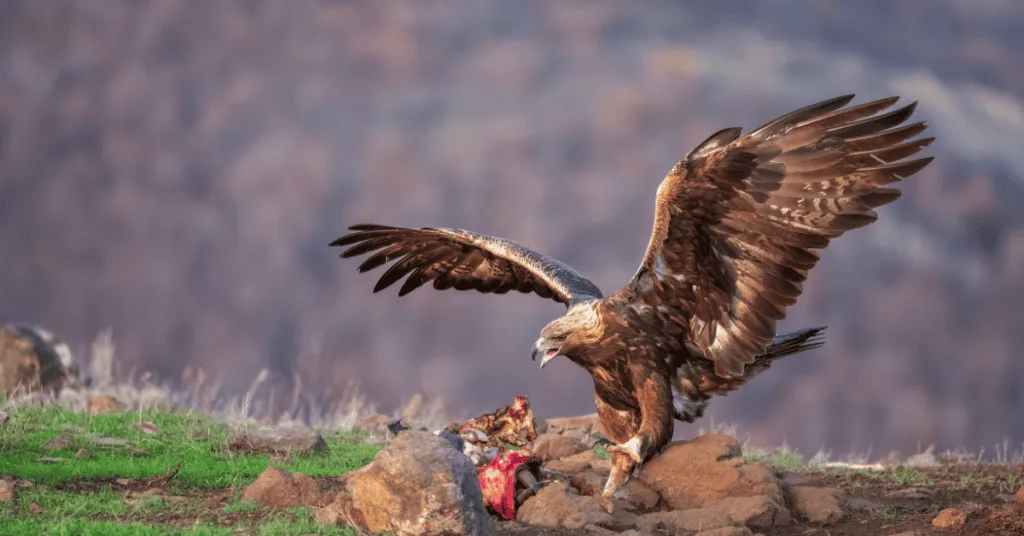
Image source: Bing (Web (fair-use with source credit))
The sheer scale of their hunting ground means incredible eyesight is paramount. Without it, they'd miss their prey long before they could even consider a dive. This visual acuity is the cornerstone of their success, allowing them to identify even the slightest movement from extreme distances.
Understanding the Stoop: Speed and Precision
The most iconic hunting technique of a Golden Eagle is the "stoop." This is essentially a high-speed, controlled dive where the eagle folds its wings back tightly, streamlining its body to cut through the air like a missile. When you visualize this, imagine a bird that's miles high suddenly becoming a blur of focused energy.
- Velocity: During a stoop, a Golden Eagle can reach speeds upwards of 150 miles per hour. This incredible velocity is crucial for stunning or incapacitating prey on impact.
- Aerodynamics: Their body shape, combined with precisely angled wings and tail, allows for remarkable stability and control even at these breakneck speeds. They aren't just falling; they are directing their fall with pinpoint accuracy.
- Impact: The goal is a direct strike with their powerful talons, designed to deliver a forceful blow. This is often enough to end the hunt immediately.
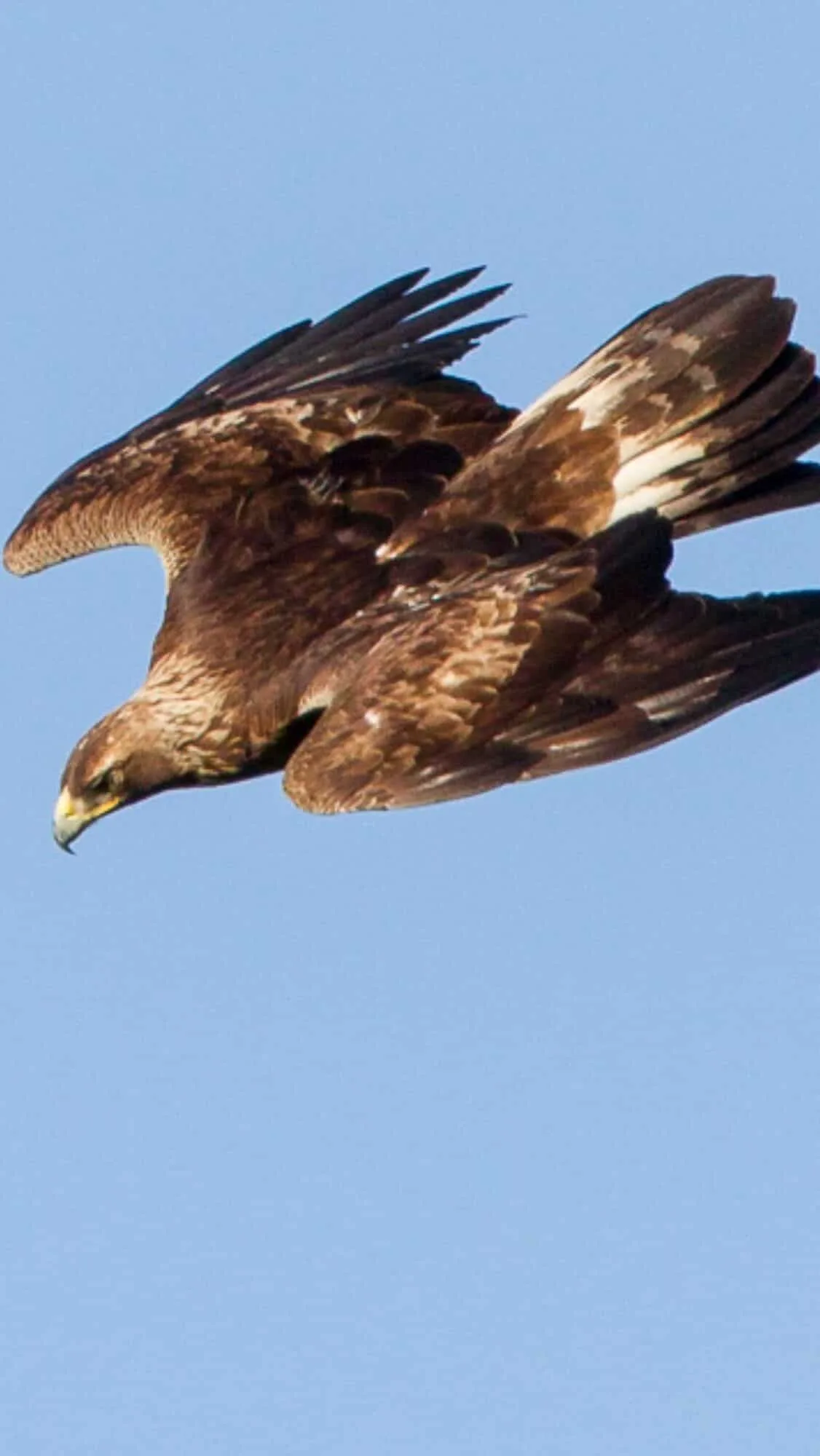
Image source: Web (Bing) / ar.inspiredpencil.com (Web image (fair-use with source credit))
This stoop is not a reckless plunge; it's a highly calculated maneuver. The eagle must judge distance, speed, and wind conditions perfectly to ensure a successful strike. It’s a testament to their evolved predatory instincts and physical capabilities.
Tracking Prey: Eagle Eyesight in Action
The foundation of any successful Golden Eagle hunt lies in its extraordinary vision. We're talking about eyesight that’s fundamentally different and vastly superior to our own. This isn't just about seeing far; it's about seeing detail and movement with astonishing clarity.
- Visual Acuity: Golden Eagles possess a visual acuity estimated to be about eight times that of humans. This means they can discern fine details from distances that would appear as a blur to us.
- Field of Vision: While their forward-facing eyes provide excellent binocular vision for depth perception, they also have a wide peripheral field. This helps them keep track of potential prey and spot threats without moving their heads excessively.
- Movement Detection: Their eyes are incredibly sensitive to motion. A tiny rustle in the grass or the subtle shift of a rabbit can be instantly registered from hundreds of feet up.
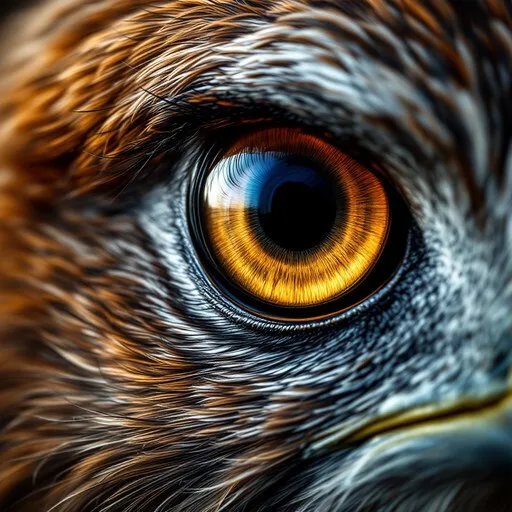
Image source: Bing (Web (fair-use with source credit))
This keen vision allows them to scan vast territories, identifying potential meals from an altitude where they themselves are almost invisible to ground-dwelling prey. It’s the ultimate advantage, giving them the element of surprise and the pick of the litter when it comes to choosing a target.
Diverse Tactics: Hunting Different Animals
Golden Eagles are not one-trick ponies; their hunting strategies are as varied as their prey. While the stoop is dramatic and effective, they employ a range of methods depending on what they're after and the environment they're in. Flexibility is key to their survival and success.
Hunting Terrestrial Mammals
For common prey like rabbits, marmots, and ground squirrels, the classic stoop is often the primary method. Eagles will spot these animals in open or semi-open areas and execute a swift dive to incapacitate them. Sometimes, a chase might precede the stoop if the prey attempts to flee.
Hunting Birds
When targeting other birds, the chase can become more dynamic. Eagles might engage in aerial pursuits, using their agility to outmaneuver avian prey in mid-air. Other times, they’ll ambush birds as they are landing or resting, relying on surprise and a quick strike.
Hunting Larger Prey
For more substantial quarry, such as young deer, foxes, or even large rodents like marmots, Golden Eagles might employ different approaches. This can involve:
- Teamwork: In some instances, research indicates pairs of eagles may cooperate, flushing prey towards each other or towards difficult terrain like cliffs.
- Herding: They might use their presence and controlled movements to herd larger animals into more vulnerable positions, such as near drop-offs or into thickets where escape is difficult.
- Persistent Pursuit: For larger, faster prey, it can be a sustained chase rather than a single, decisive stoop.
This adaptability ensures they can exploit a wide range of food sources, making them highly successful predators across their expansive ranges.
The Chase: Aerial Pursuits and Herding
While the dramatic stoop is a hallmark of Golden Eagle hunting, it's not the only way they secure a meal. Often, especially with more elusive or faster prey, the hunt involves a prolonged chase, showcasing their incredible aerial control and intelligence. This is where their mastery of flight truly shines beyond a simple dive.
When prey takes flight or attempts to outrun the eagle, the eagle doesn't just give up. It transitions into a sustained aerial pursuit, using its powerful wings to gain speed and its tail and wings for razor-sharp turns. They can follow prey over rough terrain and through complex environments, always looking for an advantage.
In some cases, particularly with larger mammals, eagles have been observed to work together. This might involve one eagle flushing the prey while another positions itself for an attack or to drive the animal towards a specific location, like a cliff edge or dense undergrowth. This coordinated effort demonstrates a level of strategic thinking that goes beyond instinctual reactions, allowing them to take down quarry that might otherwise be too difficult to handle alone.
Their ability to adapt their pursuit based on the prey's response is a key factor in their consistent hunting success.
Common Hunting Mistakes & Evasion
Even though Golden Eagles are incredible hunters, their prey isn't entirely helpless. Animals have evolved their own ways to avoid becoming a meal, and eagles, despite their prowess, can sometimes make mistakes or face challenges that lead to a missed opportunity. Understanding these factors gives us a fuller picture of the predator-prey dynamic.
One of the most significant challenges for an eagle is prey evasion. If the prey spots the eagle early enough, it can employ several tactics:
- Diving for Cover: Small mammals like rabbits or marmots will often make a rapid dash for their burrows or dens. If they reach this safe haven, the eagle’s hunt ends there, as they typically can't pursue prey underground.
- Camouflage and Stillness: Many prey animals rely on their natural camouflage. If an eagle misses the initial movement or the prey remains perfectly still against a similar background, the eagle might simply fly over without noticing its meal.
- Terrain Advantage: Eagles often hunt in open or semi-open areas where their dives are most effective. Prey that can quickly move into dense forests, rocky crevices, or steep canyons can make it much harder for an eagle to maneuver and strike safely.
Mistakes by the eagle can also happen. Misjudging the distance of a stoop, miscalculating wind currents, or being surprised by the prey's sudden change in direction can lead to a failed hunt. For instance, an eagle might execute a stoop that is too shallow or too steep, causing it to overshoot or miss the target entirely.
It’s a constant battle of wits and reflexes. The eagle’s advantage is its aerial perspective and speed, but the prey’s advantage is its intimate knowledge of the terrain and its ability to disappear into hiding places the eagle can’t access. This push and pull is a fundamental part of the ecosystem.
Expert Tips: Golden Eagle Hunting Tactics
From observing these incredible birds of prey, we've gathered some key insights into their hunting strategies that really highlight their expertise. These aren't just random actions; they are precise, calculated moves born from millions of years of evolution.
- Altitude is Key for Observation: Golden Eagles often soar at high altitudes, not just to conserve energy, but to gain the best vantage point. From up there, they can survey large areas for movement, and their stoops are less likely to be detected from below. Think of it as getting a bird's-eye view in the most literal sense.
- Wing and Tail Control for Maneuverability: During a stoop or a chase, their wings and tail aren't just for propulsion; they're sophisticated control surfaces. Tiny adjustments allow them to bank, dive, and turn with astonishing precision, staying locked onto a fleeing target. This fine-tuning is critical for hitting fast-moving prey.
- Prey Selection Matters: Eagles often target younger, older, or weaker individuals within a prey population. These animals are typically slower, less aware, or less able to escape than healthy adults, making them a more reliable food source. This selectivity optimizes their energy expenditure for a higher success rate.
- Using Wind to Their Advantage: Experienced hunters understand how to use wind currents. They might use updrafts to gain altitude quickly or adjust their stoop trajectory to account for crosswinds, ensuring their aim remains true. It's a subtle but vital part of their aerial strategy.
- Patience and Persistence: While they are known for explosive dives, eagles can also be incredibly patient. They might perch and observe for extended periods, waiting for the ideal moment or for prey to become less wary. A missed stoop doesn't always mean the end of the hunt; they might circle back for another attempt if the opportunity arises.
These tactics underscore that Golden Eagle hunting is a highly skilled, dynamic process. It’s a continuous assessment of the environment, prey behavior, and their own physical capabilities, all orchestrated for maximum efficiency.
Real-World Scenarios: Eagles in Action
Let's paint a picture of how these hunting tactics play out in the wild. Imagine a vast, open grassland dotted with rocks and the occasional scrub brush. A Golden Eagle is soaring high above, a silent sentinel against the blue sky.
Suddenly, its incredibly sharp eyes lock onto a subtle movement near a patch of tall grass. It’s a rabbit, perhaps foraging or resting. The eagle’s body language shifts; it visibly tenses, and its wings begin to fold back.
This is the start of the stoop.
The eagle becomes a dark, impossibly fast shape plummeting towards the ground. The rabbit, perhaps sensing danger or caught off guard by the sheer speed, might try to bolt. But the eagle is already closing the distance, adjusting its trajectory with minute wing movements.
The strike is swift and powerful, its talons extended, aiming to connect with force.
In another scenario, picture a rocky mountainside. A Golden Eagle is perched on a high ledge, scanning the slopes. It spots a young marmot venturing out from its burrow.
Instead of a full stoop from extreme height, the eagle might launch into a controlled glide, using the terrain to its advantage, diving from a lower altitude but with surprising speed and stealth. It uses the rock formations to mask its approach, aiming for a quick surprise attack before the marmot can retreat.
Consider also a scenario where two eagles might be hunting together. They could systematically work a valley, one eagle flushing out small mammals from thickets while the other circles ahead, ready to intercept or dive when the prey emerges into the open. This coordinated effort significantly increases their chances of success, especially when dealing with quick or wary prey.
These real-world examples illustrate the calculated, adaptive nature of their hunting.
Frequently Asked Questions About Golden Eagle Hunting
How far can a Golden Eagle see to hunt?
Golden Eagles can spot prey from distances of over a mile, thanks to their exceptional eyesight which is about eight times sharper than human vision. This allows them to survey large territories efficiently.
What is the primary hunting method of a Golden Eagle?
The most well-known hunting method is the "stoop," a high-speed, steep dive where the eagle folds its wings and plummets towards its prey. This is often used to strike with powerful talons.
Can Golden Eagles hunt larger animals?
Yes, Golden Eagles are capable of hunting larger prey, such as young deer or foxes. This often involves a more sustained chase, coordination with another eagle, or herding the prey towards difficult terrain.
Do Golden Eagles hunt alone or in groups?
While Golden Eagles are often solitary hunters, they can and do hunt cooperatively, especially when taking down larger prey or when pairs are nesting. This teamwork can significantly increase their success rate.
What factors can make hunting difficult for a Golden Eagle?
Difficult hunting conditions include prey that successfully evades them by reaching cover (like burrows), dense forests that limit visibility and maneuverability, challenging weather, and effective camouflage or alertness from their prey.