Bird Nesting Habits
Finding a bird nest near your home sounds charming until you realize you might be breaking federal law by removing it. Bird nesting habits vary widely by species, region, and season. The legal and health consequences of getting it wrong are real.
The Migratory Bird Treaty Act protects most nesting birds in the United States, with penalties reaching $15,000 per violation. Whether you've got a nest in your gutter or you're just trying to understand what's building outside your window, this guide breaks down what you need to know.

Quick Answer: Why Knowing Bird Nesting Habits Matters More Than You Think
Bird nesting habits describe when and where species build nests and raise young. Most North American birds nest from spring through late summer. Many species, including swallows and robins, are federally protected.
If you find an active nest, leave it alone until the chicks have left. Disturbing an active nest can result in serious legal penalties.
Here's what trips people up. The timing shifts depending on where you live. Nesting season starts earlier in the South and later in northern states.
Climate patterns as of 2026 continue to push nesting windows earlier in many regions. That means last year's safe maintenance date might not work this year.
The stakes are real. Under the Migratory Bird Treaty Act, disturbing an active nest can carry fines up to $15,000 per violation. Even something as simple as pressure-washing a soffit can turn into a federal offense if a nest is active underneath.
Understanding these habits gives you the power to plan ahead. Know when nesting season starts in your area. Schedule gutter cleaning, painting, or siding repairs before it begins.
How Bird Nesting Habits Actually Work Across Species
Bird nesting habits fall into three main categories. Cavity nesters like woodpeckers, bluebirds, and chickadees excavate holes in dead trees or use man-made boxes. Open-cup nesters like robins and sparrows weave visible nests from twigs, grass, and mud.
Ground nesters like killdeer, pipits, and phoebes lay eggs directly on the earth with minimal cover.
Nesting Season Timing by Region and Climate
Timing depends heavily on geography. In southern states, birds can start nesting as early as February. In northern regions, most species wait until March or April.
Species like the American robin may raise two to three broods per season. Others, like hummingbirds, build fresh nests for each clutch.
Changing weather patterns are already shifting these windows earlier in many parts of the country. The Cornell Lab of Ornithology has tracked measurable advances in nesting dates for several migratory species over the past two decades. If your region has seen unusually warm winters, expect nesting to start sooner than the historical average.
Nest Types, Materials, and Clutch Sizes
Nest construction varies dramatically by species. Swallows use mud pellets. Orioles weave hanging basket nests from plant fibers.
Goldfinches line their nests with dandelion fluff and plant down.
Most songbirds lay three to five eggs per clutch. Incubation periods range from 10 days for hummingbirds to 40 days for larger raptors. Fledgling age, when chicks leave the nest, is the single most important number for planning home maintenance.
You'll need this information to time gutter cleaning, soffit repairs, or vent maintenance safely.
The Legal Risks: What the Migratory Bird Treaty Act Actually Means
Here's the part most people miss. The Migratory Bird Treaty Act of 1918, administered by the U.S. Fish and Wildlife Service, protects nearly all native bird species in the United States.
That includes their eggs, nests, and feathers. Violations carry penalties up to $15,000 in fines and up to six months in jail.
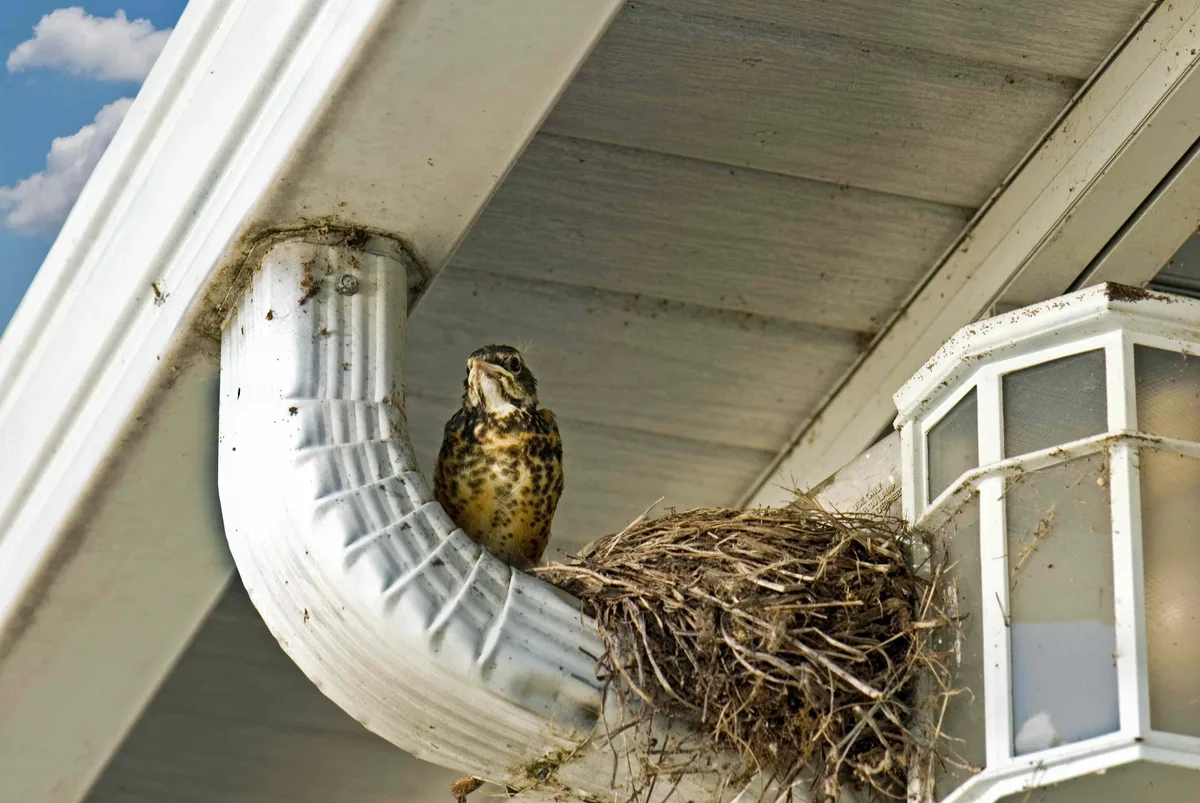
The Act covers roughly 1,000 species protected under international agreements with Canada, Mexico, Japan, and Russia. House sparrows and European starlings are not protected. But most songbirds, raptors, and waterfowl are fully covered.
You can check current protected species through the U.S. Fish and Wildlife Service.
State laws add another layer. Some states offer additional protections beyond federal law. Always verify with your state wildlife agency before taking any action.
No one plans to run afoul of the MBTA. But property owners have been cited for things like painting a soffit that had a swallow nest attached. Ignorance of the law is not a defense.
If you're unsure whether a nest is protected, treat it as protected.
The Health and Safety Risks Hiding in Bird Nests
Bird nests aren't just a legal concern. They're a health concern too. Accumulated nesting material, droppings, and feathers create ideal conditions for harmful organisms.
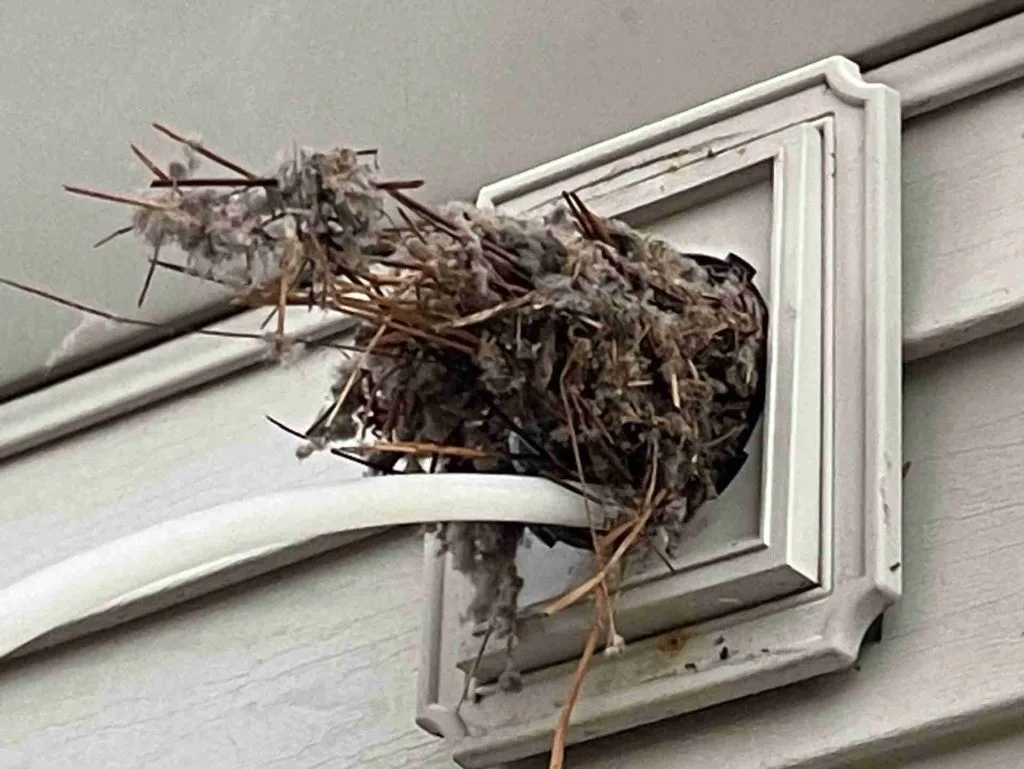
Histoplasmosis, Ectoparasites, and Nesting Material Hazards
Histoplasmosis is the biggest risk. It's a fungal infection caused by breathing in spores from bird and bat droppings. The CDC has documented cases where homeowners developed respiratory problems after cleaning dried nesting material without protection.
Symptoms range from mild flu-like illness to severe lung infections.
Beyond histoplasmosis, nests can harbor ectoparasites like bird mites, pigeon lice, and fleas. These parasites can migrate from nests into living spaces once the birds leave. Bird droppings also carry bacteria like Salmonella and E. coli.
Nests built in drywall, attics, or soffits can cause structural moisture damage. Trapped moisture against wood framing leads to rot. Over time, that becomes a framing problem, not just a bird problem.
Safety steps when near a nest include wearing an N95 respirator and gloves. Avoid dry sweeping nesting material. Spray droppings with water first to suppress dust before cleanup.
Protective gear matters more than most people think. Even a single nest full of dried droppings can expose you to enough spores to cause infection.
What to Do When You Find an Active Nest Near Your Home
Finding a nest is easier than most homeowners think. Birds are remarkably predictable about where they build. Here's how to assess the situation and respond correctly.
Step-by-Step: Assessing and Responding to a Nest You Find
Identify the nest type. Cup nests hanging from branches are usually songbirds. Nests tucked into soffits, vents, or gutters are often swallows, starlings, or sparrows. Knowing the nest type narrows down the species.
Check for signs of activity. Look for eggs, chicks, or an adult bird nearby. If you see any of these, the nest is active. Do not touch it.
Wait and watch. Birds may leave a nest temporarily to forage. A nest without visible chicks might still be in use. Wait at least 48 hours before concluding it's empty.
Consult the nesting calendar. In most of the continental U.S., nesting season runs from March through August. Nests found during this window are likely active.
Plan around the nest, not against it. Once you've confirmed the nest is active, schedule maintenance for after the chicks have left. Most songbirds fledge within two to three weeks.
Patience pays off here. Waiting two or three extra weeks avoids legal trouble and keeps your maintenance project on track. If the nest is in a spot you absolutely can't tolerate, read the next section on when to call a professional.
When to Leave It Alone vs. When to Call a Professional
Most of the time, the right move is simple: wait. If the nest is active and legally protected, you have few options but to let nature run its course. That said, some situations genuinely call for professional help.
Species-Specific Exceptions and State-by-State Rules
House sparrows and European starlings are not protected under the Migratory Bird Treaty Act. You can remove their nests without a permit. But you need to be sure about the species first.
Misidentification is the most common reason homeowners end up in legal trouble.
Calling a wildlife control professional makes sense when the nest is inside your living space, when you can't identify the species, or when nesting has caused structural damage. These experts understand federal and state law, and they carry the proper permits.
Check your state wildlife agency's website before taking any action. Rules vary significantly. Some states protect additional species beyond federal requirements.
Others offer guidance on when and how to remove nests legally.
Expert Mistakes to Avoid When Dealing with Nesting Birds
Our research and conversations with wildlife control professionals point to a handful of mistakes that come up again and again. Here's what to watch for:
- Assuming an empty nest is safe to remove. Birds often leave for hours to feed. Wait at least 48 hours before concluding a nest is abandoned.
- Removing nests during nesting season without checking. Season runs roughly March through August in most of the continental United States. If you're unsure, assume protection applies.
- Ignoring state laws. Federal protection is the floor, not the ceiling. Some states protect more species or impose stricter rules.
- Skipping protective gear when cleaning nest sites. An N95 respirator, gloves, and eye protection are standard safety equipment for this kind of work.
- Removing nests too aggressively in spring. Nests found in February or March are almost certainly going to be occupied. Schedule your work around them instead.
- Assuming all birds are equally protected. Only a few common species fall outside federal protection. Treating every nest as off-limits is the safe default.
One more thing people get wrong: timing. Chicks that look small are closer to fledging than you'd think. Most songbird chicks leave the nest within two to three weeks of hatching.
Waiting is almost always shorter than dealing with a violation.
Frequently Asked Questions
How long does bird nesting season last?
Nesting season typically runs from March through August across most of the continental United States. Some southern states see activity as early as February. Northern states may see nesting begin in late April.
Species that raise multiple broods can stay active into September or October.
Can I legally remove a bird nest from my property?
Under the Migratory Bird Treaty Act, removing an active nest of a protected species is illegal without a permit. Nests of house sparrows and European starlings are not protected. Check with your state wildlife agency before removing any nest.
Penalties reach $15,000 per violation.
How do I know if a bird nest is active?
Look for eggs, chicks, or an adult bird returning frequently. Even if you don't see activity, a nest built during nesting season is likely in use. Wait 48 hours without disturbance before concluding it's abandoned.
In doubt, treat it as active.
What diseases can bird nests transmit to humans?
Bird nests can harbor histoplasmosis-causing fungus, Salmonella, and ectoparasites like bird mites and fleas. The CDC warns that cleaning dried nesting material without protection can trigger respiratory infections. Always wear an N95 respirator and gloves when cleaning near nests.
Spray droppings with water first to reduce airborne spores.
When should I call a professional for a bird nest problem?
Call a licensed wildlife control professional when the nest is inside your home, when you can't identify the species, or when nesting has caused structural damage to your property. Professionals hold permits and understand both federal and state regulations. They can also relocate nests legally where possible.
Verified Summary: Key Takeaways and Safe Action Checklist
Bird nesting habits are more predictable than most people realize. Knowing them protects you legally and medically. Here's the short version:
- Nesting season runs March to August in most of the United States. Schedule maintenance outside this window.
- The Migratory Bird Treaty Act protects nearly all native bird species and their nests. Fines reach $15,000 per violation.
- House sparrows and European starlings are not protected. All other common nesting species are.
- Nests can transmit histoplasmosis, carry bird mites, and cause structural damage. Wear protective gear when cleaning near them.
- Wait 48 hours before concluding a nest is abandoned. Most songbird chicks fledge within two to three weeks.
Check with your state wildlife agency before acting. When in doubt, treat any active nest as protected.