Bird Migration
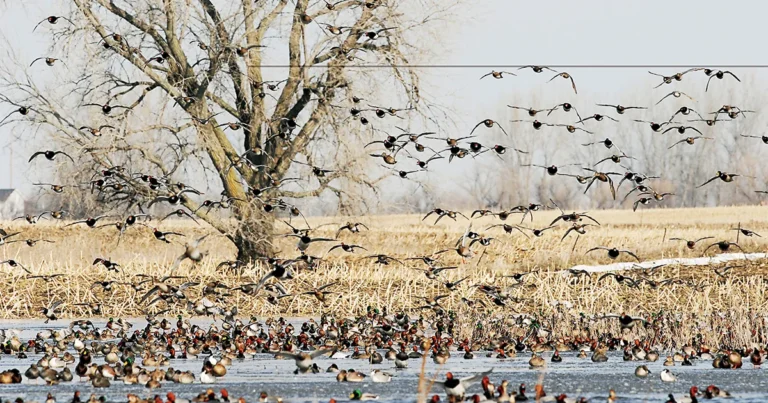
Bird migration is one of the most breathtaking natural events on the planet, yet it can be genuinely confusing to understand what you're looking at. Knowing where birds go, when they move, and how to spot them takes the right visual tools and a bit of context.
Research from the U.S. Fish & Wildlife Service shows that roughly 40% of bird species worldwide are migratory. As of 2026, platforms like eBird have logged more than 100 million observation checklists globally.
Knowing how to read migration maps and visual guides is where most birders either level up or stay stuck.
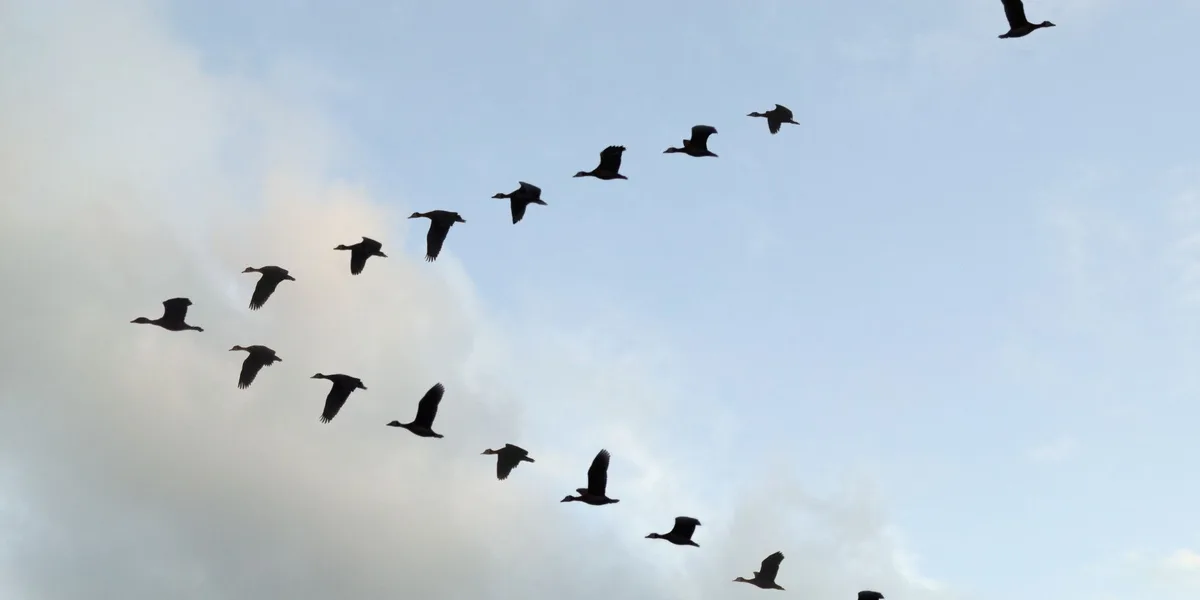
Image source: Bing (Web (fair-use with source credit))
Quick Answer
Bird migration is the seasonal movement of birds between breeding and wintering grounds. Around 40% of bird species migrate every year. Flyways are the major highway systems birds follow.
Visual tools like maps and field guides make these patterns easy to grasp. Most migration can be observed with binoculars and basic identification skills.
What Is Bird Migration (and Why Visuals Are the Real Key?)
Bird migration is the seasonal movement of birds from breeding grounds to wintering grounds and back again. It happens twice a year. Short-distance migrants travel a few hundred miles.
Long-distance migrants can cover thousands of miles nonstop.
Here's why visuals are central to understanding it all. Migration is fundamentally geographic. Without a map or diagram, it's tough to picture where birds actually go and why.
A flyway diagram tells you more in 10 seconds than paragraphs of text ever could.
Think of it like a road trip. If someone described the route to you in words alone, you'd still want a map. The same logic applies to bird migration.
Maps, range charts, and species illustrations fill in the gaps that plain description can't.
Visual tools also matter for identification in the field. When a warbler lands in a tree during migration season, you'll need to match what you see against illustrations and range maps to figure out what it is. That's where visual resources earn their keep.
Here's what good migration visuals typically include:
- Range maps showing breeding zones, wintering zones, and migration corridors
- Flyway diagrams tracing the major routes across continents
- Species illustrations with plumage details for quick identification
- Timeline charts showing peak migration periods by region and latitude
The Four Major North American Flyways
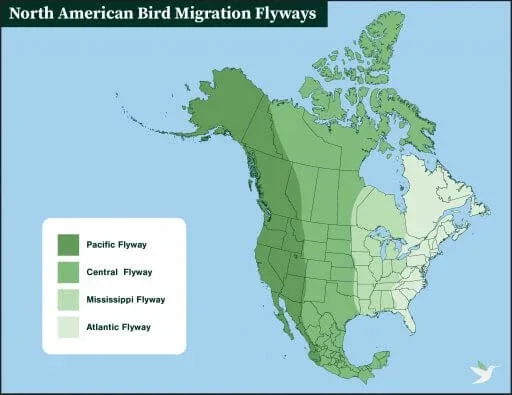
Image source: Bing (Web (fair-use with source credit))
Birds in North America follow four major flyways, like interstate highways in the sky. Knowing which flyway covers your area helps you figure out what to expect and when.
| Flyway | Spans | Notable Species |
|---|---|---|
| Atlantic | Eastern Canada to the Caribbean | Osprey, Ruby-throated Hummingbird, Blackpoll Warbler |
| Mississippi | Central Canada to Central America | Swainson's Hawk, American Goldfinch |
| Central | Western Canada to Mexico | Broad-winged Hawk, Mountain Bluebird |
| Pacific | Western Canada to Western Mexico | Rufous Hummingbird, Pacific Loon |
The Mississippi flyway is the widest, covering a huge stretch from the Great Plains to the Gulf Coast. The Atlantic flyway has some of the best-documented migration corridors on the continent. The Pacific flyway includes some of the most dramatic long-distance migrants, like the Arctic tern.
If you live near any of these flyways, you're in a good position to observe migration. Each one has different peak timing, different species, and different habitat types along the way.
Step-by-Step: How to Track and Visualize Migration in Your Area
Tracking bird migration takes a few steps, but each one builds on the last.
Step 1: Identify your flyway. Check which of the four major flyways covers your region. The U.S. Fish & Wildlife Service publishes detailed flyway maps.
Knowing your flyway sets the stage for everything else.
Step 2: Pull up migration maps. Platforms like eBird offer real-time migration visualizations showing where species have been reported recently. The Cornell Lab of Ornithology runs eBird, and their migration tools are among the best available.
Step 3: Check peak timing. Each species has a narrow window when it passes through. Warblers typically peak in mid to late spring across the eastern U.S. Fall migration peaks from September into November for most groups.
Step 4: Learn to read radar. Weather radar (NEXRAD) picks up bird migration density at night. Mass migrations show up as faint green or yellow blobs on radar screens. NOAA publishes guidance on interpreting these patterns for bird activity.
Step 5: Log your observations. Record what you see using a notebook, eBird checklists, or a birding app. Consistent logging over seasons reveals your own local patterns over time.
Key Visual Cues: How to Identify Migratory Birds

Image source: Bing (Web (fair-use with source credit))
Identifying migratory birds in the field relies heavily on visual cues. Shape, behavior, and plumage are your three main tools.
Shape comes first. Long wings suggest a long-distance migrant. A short, round body with stubby wings suggests a resident or short-distance mover. Warblers are tiny and quick.
Hawks have broad, rounded wings for soaring on thermals.
Plumage changes with the seasons. Many species look completely different in breeding versus non-breeding plumage. A male Scarlet Tanager in spring is bright red. In fall, it's olive-yellow with dark wings.
If you don't know this, you'll misidentify it in a heartbeat.
Behavior gives clues too. Some warblers hop along branches at eye level. Others stay near the canopy. Flycatchers often sit on open perches and sally out for insects.
Knowing these habits narrows down the species fast.
Field guides with range maps and seasonal plumage illustrations are essential. They show what to expect at the time of year and in your specific location.
Common Visual Mistakes That Throw Off New Birders During Migration Season
New birders make a handful of visual mistakes during migration season. Most of them are easy to fix once you know what to look for.
Mistake 1: Ignoring size and shape. A lot of people focus on color first. But in poor light or through binoculars, color is the least reliable feature. Shape and size are your best bet for a solid ID.
Mistake 2: Misreading range maps. Range maps show where a species lives over time, not just right now. A map might show a species in your area, but only during migration season. Check the seasonal indicators on the map before assuming a resident bird.
Mistake 3: Forgetting plumage variation. A female, a juvenile, and a non-breeding male can look completely different. If you're only memorizing one look, you'll miss a lot of birds.
Mistake 4: Neglecting the sky. A lot of migration happens overhead. Raptors soaring on thermals. Shorebirds flying in V-formation.
Warblers hiding in canopy cover. If you only look at eye level, you'll miss half the action.
Mistake 5: Assuming a bird is a resident when it's migrating. Dark-eyed juncos in the Midwest look like year-round residents to many people. But they're actually partial migrants, heading south for winter. Knowing the difference helps you watch the right places at the right times.
Safety, Legal Rules, and Conservation Concerns for Migratory Bird Watching
Watching migration comes with a few rules worth knowing. The Migratory Bird Treaty Act (MBTA) protects most migratory bird species in the United States and Canada. You can't trap, collect, or disturb protected birds, eggs, or nests without a permit.
Birding and photography are fine. Touching nests or handling birds is not.
The Convention on Migratory Species governs protections at the international level. It covers species that cross national borders along flyways. Each country has its own enforcement, but the core idea is shared: migratory birds belong to no single nation.
Habitat loss remains the biggest threat. Stopover sites like wetlands and coastal marshes are disappearing at an alarming rate. Every birder who logs observations on eBird contributes to conservation research that helps address these losses.
Collisions with buildings, windows, and wind turbines kill millions of birds each year. Most of these deaths happen during migration season, when birds are concentrated and fatigued. If you find injured birds near buildings, contact a licensed wildlife rehabilitator.
Don't try to handle them yourself.
Here are a few practical guidelines for responsible birding during migration:
- Stay on marked trails at wildlife refuges and protected areas
- Keep your distance from nests, rookeries, and feeding stations
- Don't play bird calls or playback to lure species into open view
- Avoid flash photography near sensitive roosting sites
- Report unusual sightings to local birding hotlines or eBird
What Laws Protect Migratory Birds?
The MBTA is the main U.S. federal law governing migratory bird protection. It makes it illegal to kill, capture, or harm protected species without authorization. Penalties can include significant fines and imprisonment for repeat violations.
Canada operates under similar provisions through the Migratory Birds Convention Act.
Frequently Asked Questions
When is the best time to watch bird migration?
Spring migration peaks from April through May across most of North America. Fall migration runs from late August through November. The exact timing shifts depending on latitude and species.
Northern areas see peak activity later in spring. Check local eBird reports for current conditions in your specific region.
How far do migratory birds travel in a season?
Distances vary widely by species. The Arctic tern migrates roughly 44,000 miles round trip annually. A Ruby-throated Hummingbird covers about 2,000 miles between its breeding and wintering grounds.
Short-distance migrants like Dark-eyed Juncos may travel just a few hundred miles south each fall.
What are the four flyways in North America?
North America has four major flyways: Atlantic, Mississippi, Central, and Pacific. Each flyway covers a distinct geographic corridor from breeding grounds to wintering areas. The Mississippi flyway is the widest.
The Pacific flyway carries some of the longest-distance migrants on the continent.
Do all birds migrate every year?
No. Around 40% of bird species are migratory, and many of those are only partial migrants. Some individuals of the same species will migrate while others stay put year-round.
Residency, partial migration, and full migration all depend on species, geography, and food availability.
Can you watch bird migration without special equipment?
Yes. Binoculars help, but you can spot raptors and shorebirds with the naked eye if you know where to look. Websites like eBird and apps like Merlin Bird ID make identification much easier.
Learn to check the sky. A lot of migration happens overhead in V-formations.
What is the biggest threat to migratory birds?
Habitat loss at breeding, stopover, and wintering sites is the number one threat worldwide. Climate change is also shifting migration timing and disrupting food sources. Building collisions and wind turbine strikes add to the toll.
Conservation programs along major flyways aim to address all three.
Final Takeaway: Building Your Own Migration Watch Routine
Understanding bird migration gets easier when you build a simple observation routine. Pick one location near a flyway. Visit it at the same time each week during migration season.
Log what you see on eBird or in a notebook.
The visual tools are out there. Migration maps, radar imagery, field guides with seasonal plumage, and range charts all work together. Use them side by side rather than in isolation.
A flyway map tells you what's possible. A field guide tells you what to look for. Your own observations fill in the local details.
Over a full year, you'll build a picture of how migration moves through your area. Peak dates for warblers. When the first northbound shorebirds arrive.
Which raptors use the thermals in October. That's knowledge no website can replace.
Keep it simple. Stay curious. And look up often.
That's where the magic happens.