Blackbird Facts
Understanding blackbird facts helps you identify these common backyard visitors with confidence. These birds adapt quickly to human landscapes and often become a regular, energetic presence in our gardens.
As of 2026, researchers emphasize that "blackbird" refers to distinct species depending on your location. The European blackbird (Turdus merula) and the North American Icteridae family represent different evolutionary paths.
Quick Answer
Blackbirds are common, adaptable songbirds found worldwide. European species belong to the thrush family. North American blackbirds represent the Icteridae family.
They eat insects, berries, and seeds. Most blackbirds build cup-shaped nests in trees or shrubs.
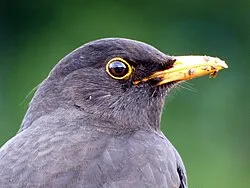
Image source: Bing (Web (fair-use with source credit))
The Blackbird Identity Crisis: Sorting Out the Species
If you are standing in a garden in London, a blackbird is a specific type of thrush. It is a solitary bird known for a mellow, fluting song and a bright yellow beak. You will see them hopping across lawns to hunt for worms.
In North America, the term is a blanket category for a diverse family of birds. These include Red-winged Blackbirds, Brewer’s Blackbirds, and various grackles. They are usually more social and often congregate in large, noisy flocks near wetlands or fields.
The Cornell Lab of Ornithology tracks these differences across continental regions. Confusing the two groups is common because their shared names ignore their separate genetic backgrounds. When you describe a blackbird, always check your regional field guide first.
Visual Identification: Reading the Beak and Plumage
Visual cues remain the most reliable way to identify these birds. Males and females often look quite different. This trait is known as sexual dimorphism.
In the European species, males have solid black feathers and a striking orange-yellow beak. Females and juveniles are typically dark brown with streaked chests. Their beak is much duller than that of the adult male.
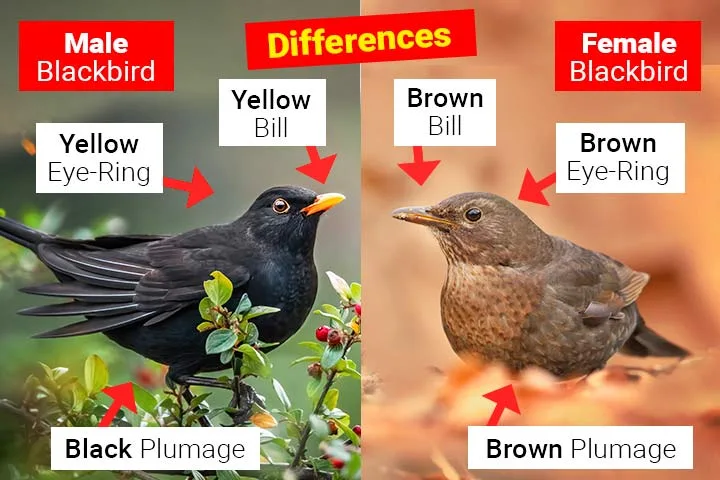
Image source: Web (Bing) / ar.inspiredpencil.com (Web image (fair-use with source credit))
North American species, like the Red-winged Blackbird, have specific identification marks. Males display bright red and yellow shoulder patches. Females look like large, dark sparrows.
- Beak shape: Thinner, sharper beaks generally indicate insect-eating habits.
- Plumage: Iridescence on feathers often catches the sunlight on North American species.
- Movement: Look for the distinctive, jerky hopping pattern on the ground.
Behavioral Clues: How to Tell Who’s in Your Yard
Behavior offers a window into what the bird is currently doing. A blackbird tilting its head on the lawn is using sensitive hearing to detect vibration. It is hunting for soil-dwelling invertebrates.
If you see a bird standing still on a fence post and making a harsh, mechanical call, it is likely defending a territory. These birds are protective of their immediate food sources and nesting sites. They rarely tolerate rivals during the spring breeding season.
Migration behavior also separates the groups. Many North American blackbirds are highly migratory. They form massive flocks that can number in the thousands during the winter months.
European blackbirds are generally more sedentary, staying in the same garden year-round if the food holds out.
Ecological Impact: Why Gardeners and Ecologists Care
Blackbirds perform a vital role in local ecosystems as natural pest managers. They consume a vast number of garden pests, including snails, slugs, and harmful moth larvae. A single family of blackbirds can significantly lower the insect population in your flower beds.
The Royal Society for the Protection of Birds notes that these birds also act as seed dispersers. They consume small fruits and berries, then deposit the seeds in new locations. This cycle helps maintain the diversity of local plant life.
| Benefit Type | Ecological Role | Impact on Garden |
|---|---|---|
| Pest Control | Consumes slugs and larvae | Protects vegetable yields |
| Seed Dispersal | Moves seeds through droppings | Encourages wild plant growth |
| Soil Health | Probing action aerates dirt | Improves root oxygenation |
Common Identification Pitfalls and Misinterpretations
The most frequent mistake is confusing a true blackbird with a European Starling. Starlings are smaller, shorter-tailed, and have speckled feathers that look metallic in the light. Their beaks are different shapes and they do not have the same song style.
Grackles also cause confusion. They are larger, move with a distinct strut, and have very long, wedge-shaped tails. They are often seen walking confidently in parking lots or near water.
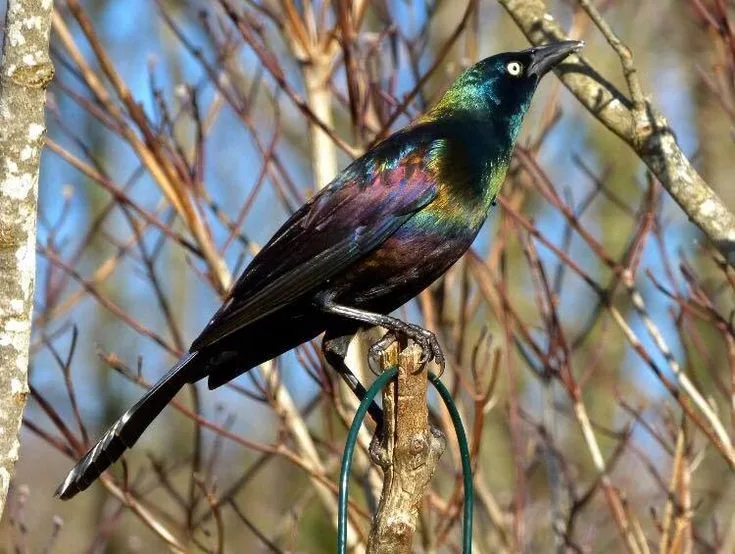
Image source: Bing (Web (fair-use with source credit))
- The Starling Trap: Don't rely on color alone. Starlings have purple and green sheens.
- The Grackle Tail: If the tail looks oversized and heavy, it is likely a grackle.
- Song Analysis: Starlings make strange, clicking, and whistling sounds. Blackbirds usually sing in clear, musical phrases.
Legal Protections and Backyard Conservation Best Practices
True blackbirds and their North American counterparts enjoy robust legal status in many regions. In the United States, the Migratory Bird Treaty Act protects most native species from harm, capture, or nest destruction. You cannot legally keep these birds as pets or disturb active nesting sites.
In the United Kingdom, the Wildlife and Countryside Act 1981 provides similar safeguards for the European blackbird. These laws exist to ensure populations remain stable despite rapid urbanization. Always consult your local wildlife agency if you encounter an injured bird.
Conservation efforts often focus on protecting the nesting environment rather than direct intervention. You should avoid trimming dense hedges or shrubs during the peak breeding months. This simple step keeps chicks safe from predators while they remain in the nest.
Bird-safe glass standards are another helpful way to protect your local population. Collisions with windows account for significant mortality in urban areas. You can apply window decals or film to break up reflections that confuse birds during flight.
- Avoid spring pruning: Check hedges for nests before starting yard work.
- Use window film: Reduce surface glare to prevent accidental strikes.
- Maintain clean water: Scrub your birdbath weekly to prevent disease spread.
- Report concerns: Contact local wildlife rehabilitators if you find a grounded or clearly injured bird.
Frequently Asked Questions
How can I attract more blackbirds to my garden?
Provide a mix of food sources and clean water. These birds prefer suet, mealworms, and crushed berries over basic mixed seeds. A shallow, wide birdbath encourages them to bathe frequently.
Keep your lawn natural and leaf-littered to provide them with a steady supply of worms and soil-dwelling insects.
Do blackbirds migrate during the winter?
Many North American species migrate south to escape extreme cold and frozen soil conditions. European blackbirds are generally more local but may shift their range toward human settlements. They look for areas where the ground remains soft enough for probing.
You might see more of them in your garden when natural food sources dwindle elsewhere.
Why is a blackbird attacking my window?
The bird is reacting to its own reflection during the breeding season. It views the reflection as an intruding rival attempting to steal its territory. You can solve this by covering the exterior of the window with a screen or soaping the glass until the territorial behavior stops.
Are blackbirds considered a nuisance species?
In some agricultural settings, large flocks of blackbirds are viewed as a nuisance because they can damage grain crops or fruit orchards. However, in residential gardens, they are widely considered beneficial for their role in insect control. Their presence is generally a sign of a healthy, functioning ecosystem in your immediate area.
What should I feed a young bird I found on the ground?
Do not feed a grounded fledgling unless a wildlife expert explicitly tells you to do so. Many young birds are just learning to fly and are still under the care of their parents. You should keep pets indoors and monitor the area from a distance to see if the adults return to provide food.