Bird Songs and Calls
Understanding bird songs and calls is like learning the secret language of your local environment. Most of us hear a chaotic mix of chirps, but there is a rigid structure to these vocalizations.
Scientists note that most bird species have a vocal range between 1 kHz and 8 kHz, which is well within the human audible spectrum. As of 2026, research from the Cornell Lab of Ornithology confirms that these sounds are essential for survival and reproduction.
Quick Answer
Bird songs and calls are distinct forms of avian communication. Songs are complex melodies primarily used for mating and territorial defense. Calls are simple, short notes for daily survival and navigation.
Both rely on a specialized organ called the syrinx. You can identify birds by listening to these specific acoustic patterns.

Image source: Web (Bing) / wildbirdsgpw.com (Web image (fair-use with source credit))
Why Just Listening Isn't Enough to Identify Birds
If you rely solely on your ears, you will likely miss the context of the interaction. You must observe the bird's posture and behavior to confirm what you are hearing. Birds often sing from high, exposed perches to project their sound across a territory.
Conversely, contact calls are often made while the bird is moving through dense brush.
Our research suggests that beginners often struggle because they ignore the environment. A song heard in a wetland during May is almost certainly different from a similar-sounding song in a forest in October. You should always document the habitat and the time of day alongside the vocalization.
Check the bird's physical state while it vocalizes. Is it fluffed up, or is it swaying? These physical cues often correspond to the intensity of the song.
Understanding this relationship prevents you from misidentifying a simple alarm call as a territorial song.
The Essential Difference Between Songs and Calls
Songs and calls serve very different biological functions in the lives of birds. A song is usually a complex, repetitive vocalization that lasts several seconds or even minutes. Males primarily use songs to attract mates or warn off rivals.
Songs are most frequent during the spring breeding season.
Calls are much simpler and consist of only one or two notes. They are used for immediate communication between individuals. Examples include alarm notes, contact notes for flocking, and begging calls from hungry chicks.
Both sexes use calls throughout the entire year, regardless of the breeding season.
The biological machinery behind these sounds is the syrinx. This vocal organ is located at the base of the trachea where it branches into the lungs. Unlike the human larynx, the syrinx allows birds to produce two distinct sounds simultaneously.
This unique anatomy creates the complex trills and overlapping notes that define many species.
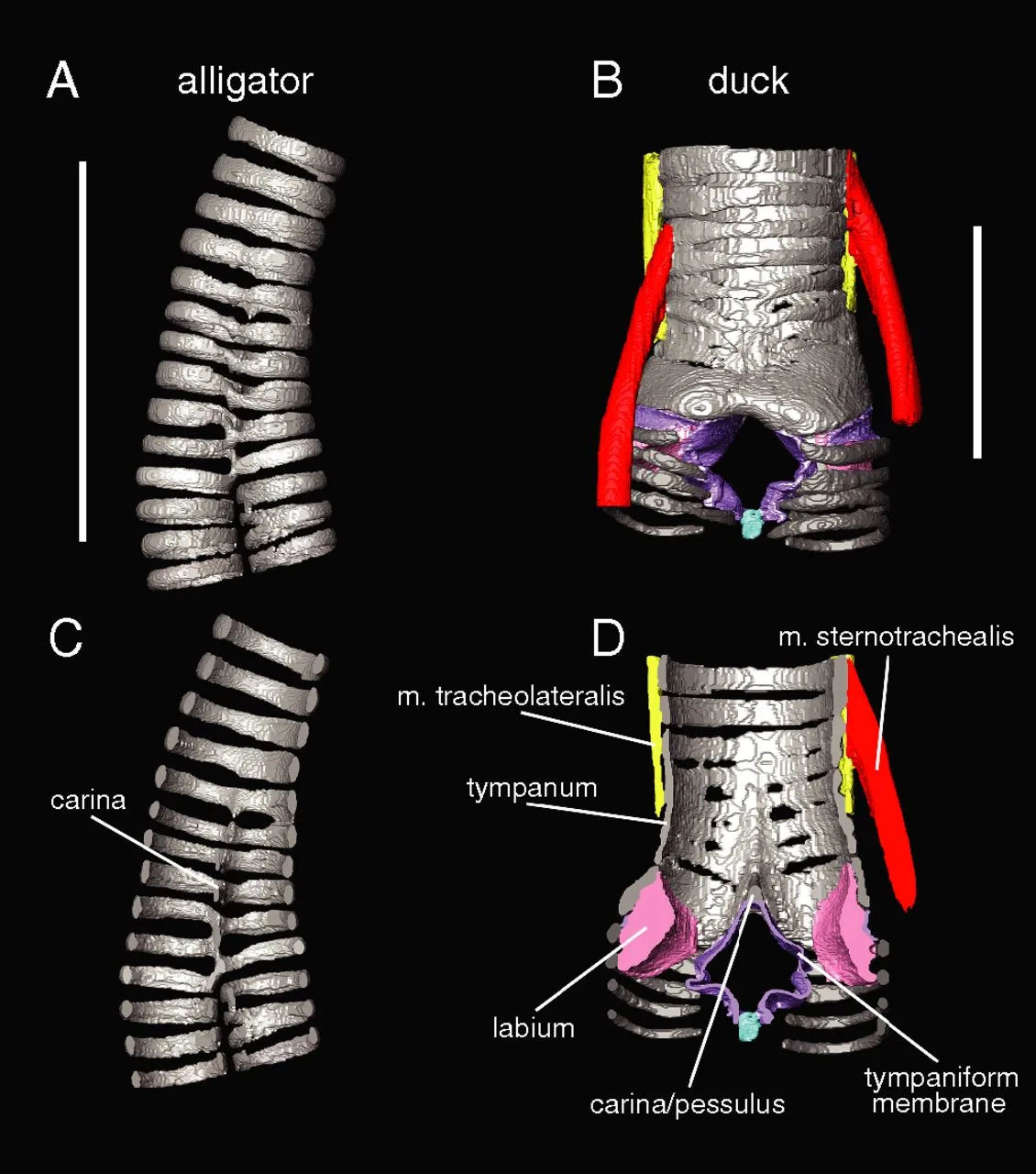
Image source: Web (Bing) / pnas.org (Web image (fair-use with source credit))
Decoding the Rhythm, Cadence, and Frequency
You should prioritize rhythm over pitch when trying to identify a species by sound. Pitch can be difficult to judge without perfect relative hearing. Rhythmic patterns are much easier to map to your memory.
Think of the pattern as a series of long and short pulses.
Frequency refers to how high or low the sound is on a musical scale. Some species, like the Blackpoll Warbler, produce very high-frequency songs that push the limits of human hearing. Other birds, like the Mourning Dove, rely on low-frequency, hollow-sounding coos.
You can often visualize these differences using a spectrogram, which displays time, frequency, and intensity on a graph.
| Sound Characteristic | What to Listen For |
|---|---|
| Rhythm | Speed, repetition, and pauses between notes |
| Frequency | High-pitched whistles vs low-pitched hums |
| Cadence | Steady flow vs staccato, broken bursts |
| Complexity | Simple monotone vs varied multi-note phrases |
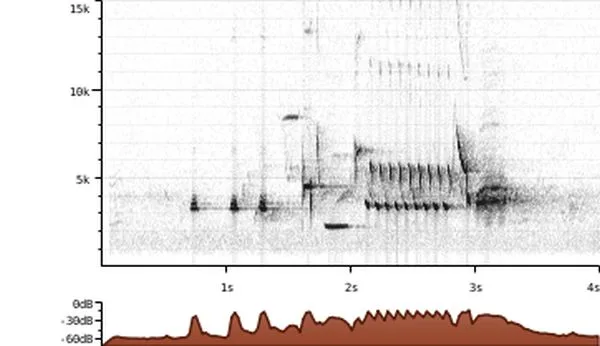
Image source: Web (Bing) / birdsoutsidemywindow.org (Web image (fair-use with source credit))
A Practical Workflow for Field Identification by Ear
To master field identification, you need a repeatable process. Don't try to identify everything you hear at once. Start by isolating a single sound that stands out from the rest of the forest noise.
- Stop and Breathe: Silence yourself for at least one minute to let the local birds recover from your intrusion.
- Isolate the Sound: Focus your attention on one specific bird's vocalization, ignoring the common background chatter.
- Map the Rhythm: Use a mnemonic device to remember the cadence. For example, "Teacher-teacher-teacher" is a classic way to remember an Ovenbird.
- Observe the Source: Once you have the rhythm, locate the bird with your eyes. Confirming the visual identity cements the sound-to-species connection in your brain.
- Record if Necessary: Use a simple audio recording app to capture the sound for later analysis against verified databases like the Macaulay Library.
Common Mistakes That Trip Up Even Experienced Birders
The most common error is failing to account for mimicry. Mockingbirds, Thrashers, and Starlings are notorious for copying other species. If you hear a Red-tailed Hawk scream, check to see if a Blue Jay or a Mockingbird is nearby.
It is often the mimic rather than the bird you expect.
Another mistake is assuming a bird is a specific species just because it sounds similar to a recording you heard recently. Bird vocalizations can vary by geographic region, a phenomenon known as bird dialects. A song from a population in one state might sound slightly different from the same species in a state thousands of miles away.
Finally, do not underestimate the impact of ambient noise. Wind, traffic, or even the sound of running water can mask high-frequency notes. If the environment is noisy, you may only hear the lower-frequency parts of a song.
Always verify your observations in quieter conditions if you are unsure.
Leveraging Anchor Species to Master Your Local Habitat
Every geographic area has "anchor species" that provide the baseline for your listening environment. These are the common birds whose songs are so familiar that you stop consciously hearing them after a while. By identifying these regulars first, you clear the auditory clutter from your mind.
This approach lets you focus your attention solely on sounds that fall outside your established baseline. If you live in the Northeast, the American Robin is a classic anchor species. Once you identify its cheery, rhythmic song, you can effectively filter it out to hear the more subtle calls of nearby warblers.
Create a list of five common birds in your specific ZIP code. Listen to their songs repeatedly until you can recognize them instantly without thinking. Once these become background noise, your brain naturally becomes more sensitive to the "new" sounds in your environment.
Frequently Asked Questions About Avian Communication
Why do birds sing at dawn?
Birds sing during the dawn chorus because the air is calm and cool. Sound travels much further in these conditions than it does in the heat of the day. This timing also allows males to maximize their chances of attracting a mate before the busy foraging day begins.
Can I identify all birds just by their calls?
You cannot identify every single bird species solely by call. While many birds have unique vocalizations, some species are nearly identical in their acoustic signatures. Combining auditory data with visual observations of size, color, and behavior is always the most reliable method for identification.
Do birds ever lose their ability to sing?
Birds do not lose their vocal ability, but they do stop singing outside of their breeding season. Hormonal changes trigger the urge to sing, which typically fades as the days grow shorter. Most birds shift to simple contact calls during the winter months to survive.
Why do some birds imitate other species?
Mimicry is an evolutionary tool used to confuse rivals or impress potential mates. Birds like the Northern Mockingbird incorporate the songs of others to build a more complex, impressive repertoire. This display signals their intelligence and dominance within their territory to other birds.
Should I use audio apps to identify bird sounds?
Audio recognition apps are excellent learning aids, but they should not be your only source of information. These tools can sometimes misidentify sounds due to background noise or poor recording quality. Always verify the app's result by comparing it to your own observations in the field.