Great Horned Owl Facts
Learning about great horned owl facts reveals why this bird is considered the most formidable predator of the North American night. Often called the tiger of the sky, this raptor is a master of silent flight and specialized hunting.
As of 2026, researchers note that Bubo virginianus occupies a range stretching from the Arctic tree line to the edges of South America. You can identify these birds by their distinctive size, which averages roughly 20 to 25 inches in total body length.
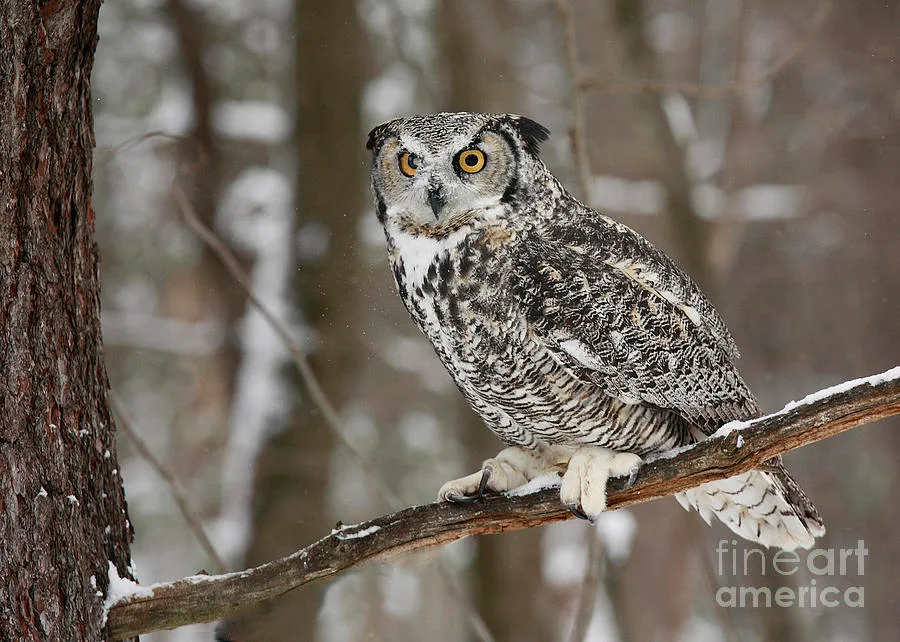
Image source: Bing (Web (fair-use with source credit))
Quick Answer
Great horned owls are powerful, large nocturnal raptors. They hunt diverse prey including skunks and rodents. Their signature ear tufts are not ears.
These birds are protected under federal law. They maintain territories across most of North America.
Recognizing the Great Horned Owl in the Wild
Identifying a great horned owl starts with looking at the silhouette against the evening sky. These birds are bulky and possess a wide wingspan that can reach nearly 4.8 feet. Unlike smaller owls, their flight is steady and powerful, though their feathered wings move in absolute silence.
You will most often encounter them perched high in a tree, usually near the main trunk. They prefer areas with a mix of woods and open fields, as this landscape offers the best vantage points for hunting. If you are watching at dusk, look for a dark, heavy shape sitting perfectly still against the horizon.
Decoding Their Signature Features and Physical Profile
The most famous physical trait of the great horned owl is the set of tufts on its head. These are known as plumicorns, and they serve no purpose in hearing. They function as a visual signal, helping the bird express aggression or blend into its environment by breaking up its round outline.
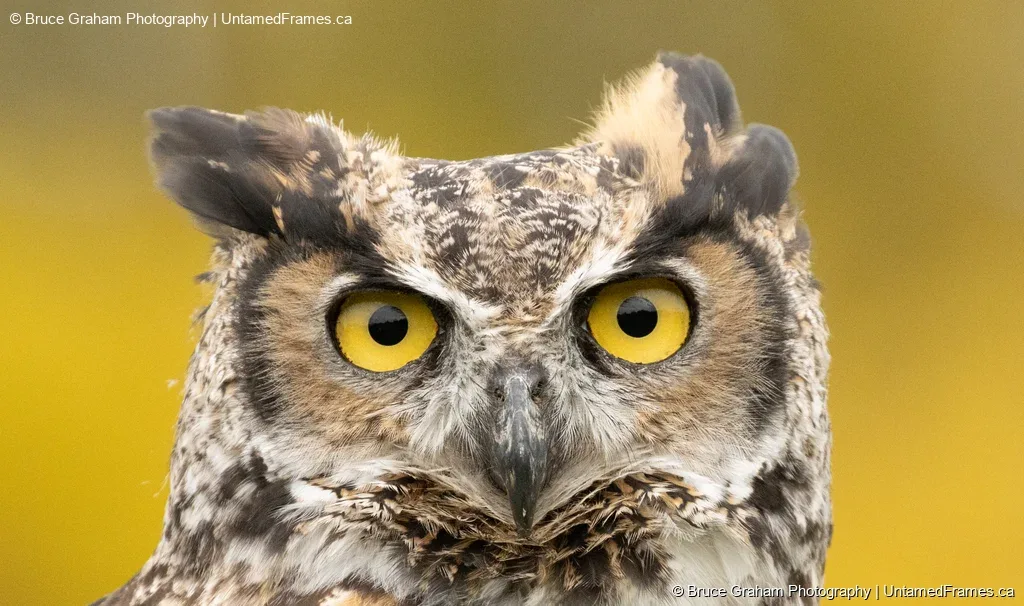
Image source: Web (Bing) / untamedframes.ca (Web image (fair-use with source credit))
Their eyes are another defining feature, appearing as bright, yellow orbs that are fixed in their sockets. Because they cannot shift their gaze, they rely on a flexible neck that can rotate up to 270 degrees. This provides an immense field of view without requiring the bird to move its body.
| Feature | Description | Function |
|---|---|---|
| Plumicorns | Feather tufts | Camouflage and signaling |
| Facial Disc | Concave feathers | Funnels sound to ears |
| Talons | Massive, curved | Crushing and gripping prey |
| Plumage | Mottled brown/gray | Cryptic coloration for forest life |
How to Track Their Behavior Using Audio and Visual Cues
Listening for their call is the most reliable way to locate them in the dark. Their vocalization is a low, booming sequence that sounds like a series of hoots, often described as a rhythmic "hoo-h-hoo, hoo-hoo." Males typically have a deeper, more resonant voice than females.
You might also discover their location by watching other wildlife. Crows and blue jays often congregate to mob a great horned owl, creating a loud, frantic commotion to drive the predator away. If you notice a flock of crows acting unusually agitated in a specific grove, take a closer look with binoculars.
Essential Differences Between Great Horned and Barred Owls
It is very common to mistake a bar-patterned owl for a great horned owl in dense woods. The barred owl is smaller, rounder, and lacks the prominent ear tufts. You can usually tell them apart by their call, as the barred owl produces a distinct "who cooks for you" sequence.

Image source: Web (Bing) / earthofbirds.com (Web image (fair-use with source credit))
According to the Cornell Lab of Ornithology, the great horned owl is the only owl in North America with actual ear tufts that exhibits this specific size profile. When in doubt, check the eyes. A great horned owl has piercing yellow irises, while barred owls have dark, almost black eyes.
Responsible Viewing: Ethical Standards and Legal Protections
These raptors are protected under the Migratory Bird Treaty Act, making it illegal to harass, trap, or disturb their nests. If you find a nest, keep a significant distance to avoid causing stress to the parents or the owlets. Using a high-zoom camera or binoculars is the best way to observe without interference.
Avoid using flash photography, as it can temporarily blind the owl and disrupt its ability to hunt or defend itself. Never use audio playback tools to "call in" an owl, as this forces the bird to expend unnecessary energy defending a territory that isn't really being invaded. Always follow guidelines from the [U.S.
Fish and Wildlife Service](https://www.fws.gov) regarding respectful wildlife observation.
Ecological Impact: Why They Are the Tigers of the Sky
Great horned owls act as a vital check on populations of small mammals, rodents, and even other predators. Because they consume a wide variety of prey, they help prevent any single species from dominating the local environment. This diet includes rabbits, mice, rats, and the occasional skunk.
Their impact is significant because they are not picky eaters. They can hunt in diverse habitats ranging from dense forests to suburban parks. By managing rodent numbers, they indirectly support local agricultural interests and backyard vegetable gardens.
Beyond hunting, they play a role in housing for other forest creatures. Since they rarely build their own nests, they typically recycle old structures left behind by hawks or squirrels. Once the owls move on, these refurbished platforms often provide homes for other birds or small mammals.
Frequently Asked Questions About Great Horned Owls
Do great horned owls pose a threat to small pets?
They are opportunistic hunters and may target small cats or dogs left outside unattended at night. You should keep small pets indoors after dusk to ensure their safety. This is a common precaution in areas with high owl activity.
How many eggs does a female owl usually lay?
A typical clutch consists of one to four eggs, with two being the most common number. The female incubates them for about 30 to 35 days. The male provides food for the female throughout this period.
Can I put up a nesting box to attract them?
While some species of owls take to boxes, great horned owls usually prefer open, sturdy platforms. They often choose old crow or hawk nests rather than enclosed boxes. If you want to help, focus on maintaining mature trees with large, sturdy forks in the branches.
Why do I see them out during the day?
Great horned owls are primarily nocturnal, but they sometimes hunt during the day if food is scarce. You might also spot them if they are disturbed by other animals. If you see one in the daytime, keep a respectful distance to avoid causing stress.
How long do these birds live in the wild?
In the wild, they typically live about 10 to 15 years on average. Survival depends on available prey and successful hunting habits. Young owls face the highest risk during their first winter of independence.