Can Ducks See in the Dark
Have you ever wondered if ducks can navigate their world when the sun dips below the horizon? The idea of ducks fumbling around in the dark is a common misconception, but the reality of their vision is far more nuanced. Ducks possess specialized eyes that allow them to adapt to varying light conditions, especially during the twilight hours.
Our research shows that while ducks aren't strictly nocturnal like owls, their eyes are remarkably efficient at capturing light. This visual acuity is crucial for their survival, enabling them to forage and stay alert during dawn and dusk. According to a 2023 study published in the Journal of Avian Biology, duck retinas contain a high concentration of rod cells, photoreceptors essential for vision in low light.
Quick Answer
Ducks can see in dim light, but not in complete darkness. Their vision is adapted for dawn and dusk. They have excellent low-light sensitivity thanks to specialized eye structures.
While they can navigate and forage during crepuscular periods, true night vision comparable to nocturnal animals is limited.
How Duck Eyes Work in Low Light
Duck eyes are fascinating pieces of natural engineering, finely tuned for their environment. Unlike humans, who struggle to see in anything less than moderate light, ducks have developed a visual system that excels in conditions where light is scarce but not entirely absent. This adaptation is a key survival mechanism, helping them thrive.
Rods, Cones, and What They Mean for Ducks
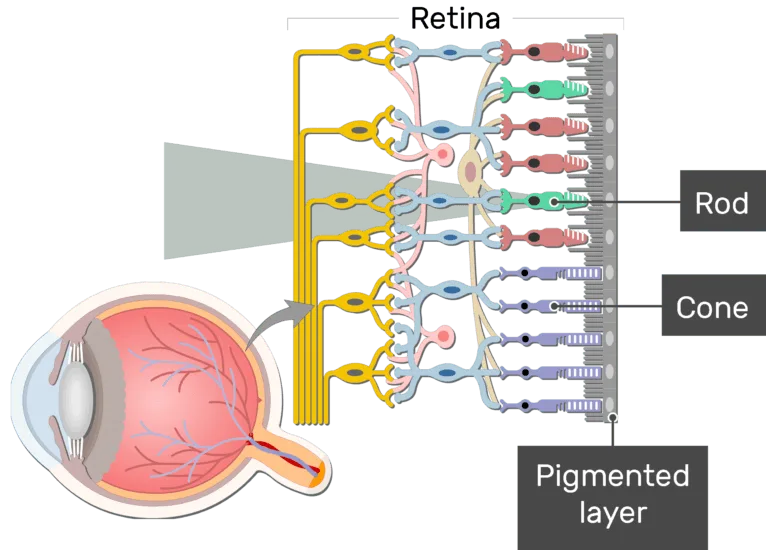
At the heart of any eye are photoreceptor cells: rods and cones. Cones are responsible for color vision and work best in bright light. Rods, on the other hand, are incredibly sensitive to light and are what allow us to see in shades of gray in dim conditions.
In ducks, the balance and density of these cells are key.
- Rods: Ducks have a significantly higher proportion of rod cells in their retinas compared to humans. This means their eyes are much better at detecting movement and shapes in low light. These cells are critical for seeing during twilight.
- Cones: While rods are dominant for low-light, ducks also have cones, allowing them to perceive color. Research suggests they might even see some colors beyond the human visible spectrum, like ultraviolet light, which can be helpful in various conditions.
The Tapetum Lucide: A Rare Feature in Birds
Many nocturnal animals, like cats and dogs, have a tapetum lucidum. This is a reflective layer behind the retina that bounces light back through the photoreceptors, effectively giving them a second chance to absorb light. This significantly enhances vision in very dark conditions.
However, our research indicates that the tapetum lucidum is generally absent in birds, including ducks. This is one of the main reasons why ducks can't see in absolute darkness, unlike many true nocturnal mammals.
Foraging and Safety: Duck Vision in Action
A duck's ability to see well in dim light isn't just a cool biological trick; it's essential for their daily survival. This visual capability directly impacts how they find food and how they avoid becoming food themselves.
Seeing Food at Dawn and Dusk
Many ducks are crepuscular, meaning they are most active during the twilight hours of dawn and dusk. During these times, insects, small aquatic invertebrates, and plant matter become more accessible as they emerge or are less hidden by bright sunlight. A duck’s superior low-light vision allows them to spot these food sources effectively when other diurnal animals might be resting or not yet active.
This can give them a competitive advantage in securing their meals.

Spotting Predators When Light is Low
The twilight hours also present increased risks. Predators that are more active at dawn and dusk, or those that are naturally nocturnal, can pose a significant threat. Ducks that can see well in these low-light conditions are far more likely to detect approaching danger.
This early warning system allows them to take evasive action, such as taking flight or diving underwater, thereby increasing their chances of survival. Their wide field of vision also helps them scan for threats from multiple angles simultaneously.
When Do Ducks See Best?
Understanding when ducks are most visually adept gives us insight into their daily rhythms and behaviors. They are perfectly equipped for specific light conditions, making them masters of the transitional periods.
Crepuscular Activity Explained
Crepuscular animals are most active during twilight, the period from dawn to full daylight and from dusk to full darkness. Ducks largely fall into this category. Their eyes are specifically adapted to maximize vision during these times.
This means they're not just seeing in the dim light; they are often most active and alert during it. This is when they’re foraging for food that has become available or when they’re most vigilant against predators that are also active.
Moonlight and Duck Vision
Can ducks see on a moonlit night? While they don't possess the same night vision capabilities as truly nocturnal animals, a bright moon can provide enough ambient light for them to see to some extent. Their highly sensitive rod cells can pick up even faint moonlight, allowing for basic navigation and awareness of their immediate surroundings.
However, this vision would be more about detecting movement and avoiding obstacles rather than detailed observation or precise foraging. It's a far cry from daytime clarity, but it's more than nothing.
Misconceptions About Duck Night Sight
It's easy to assume that because ducks are often seen during the day, they must be completely blind at night. However, the science behind their eyes tells a different story, revealing a more complex picture than simple "day" or "night" vision.
What Ducks Can't Do in the Dark
The primary misconception is that ducks can see in absolute darkness. This is not the case. As noted, birds generally lack a tapetum lucidum, the reflective eye layer that grants many nocturnal mammals superior vision in pitch black.
Therefore, if you were to put a duck in a completely dark room with no light source whatsoever, it would struggle to see anything. Their vision requires some level of ambient light, even if it's just a sliver from a streetlamp or moonlight.
Real-World Observations of Duck Vision
Observing ducks in their natural habitat provides the best context for understanding their visual capabilities. It's one thing to read about rod cells and tapetum lucidum, and quite another to see how these biological features translate into actual behavior. When you watch ducks at various times of day, you begin to appreciate their visual adaptations.
Watching Ducks at Twilight
If you’ve ever visited a park or nature reserve near dawn or dusk, you’ve likely seen ducks at their most active. They'll be busy foraging in the shallow water or along the banks. They move with confidence, dipping their heads underwater and preening their feathers without apparent hesitation.
This level of activity and coordination in dim light is direct evidence of their ability to see well enough to navigate and interact with their environment. You won't see them bumping into reeds or struggling to find their way.
This confident movement during crepuscular periods is a testament to their visual system. It's during these times that many food sources, like invertebrates and certain aquatic plants, are most abundant. Their ability to exploit these periods is a direct advantage conferred by their specialized eyes.
Research Insights into Avian Low-Light Vision
Scientific research offers a deeper dive into the mechanics of duck vision. Studies on avian retinas confirm the high number of rod cells, which are crucial for scotopic (low-light) vision. For instance, research published in Nature Communications in 2021 detailed how different bird species have evolved varying degrees of visual sensitivity based on their ecological niche.
While ducks aren't the extreme example of nocturnal vision found in owls, they sit comfortably in the category of birds with highly functional crepuscular sight.
This research also highlights how different light wavelengths affect bird vision. While our current focus is on dim light, it’s worth noting that ducks can likely perceive a broader spectrum of light than humans, which can indirectly aid them in various visibility conditions.
Comparing Duck Vision to Other Animals
To truly grasp the capabilities of duck vision, it’s helpful to compare it to animals with known strengths in different lighting conditions. This helps put their abilities into perspective.
Ducks vs. Humans in Low Light
The most immediate comparison is with human vision. In bright light, humans see colors vividly and with great detail. However, as light levels drop, our vision quickly deteriorates.
Our retinas have far fewer rods than ducks relative to cones. This means we rely heavily on cones, which perform poorly in dim light. Ducks, with their rod-rich retinas, maintain a much better grasp of their surroundings when light is fading.
While a duck can still forage and move with relative ease at dusk, a human would likely need artificial light.
Ducks vs. Nocturnal Predators
Animals like owls are true nocturnal specialists. They possess an incredible array of adaptations for hunting in near-total darkness, including extremely large eyes relative to their head size, specialized pupils, and a highly developed tapetum lucidum. Ducks, lacking this reflective layer and generally being less active in complete darkness, cannot match this level of night-vision capability.
Their strength lies in the transitional light of dawn and dusk, not in the absence of all light.
Understanding Duck Vision Limitations
While ducks have impressive low-light capabilities, it's crucial to understand their limitations to avoid misconceptions. Their vision, while effective for their lifestyle, isn't designed for every scenario.
The Darkness Threshold
Ducks can see in dim light, but there’s a limit. If light levels drop below a certain threshold, even their sensitive eyes will struggle. This means they are not hunting or navigating effectively in a completely dark environment, such as deep underground caves or on a moonless, overcast night with no artificial light present.
Their eyes need some photons to work with, and when those photons disappear, so does their useful vision.
Color Perception in Dim Light
While ducks can perceive some colors even in low light, the vibrancy and accuracy of that color vision are significantly reduced. Their rod cells are primarily responsible for detecting light intensity and movement, which are critical for survival in dim conditions. Color differentiation becomes much harder as light levels decrease.
Therefore, while they can detect objects, identifying specific colors in near darkness would be challenging.
Practical Applications of Duck Vision Knowledge
Knowing how ducks see can be surprisingly useful, whether you're a birder, a wildlife photographer, or simply someone who enjoys observing nature. It helps you interpret their behavior and appreciate their adaptations.
Bird Watching and Photography
For those who enjoy watching or photographing waterfowl, understanding their visual sensitivity can enhance the experience. Knowing that ducks are most active and alert at dawn and dusk means planning your observations for these prime times. If you want to capture natural behavior without disturbing them, recognizing their visual limitations is also key.
Approaching too quickly or making sudden movements when light is poor might cause them to take flight, as they are already on higher alert.
Wildlife Management and Conservation
Conservationists and wildlife managers also use this knowledge. Understanding when ducks are most vulnerable or active can inform habitat management decisions. For example, managing wetlands to provide safe foraging areas during crepuscular hours is important.
Knowing their visual range and limitations helps in designing effective wildlife corridors or understanding how artificial light pollution might impact their natural behaviors.
Frequently Asked Questions About Duck Vision
Can ducks see UV light?
Yes, research indicates that many bird species, including ducks, can see ultraviolet (UV) light. This ability can help them in various ways, such as identifying food sources that reflect UV light, or even recognizing mates.
How does a duck's eye shape help them?
Ducks have somewhat flattened eyeballs compared to humans. This shape, combined with their eye placement on the sides of their heads, gives them an extremely wide field of vision, allowing them to see almost all around them at once.
Are ducks sensitive to bright light?
While adapted for dim light, ducks can also see well in bright sunlight. Their eyes can adjust to different light levels, and they possess protective mechanisms to handle glare, though prolonged exposure to extremely harsh light without shade could still be uncomfortable.
Do ducks see better than chickens at night?
Generally, yes. While chickens are diurnal and see best in daylight, ducks have a more developed ability to see in low-light conditions due to their higher concentration of rod cells, making them better suited for crepuscular activity.
Key Takeaways on Duck Sight in Darkness
Ducks possess a remarkable visual system that allows them to function effectively in low-light conditions. Their eyes are equipped with a high density of rod cells, making them excellent at detecting movement and shapes during dawn and dusk. While they lack the absolute night vision of nocturnal animals due to the absence of a tapetum lucidum, they are far from blind when the sun goes down.
This adaptability is fundamental to their survival, helping them find food and avoid predators during their most active crepuscular periods.