Types of Hawks
Identifying the different types of hawks is a rewarding skill that transforms every walk into a potential discovery. Once you learn to look for specific silhouettes and behaviors, you’ll notice these raptors are far more common than you might expect.
The vast majority of hawk species in North America fall under the protection of the Migratory Bird Treaty Act as of 2026. This federal standard prohibits the possession of any feathers, nests, or eggs, making observation the only legal way to enjoy these birds.
Quick Answer
Common types of hawks include the Red-tailed and Cooper’s species. Buteos feature broad wings for soaring over open terrain. Accipiters possess shorter wings for agile forest hunting.
Identification requires observing the tail shape and flight style. Expert birders look for the overall bird impression.
The Jizz Method: Identifying Hawks Through Silhouette and Behavior
Experienced birders often use a concept called jizz to identify raptors at a distance. This term refers to the overall impression, shape, and movement of a bird rather than just its color. When you spot a hawk, you should first assess the silhouette against the bright sky.
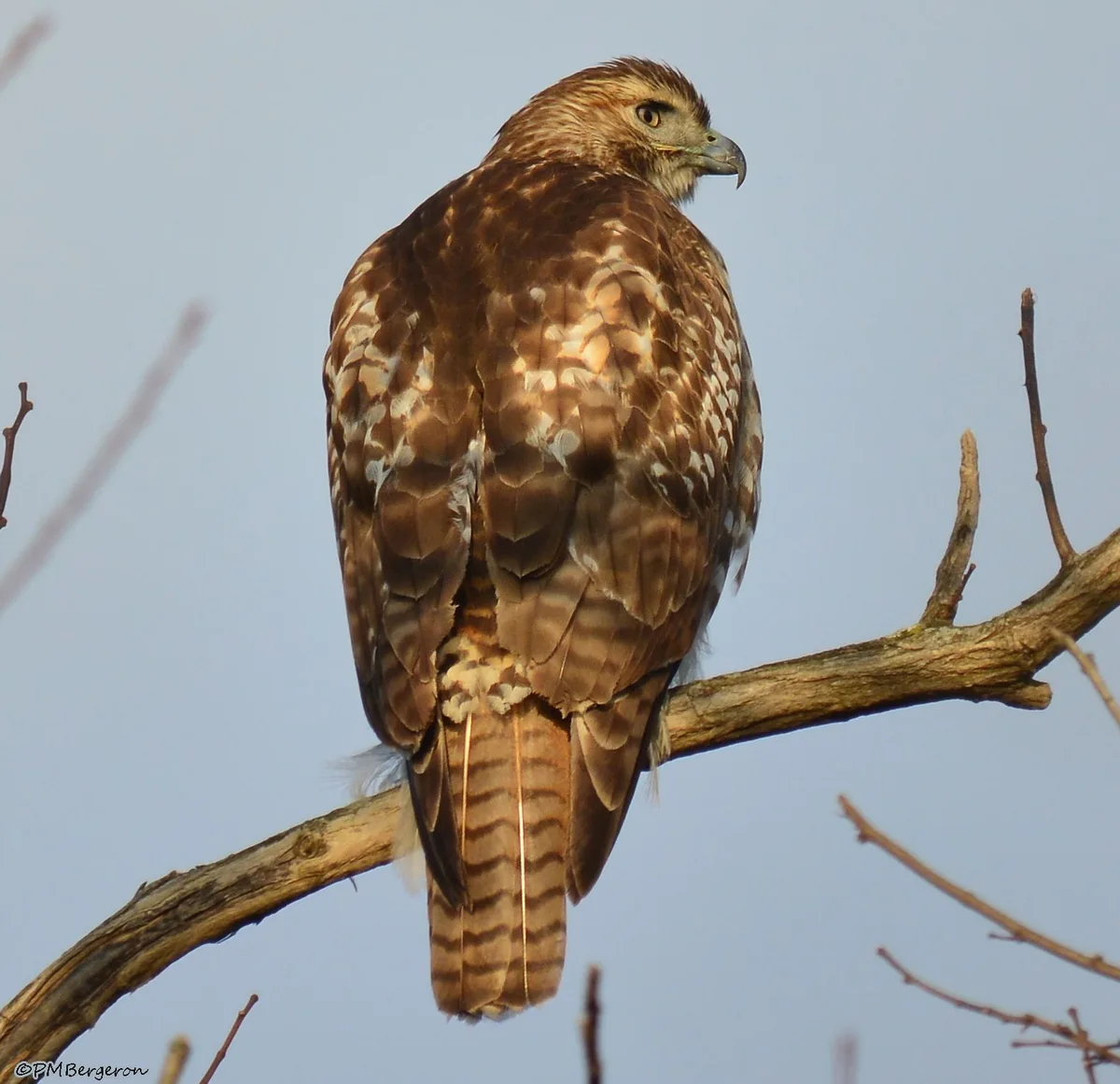
Image source: Web (Bing) / pinterest.com (Web image (fair-use with source credit))
Consider how the wings attach to the body and the relative length of the tail. Buteos, such as the Red-tailed Hawk, often appear thick and heavy-bodied. Accipiters, like the Sharp-shinned Hawk, have a sleek, streamlined profile.
These physical traits remain constant even when light conditions make plumage colors impossible to see.
The Two Families: Buteos vs. Accipiters
Most hawks you see belong to either the Buteo or Accipiter family. Understanding these two groups is the most effective way to narrow down your search. Buteos are the wide-winged soarers you often see circling high above fields or perched on highway markers.
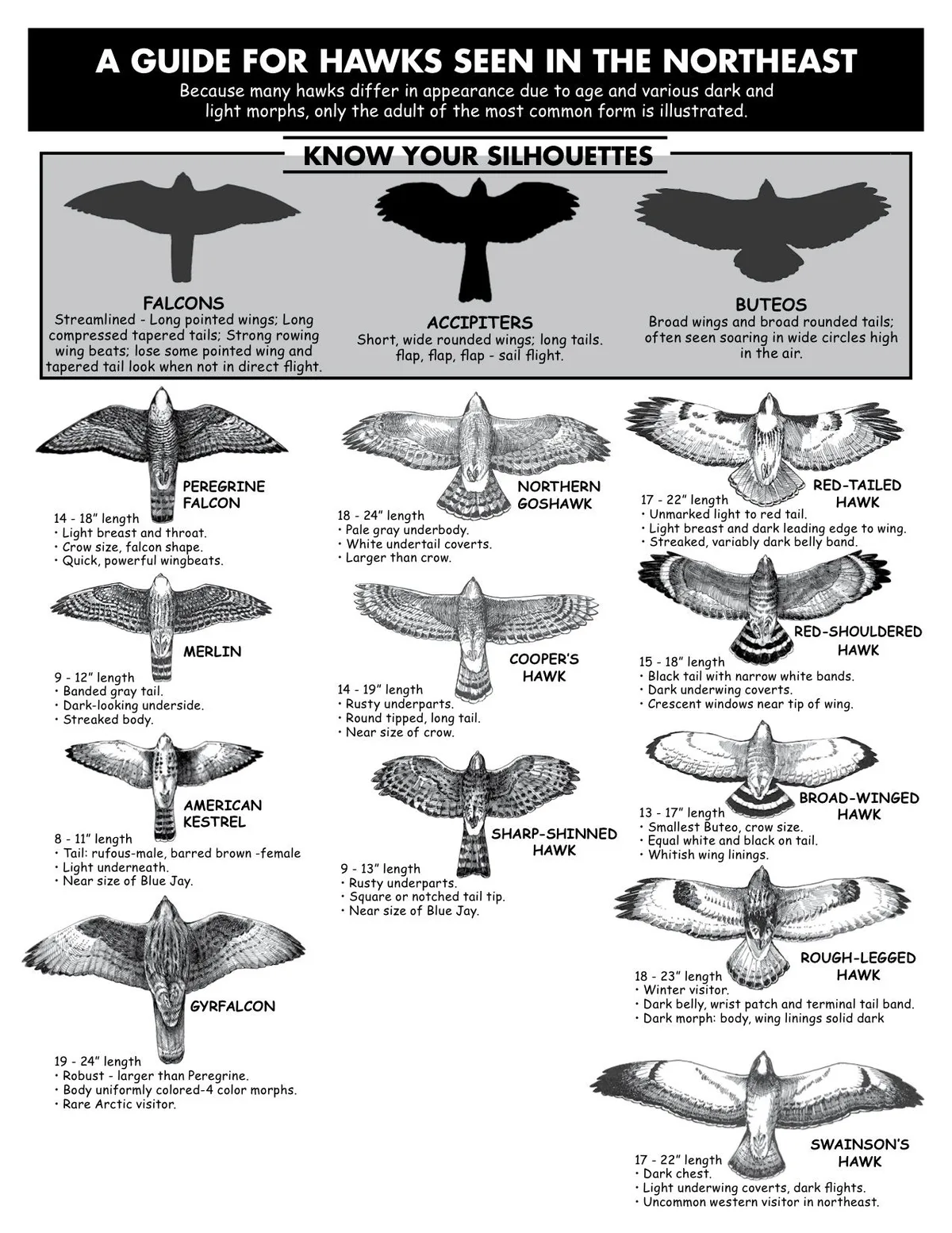
Image source: Web (Bing) / es.pinterest.com (Web image (fair-use with source credit))
Accipiters are much more elusive because they hunt primarily in dense woodlands. They rely on surprise and sudden, rapid bursts of speed to catch prey. If you are watching a bird navigate through thick tree branches with ease, you are likely looking at an Accipiter.
| Feature | Buteos | Accipiters |
|---|---|---|
| Wing Shape | Broad, rounded | Short, rounded |
| Primary Habitat | Open fields, roadsides | Forests, suburban edges |
| Flight Style | Soaring, circling | Flap-flap-glide bursts |
Visual Cues for In-the-Field Identification
Focusing on specific anatomical markers will increase your accuracy significantly. Look for the belly band on the Red-tailed Hawk, which appears as a cluster of dark feathers across the abdomen. This is a classic diagnostic feature when viewed from below.
Image source: Web (Bing) / avianbliss.com (Web image (fair-use with source credit))
The tail is another critical visual indicator. Buteos typically have short, wide tails that act like a rudder during long soaring flights. Conversely, Accipiters have long, squared, or rounded tails that help them steer during tight maneuvers.
Consult the Cornell Lab of Ornithology for detailed migration maps that help you confirm which species are currently in your region.
Decoding Flight Patterns and Habitat Preferences
Behavior acts as a secondary verification tool when visual cues are ambiguous. Hawks that maintain a steady, soaring flight pattern are usually looking for prey in open areas. They use thermal updrafts to stay aloft for long periods without flapping.
If a hawk is flapping its wings in a rhythmic, repeated motion, it is likely on a mission. This flap-glide-flap behavior is characteristic of Accipiters moving between hunting perches. By noting whether a bird is over an open meadow or deep within a forest, you can quickly eliminate half of the potential species.
Common Pitfalls: Why Juveniles and Backlighting Trick the Eye
Identifying young hawks is the most common challenge even for veteran observers. Juvenile plumage often looks duller or more streaked than the distinct patterns found on adult birds. You should avoid relying solely on color until you are familiar with the species-specific shape.
Backlighting is another frequent source of error in the field. When the sun is directly behind the bird, every hawk will appear as a dark, featureless silhouette. In these cases, focus on the wing structure and the ratio of wing length to body size.
If the light remains poor, it is often better to leave the identification as unknown rather than guessing.
Legal Protections and Ethical Birding Guidelines
Nearly all raptors are protected under federal law, specifically the Migratory Bird Treaty Act. This statute makes it illegal to hunt, capture, or harass hawks, as well as collect any of their feathers, eggs, or nests. You must maintain a respectful distance at all times to ensure you aren't disrupting their natural hunting or nesting habits.
If you are lucky enough to find an active nest, keep your distance and avoid using bright flashes or loud noises. Experts at the U.S. Fish and Wildlife Service emphasize that habituating wild birds to humans can lead to dangerous situations for the animals.
Enjoy your observations from afar and leave the environment exactly as you found it.
Practice ethical photography by prioritizing the bird's well-being over the perfect shot. If the bird displays signs of agitation, such as aggressive calling or constantly changing perches, you are likely too close. Back away slowly and observe through binoculars instead.
This approach keeps the hawks safe while allowing you to enjoy their behavior without interference.
Frequently Asked Questions About Hawk Identification
How can I distinguish a hawk from a vulture?
Vultures typically hold their wings in a distinctive V-shape, often called a dihedral, as they soar. They also tend to wobble and teeter back and forth in the wind compared to the stable flight of a hawk. If you look closely, you will see a small, featherless red or black head on a vulture.
Is it common for hawks to hunt in my backyard?
Hawks, particularly the Cooper’s Hawk and the Sharp-shinned Hawk, are frequent visitors to residential areas with bird feeders. These Accipiters specialize in hunting other birds, so they may monitor your feeders for easy opportunities. Seeing a hawk near your feeders is a natural, if sometimes startling, occurrence.
Why do some hawks sit on telephone poles?
Perch-hunting is a highly efficient strategy for Buteos like the Red-tailed Hawk. Telephone poles provide an elevated, clear vantage point to scan the ground for rodents or other prey. This behavior saves the bird energy by reducing the amount of time they need to spend in active flight.
What should I do if I find an injured hawk?
Do not attempt to touch or feed an injured bird of prey, as their talons and beaks can cause serious damage. Contact a licensed wildlife rehabilitator or your local wildlife agency for professional guidance. These organizations have the training and resources to safely rescue and treat injured raptors.
Can I identify a hawk just by its call?
Vocalizations are helpful, but they can be tricky because many hawks have similar or overlapping sounds. The Red-tailed Hawk has a loud, raspy scream often heard in movies, while other species have more subtle, high-pitched whistles. Always combine sound identification with visual observation to be sure of your result.