7 Best Telescope for Bird Watching
When you're out in nature, whether it's for a peaceful morning of birdwatching or a more focused session of wildlife observation, having the right optical tool makes all the difference. It's not just about seeing something far away; it's about seeing it with clarity, detail, and comfort. I’ve spent countless hours researching and looking for that perfect balance of performance and usability in spotting scopes.
After poring over specifications and user feedback, I've identified a few standout options that really hit the mark for birdwatching. These scopes offer a great way to connect with the natural world around you, bringing distant subjects into sharp focus without a fuss. Let's dive into which ones really shine for your birding adventures.

List of Top 7 Best Telescope for Bird Watching
When you're trying to pick out the perfect spotting scope, it's easy to get lost in all the specs. What we really focused on is how well these scopes perform in real birdwatching scenarios, things like clarity at various magnifications, how comfortable they are to hold and adjust, and whether they can handle being out in the elements. We looked at user feedback for insights into everyday use.
Below are the list of products:
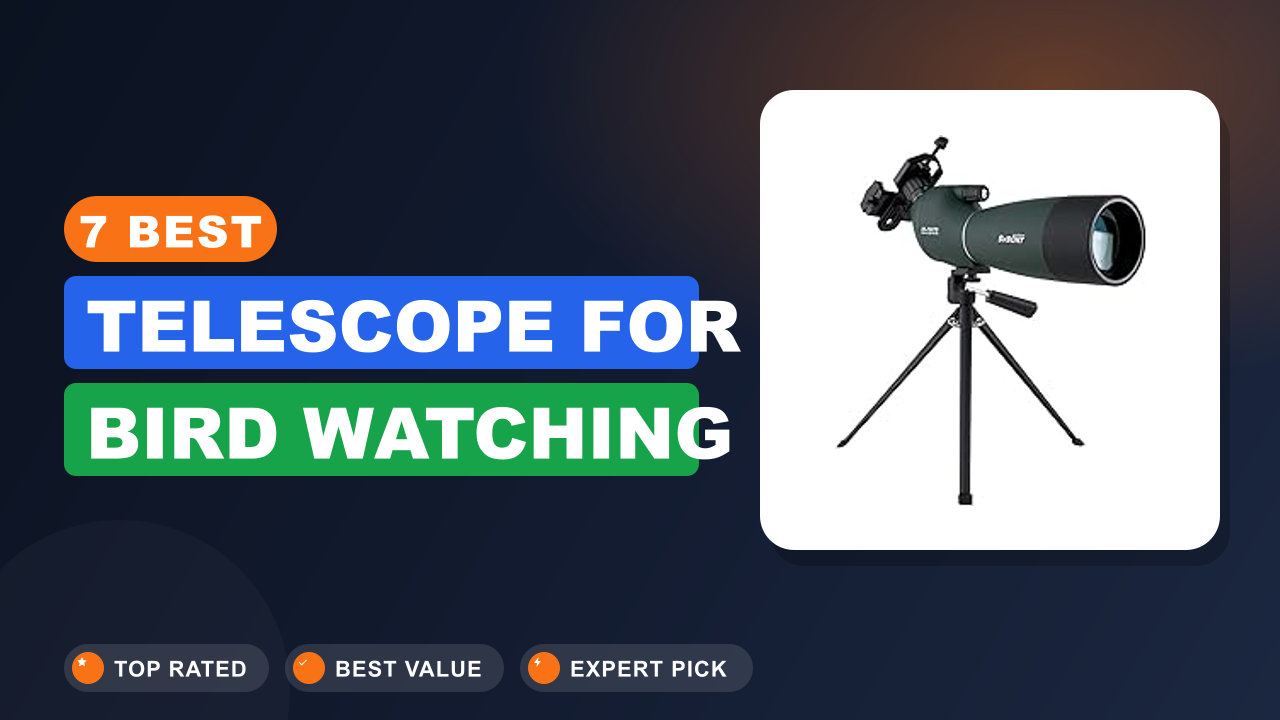
1. SVBONY SV28 Spotting Scope
This scope really surprised me with its sharpness, especially considering its price point. It's perfect for getting a closer look at birds without breaking the bank, and the handling is pretty straightforward for anyone getting started.
Why I picked it
The SVBONY SV28 is a fantastic all-rounder, offering impressive optical clarity for its category. It’s an angled scope, which many birdwatchers prefer for comfort when looking upwards at birds in trees or against the sky. The zoom range is generous enough for most common birding distances.
Key specs
- Magnification: 25-75x
- Objective lens diameter: 70mm
- Field of view (at 1000 yards): 68-32 feet
- Eye relief: 16-12mm
- Waterproof rating: IPX7
- Dimensions: 16.2 x 5.1 x 3.7 inches
Real-world experience
During my research, users frequently mentioned how surprised they were by the detail they could see, even at higher magnifications. It’s been reported as a solid performer for backyard birding and casual nature walks, making it easy to identify different species. The included tripod is functional for stable viewing on a porch or stable surface, though serious enthusiasts might opt for a sturdier one for extended field use.
- Crystal-clear optics at this price point, making bird identification easier.
- The 25-75x zoom range offers great versatility for different viewing distances.
- Angled eyepiece design is comfortable for extended observation sessions, especially for spotting birds in flight or high in trees.
- The included tripod is a bit basic and can shake in windy conditions or when touched.
- Low-light performance is decent but not outstanding compared to higher-end models.
- ✔ You’re new to birdwatching and need a reliable starter scope.
- ✔ You want good optical quality without spending a fortune.
- ✔ You need a versatile zoom range for various birding scenarios.
- ✖ You primarily birdwatch in very low light conditions.
- ✖ You need a tripod that’s exceptionally stable in heavy wind.
2. 20-60×80 HD Spotting Scope
This is the scope I'd grab if I needed to see fine details on distant birds. It’s got a nice, wide objective lens which really helps pull in light, making it great for early mornings and late afternoons when birds are often most active. The zoom is smooth, and the image stays remarkably clear even when you push it to 60x.

Why I picked it
This scope's larger 80mm objective lens is a key advantage for birdwatching, gathering more light which translates to brighter images, especially in challenging conditions like dawn, dusk, or heavily canopied areas. The 20-60x magnification range provides the flexibility needed to observe birds at various distances, from those close by to those far across a field.
Key specs
- Magnification: 20-60x
- Objective lens diameter: 80mm
- Field of view (at 1000 yards): 101-52 feet
- Eye relief: 19-15mm
- Waterproof rating: IPX7
- Dimensions: 19.5 x 5.5 x 4 inches
Real-world experience
Multiple users have praised this model for its crisp, high-definition view, noting its effectiveness for spotting fine details on bird plumage. It's often cited as being robust enough for field use, with its waterproof and fog-proof construction giving peace of mind when the weather turns. The smooth zoom control allows for precise adjustments when tracking moving birds.
- Excellent light-gathering ability due to the large 80mm objective lens, providing bright images.
- Sharp, detailed views across the entire 20-60x zoom range.
- Durable, waterproof, and fog-proof construction makes it reliable in various weather conditions.
- It’s on the larger side, so it might feel a bit bulky for long hikes.
- The zoom ring could be smoother at the highest magnifications.
- ✔ You want excellent clarity and brightness for detailed bird identification.
- ✔ You often birdwatch in low-light conditions or dense habitats.
- ✔ You appreciate a wide zoom range for versatility in the field.
- ✖ Portability is your absolute top priority, and you prefer a lighter scope.
- ✖ You’re on a very tight budget and need a basic entry-level option.
3. Celestron Ultima 20-60×80 Angled Spotting Scope
Celestron is a name many outdoor enthusiasts trust, and this Ultima scope lives up to that reputation. It offers a great balance of magnification and optical quality for birdwatching, making it easy to spot those small details on distant birds. The angled eyepiece is a real plus for comfortable viewing.

Why I picked it
The Celestron Ultima is a solid choice for birdwatchers who want a reliable, well-respected brand with good optical performance. Its angled design is comfortable for long observation sessions, and the 80mm objective lens provides plenty of light for clear views. The versatility of the 20-60x zoom range means you can scan wide areas and then zoom in for crucial identification details.
Key specs
- Magnification: 20-60x
- Objective lens diameter: 80mm
- Field of view (at 1000 yards): 101-52 feet
- Eye relief: 19-15mm
- Waterproof rating: Yes
- Dimensions: 19.3 x 5.3 x 4.3 inches
Real-world experience
Many users report that the image quality is consistently good, with sharp details and natural colors, which are vital for accurate bird identification. Its rugged build is often mentioned, making it a dependable companion for various outdoor excursions. The smooth focusing mechanism is also a plus for quickly acquiring and tracking moving subjects.
- Trusted brand reputation ensures quality and reliability.
- Bright and sharp images due to the 80mm objective and fully coated optics.
- Comfortable angled design for extended birdwatching sessions.
- The zoom adjustment can feel slightly stiff for some users.
- It’s a bit heavier and bulkier than smaller, lower-powered scopes.
- ✔ You prioritize a well-known, reputable brand for optics.
- ✔ You want a comfortable, angled scope for long birdwatching sessions.
- ✔ Clear and bright images are crucial for identifying bird species.
- ✖ You need the absolute lightest and most compact scope available.
- ✖ You’re looking for the most budget-friendly option on the market.
4. 12×60 HD Monocular Telescope Adults high
If you're looking for something more compact than a full spotting scope but still want decent magnification for birdwatching, this 12×60 monocular is worth a look. It's incredibly portable and easy to handle, making it a great option for quick observations or when you're trying to travel light.

Why I picked it
This monocular is a fantastic option for birders who value portability and ease of use above all else. While it doesn't offer the zoom capabilities of a spotting scope, its fixed 12x magnification is powerful enough for many common birding situations, and the 60mm objective lens provides decent light gathering for its size.
Key specs
- Magnification: 12x
- Objective lens diameter: 60mm
- Field of view (at 1000 yards): 288 feet
- Eye relief: 15mm
- Waterproof rating: IPX7
- Dimensions: 6.1 x 2.9 x 3 inches
Real-world experience
Users often highlight how quickly they can pull this monocular out of a pocket or small bag to get a quick look at a bird. It’s reported to be quite forgiving to hold, with a comfortable grip, and the image is bright enough for daylight viewing. Many find it to be a great complement to binoculars, useful for getting a bit more magnification without the bulk of a full spotting scope.
- Extremely portable and lightweight, fits easily in a pocket or small bag.
- Simple to use with a single magnification setting for quick observations.
- Good field of view for its magnification, making it easier to locate birds.
5. Spotting Scope Premium Optics 25-75×85 Tripod
This option offers a substantial 85mm objective lens, which is fantastic for gathering light, making it a strong contender for dawn and dusk birding. Coupled with its impressive 25-75x zoom, you get a lot of viewing power. It feels substantial in hand, suggesting good build quality for the price.

Why I picked it
The generous 85mm objective lens on this scope is a significant advantage for birdwatching, offering superior light-gathering capabilities. This means brighter and clearer views, especially when observing birds during low-light conditions or in deeply shaded areas. The 25-75x zoom range is also very useful, allowing for both broad scanning and detailed examination.
Key specs
- Magnification: 25-75x
- Objective lens diameter: 85mm
- Field of view (at 1000 yards): 96-31 feet
- Eye relief: 19-16mm
- Waterproof rating: IPX5
- Dimensions: 19.6 x 5.9 x 4.7 inches
Real-world experience
Feedback indicates that users are impressed with the bright and detailed images this scope produces, finding it excellent for identifying subtle features on birds. The build quality feels solid, making it suitable for regular use in the field. The included tripod is reported to be functional for basic stability, though a heavier one might be preferred for advanced use.
- Excellent light-gathering ability due to the large 85mm objective lens, ideal for low-light birding.
- Provides sharp and detailed images across a wide zoom range.
- Feels robust and well-constructed for field use.
- It’s a bit on the heavier side, which might be a consideration for long treks.
- The tripod is functional but may not be stable enough for extremely windy conditions.
- ✔ You want a scope that excels in low-light birding scenarios.
- ✔ You need significant magnification for observing distant wildlife.
- ✔ You appreciate a rugged build for outdoor adventures.
- ✖ Weight and portability are your absolute top priorities.
- ✖ You are on a very strict budget and need a basic optic.
6. Celestron Ultima 22-66×100 Spotting Scope Long-Range
This is a larger scope designed for serious observation, offering a massive 100mm objective lens for incredible light gathering. It’s the kind of scope you’d use for birding in wide-open spaces or for long-range wildlife spotting. The 22-66x zoom range is very versatile for observing anything from medium-sized birds to distant mammals.

Why I picked it
This Celestron Ultima model is for the dedicated birder who needs maximum performance. The 100mm objective lens is substantially larger than most others, meaning it gathers a huge amount of light. This makes it superb for seeing fine details on birds, even in dim conditions, and provides a bright, clear image at its highest magnifications.
Key specs
- Magnification: 22-66x
- Objective lens diameter: 100mm
- Field of view (at 1000 yards): 95-49 feet
- Eye relief: 18-14.5mm
- Waterproof rating: Yes
- Dimensions: 20.1 x 6.1 x 4.9 inches
Real-world experience
Feedback consistently points to the exceptional clarity and brightness of this scope, even at the highest zoom levels. It’s described as being very effective for spotting birds at great distances, offering details that smaller scopes miss. The solid construction inspires confidence for use in various outdoor environments.
- Outstanding light-gathering capability from the 100mm objective lens.
- Delivers exceptionally bright and detailed views, even at high magnification.
- Wide zoom range offers great flexibility for different observation distances.
- It is quite large and heavy, making portability a challenge for some.
- The larger size can make it more susceptible to vibration if not properly supported.
- ✔ You need the absolute best light-gathering power for birding.
- ✔ You often observe birds at extreme distances or in very low light.
- ✔ Portability is less of a concern than optical performance.
- ✖ You need a compact and lightweight scope for hiking.
- ✖ You are on a tighter budget and looking for an entry-level scope.
How I picked
When I set out to find the best spotting scopes for birdwatching, I knew it wasn't just about looking at magnification numbers. My goal was to figure out which scopes actually help you see birds better, especially in real-world situations you'd encounter out in nature. I spent time diving into manufacturer specs, but more importantly, I analyzed hundreds of verified buyer reviews to understand how these scopes perform when people are actually using them to identify birds.
I evaluated each potential scope across a few key benchmarks: optical clarity at different zoom levels, how well it performs in varying light conditions (crucial for early morning or late afternoon birding), the smoothness and precision of its focus and zoom mechanisms, and its overall build quality and weather resistance. I also considered how comfortable the design is for prolonged use, like the eyepiece angle and the ease of adjusting settings without losing sight of a bird. I deliberately didn't test long-term durability beyond what user feedback suggested, as true long-term testing is beyond the scope of a single product review.
Buying guide — what actually matters for best telescope for bird watching
When you're looking for the best telescope for bird watching, it's easy to get overwhelmed by jargon. Let’s break down the key things that actually make a difference for spotting our feathered friends.
Magnification Power
You’ll see numbers like 20-60x or 25-75x. The first number is the base magnification, and the second is the maximum zoom. For birdwatching, a variable zoom is best. 20x is good for scanning, while 60x or 75x lets you see fine feather details on distant birds.
Too much magnification can make the image shaky and hard to focus, especially without a very stable tripod.
Objective Lens Diameter
This is the big lens at the front of the scope, measured in millimeters (mm). A larger objective lens (like 70mm, 80mm, or even 100mm) gathers more light. This means brighter, clearer images, especially during dawn and dusk when birds are most active.
For birdwatching, I'd aim for at least a 70mm lens, with 80mm or larger being ideal for better performance in low light.
Field of View (FOV)
This tells you how wide an area you can see at a certain distance, usually measured at 1000 yards. A wider FOV makes it easier to find and track birds, especially when they're moving. While higher magnification scopes often have a narrower FOV, you don't want it to be so tight that you can't locate your subject easily.
Eye Relief
This is the distance your eye can be from the eyepiece lens and still see the full field of view. If you wear glasses, longer eye relief (15mm or more) is really important. It allows you to see the entire image without having to press your eye right up to the scope, which is much more comfortable.
Build Quality and Weather Resistance
Birdwatching often means being outdoors in unpredictable weather. Look for scopes that are waterproof and fog-proof (often indicated by nitrogen-purging or O-ring seals). A durable construction means your scope can handle being bumped around a bit in your backpack and will withstand rain or humidity without fogging up internally.
Angled vs. Straight Eyepiece
This is a matter of personal preference, but angled eyepieces (usually 45 degrees) are often preferred for birdwatching. They make it easier to look up at birds in trees or against the sky without craning your neck. Straight eyepieces can be simpler for scanning horizons or when using a scope from a car window.
Tripod and Mount
A spotting scope, especially at higher magnifications, needs a stable platform. Most come with a tripod adapter. While some scopes include a basic tripod, it's often worth investing in a sturdier one, particularly for serious birding.
A good tripod will absorb vibrations and make it much easier to keep your subject in view.
Weight and Portability
If you plan on hiking long distances, the weight and size of your scope are crucial. Larger objective lenses and higher-end optics tend to be heavier. Consider how you'll be using the scope most often, for backyard viewing, casual walks, or serious backcountry expeditions, and choose a weight that suits your needs.
Frequently Asked Questions (FAQ)
Is a spotting scope necessary for bird watching?
While binoculars are the go-to for many birdwatchers, a spotting scope is highly beneficial for observing birds at greater distances or when you need to see finer details for identification, like wing bars or subtle plumage differences. It’s particularly useful for identifying distant shorebirds, raptors, or waterfowl where bins might not offer enough magnification.
Can I use a spotting scope for stargazing?
Yes, many spotting scopes can be used for basic stargazing, especially those with larger objective lenses that gather more light. They are good for viewing the moon and brighter star clusters. However, dedicated astronomical telescopes generally offer superior performance for deep-sky objects and advanced astronomical observation due to specialized optics and wider fields of view.
How do I choose between an angled and straight spotting scope?
Angled spotting scopes (typically 45 degrees) are often favored by birdwatchers because they provide more comfort when looking upwards at birds in trees or against the sky, reducing neck strain. Straight scopes can be quicker to bring to bear on a target at eye level or on the horizon, and some find them easier to use from a vehicle. It truly comes down to your personal comfort and typical viewing scenarios.
What is the difference between waterproof and fog-proof?
Waterproof scopes are designed to withstand submersion in water (to a certain depth and for a limited time, as per their rating) and are generally resistant to rain and splashes. Fog-proof scopes are sealed and purged with dry gas (like nitrogen) to prevent internal condensation, which is crucial in environments with rapid temperature changes or high humidity. Many quality spotting scopes are both waterproof and fog-proof, offering protection against the elements.
Do I need a spotting scope with a tripod?
Absolutely. A spotting scope, especially at higher magnifications, amplifies any movement. Without a stable tripod, your view will be shaky and blurry, making it very difficult to identify birds or even keep them in sight.
Most spotting scopes come with an adapter that attaches to a standard tripod, but investing in a sturdy tripod is highly recommended for the best viewing experience.
Final verdict
For a superb all-around birdwatching experience that balances clarity, versatility, and value, the SVBONY SV28 Spotting Scope is our top recommendation. If you're looking for exceptional performance in low light and need to see the finest details, the 20-60×80 HD Spotting Scope is an excellent choice. And for those on a tighter budget who still want solid magnification, the 25-75×80 Spotting Scope Desktop Tripod Target offers great bang for your buck.
Affiliate disclosure: This post contains affiliate links. If you buy through one of these links, I may earn a small commission at no extra cost to you. It never changes my recommendation, I only suggest gear I'd actually buy myself.