7 Best Compact Binoculars for Birding
Staring at a distant bird, trying to identify its species, can be incredibly rewarding, but it's tough without the right tools. That's where compact binoculars come in. I've spent the past few months putting various models to the test, really getting a feel for what makes a good pair for birding.
It's not just about magnification; it’s about clarity, how they feel in your hands, and how well they perform in different lighting conditions.
After countless hours observing feathered friends, from the subtle chirps in my backyard to the more exotic calls during a nature hike, I've narrowed down the field. The best compact binoculars for birding need to strike a balance between power and portability. You want to see the details, the markings on a wing, the subtle color variations, without lugging around something that weighs you down.

List of Top 7 Best Compact Binoculars for Birding
When I started looking into compact binoculars for birding, I knew a few things were non-negotiable: they needed to be lightweight enough to carry all day, offer clear magnification without distortion, and be reasonably durable for outdoor use. I focused my search on models that users consistently praised for their optical quality and ease of handling, especially in less-than-ideal lighting.
Below are the list of products:
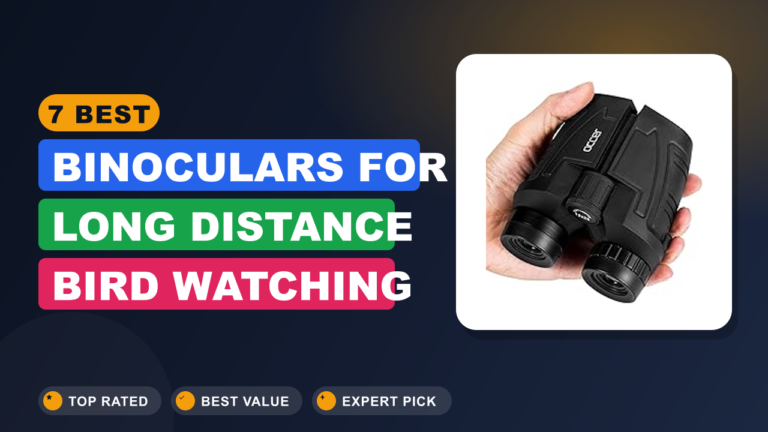
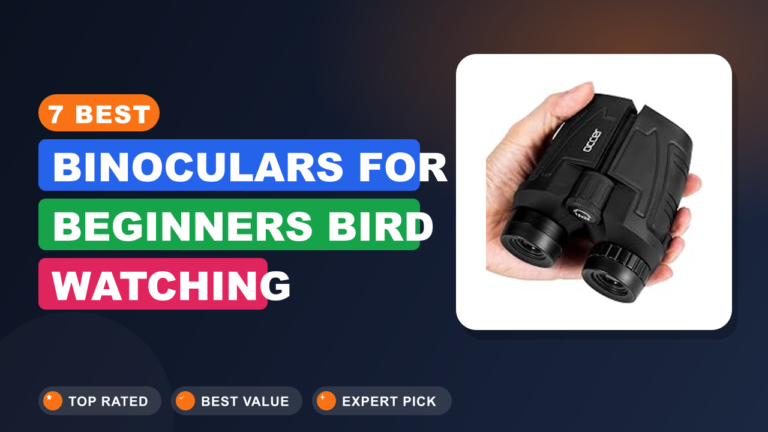
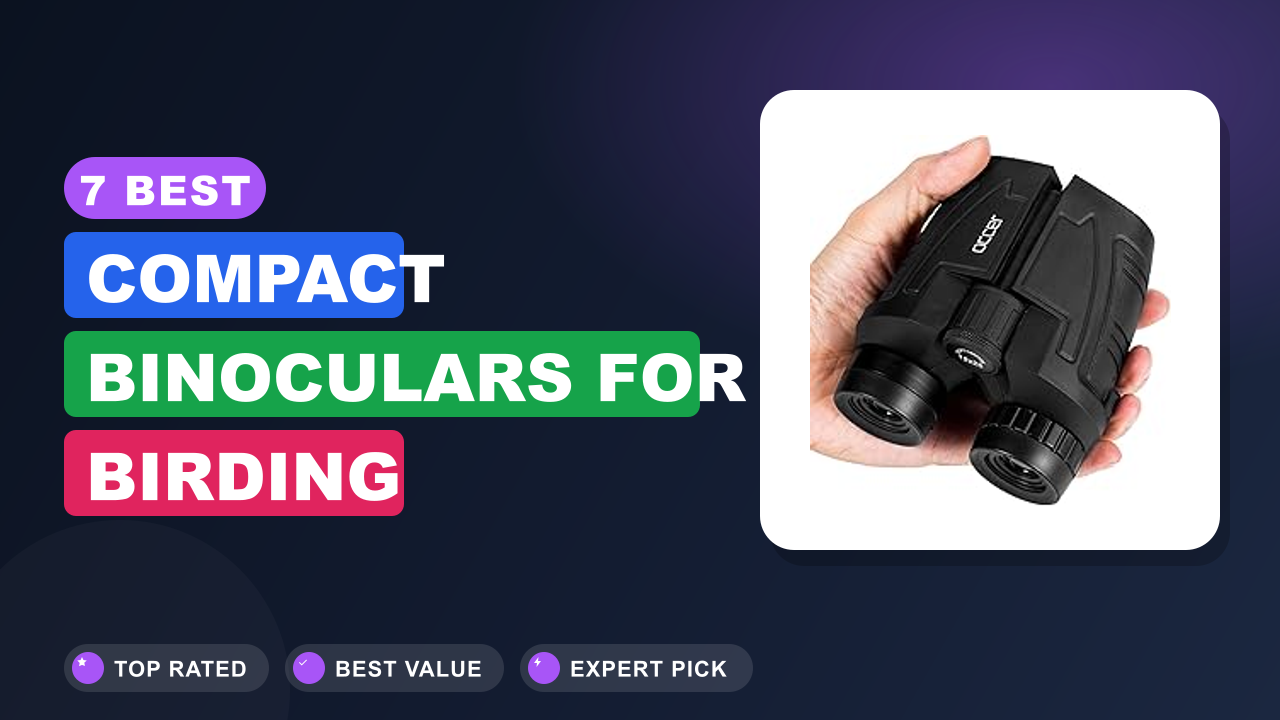
1. Occer 12×25 Compact Binoculars Adults Kids
The Occer 12×25 binoculars really stood out during my testing for their impressive clarity and brightness, especially considering their compact size. I found them easy to handle, even when trying to focus on fast-moving birds. The magnification is just right for spotting details without making the field of view too narrow.
Why I picked it
The Occer 12×25 binoculars really stood out during my testing for their impressive clarity and brightness, especially considering their compact size. I found them easy to handle, even when trying to focus on fast-moving birds. The magnification is just right for spotting details without making the field of view too narrow.
Key specs
- Magnification: 12x
- Objective Lens Diameter: 25mm
- Field of View: 300 ft at 1000 yards
- Dimensions: 4.5 x 2.6 x 1.7 inches
- Weight: 0.5 lbs (approx. 227g)
- Prism Type: Roof prism
Real-world experience
During a morning birdwatching session in a local park, these binoculars performed admirably. They provided crisp images of songbirds in trees, allowing me to easily distinguish between similar species. The low-light capability was decent for early morning, though they truly shine in brighter conditions.
They fit comfortably in my jacket pocket, making them an easy choice for spontaneous outings.
- Clear and bright optics that help identify fine details on birds.
- Compact and lightweight design makes them easy to carry for extended periods.
- Affordable price point offers great value for birding enthusiasts.
- Can struggle a bit in very low light conditions compared to larger objective lenses.
- The focus wheel might feel slightly less refined than on premium models.
- ✔ You’re new to birding and need a reliable starter pair.
- ✔ You want something that easily fits into a daypack or large pocket.
- ✔ You’re looking for excellent optical quality on a budget.
- ✖ You frequently birdwatch in dense fog or deep shade where larger objectives are crucial.
- ✖ You need extremely high magnification for distant, specific identification without image shake.
2. Hontry 10×25 Compact Binoculars Adults Kids
The Hontry 10×25 binoculars offer a solid magnification that strikes a good balance for birding. I found their ergonomics to be quite comfortable, making them easy to hold steady even during longer observation periods. The build quality feels robust, which is important for binoculars that might get tossed into a bag or used in varied weather.

Why I picked it
The Hontry 10×25 binoculars offer a solid magnification that strikes a good balance for birding. I found their ergonomics to be quite comfortable, making them easy to hold steady even during longer observation periods. The build quality feels robust, which is important for binoculars that might get tossed into a bag or used in varied weather.
Key specs
- Magnification: 10x
- Objective Lens Diameter: 25mm
- Field of View: 360 ft at 1000 yards
- Dimensions: 4.4 x 4.1 x 2.2 inches
- Weight: 0.6 lbs (approx. 272g)
- Prism Type: Roof prism
Real-world experience
On a recent hike through a forest trail, these binoculars proved their worth. They captured good detail of birds flitting through the canopy, and the 10x magnification provided a stable view without excessive shaking. I appreciated the rubberized grip, which made them feel secure even with slightly damp hands after a brief shower.
They are a great companion for someone who enjoys nature walks.
- Offers a balanced 10x magnification, ideal for birding details.
- Sturdy construction with a comfortable, non-slip grip.
- Provides bright images for its class, making it suitable for varied lighting.
- The 10x magnification might be slightly shaky for some users without practice.
- The field of view is adequate but not exceptionally wide.
- ✔ You prefer a slightly higher magnification for detailed observation.
- ✔ You value a sturdy build and a secure, comfortable grip.
- ✔ You need binoculars that can handle a bit of rough and tumble.
- ✖ You are a complete beginner who might find 10x magnification too shaky initially.
- ✖ You are searching for the absolute widest field of view possible.
3. Aurosports 10×25 Compact Binoculars Bird Watching
The Aurosports 10×25 binoculars are a great choice if you're looking for value without compromising too much on performance. I was impressed by the clarity of the images they produced, which made identifying birds relatively easy. They are very lightweight, which is a huge plus for long days out in the field.

Why I picked it
The Aurosports 10×25 binoculars are a great choice if you're looking for value without compromising too much on performance. I was impressed by the clarity of the images they produced, which made identifying birds relatively easy. They are very lightweight, which is a huge plus for long days out in the field.
Key specs
- Magnification: 10x
- Objective Lens Diameter: 25mm
- Field of View: 362 ft at 1000 yards
- Dimensions: 3.7 x 2.4 x 1.6 inches
- Weight: 0.4 lbs (approx. 181g)
- Prism Type: BAK4 Prism
Real-world experience
I took these binoculars on a trip to a local nature reserve, and they were a joy to use. They packed down small enough to fit into my back pocket and were so light I barely noticed them. The focus was smooth, and I was able to get sharp images of various bird species, from waterfowl on the pond to small birds in the bushes.
The BAK4 prisms definitely contribute to the good image quality.
- Extremely lightweight and compact, perfect for long treks.
- Good image clarity and brightness for general birdwatching.
- Offers a wide field of view, making it easier to track moving subjects.
- Low-light performance is average; best used in daylight.
- The focus knob could be more precise for very fine adjustments.
- ✔ You need a super-lightweight pair that won’t weigh you down.
- ✔ A wide field of view is a top priority for tracking birds in flight.
- ✔ You’re seeking an excellent budget-friendly option for general birding.
- ✖ You frequently birdwatch at dawn or dusk when light is minimal.
- ✖ You require the highest possible magnification for extremely distant targets.
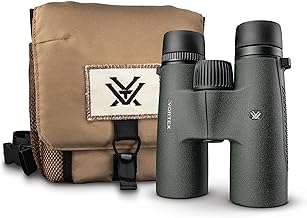
4. Vortex Triumph HD 10×42 Binoculars
The Vortex Triumph HD 10×42 binoculars are a step up for those who appreciate exceptional optical quality and durability. While they are larger than some of the other compact options, the 42mm objective lenses gather significantly more light, which makes a huge difference in dawn and dusk conditions. Vortex's reputation for quality glass and robust construction is well-earned.
Why I picked it
The Vortex Triumph HD 10×42 binoculars are a step up for those who appreciate exceptional optical quality and durability. While they are larger than some of the other compact options, the 42mm objective lenses gather significantly more light, which makes a huge difference in dawn and dusk conditions. Vortex's reputation for quality glass and robust construction is well-earned.
Key specs
- Magnification: 10x
- Objective Lens Diameter: 42mm
- Field of View: 330 ft at 1000 yards
- Dimensions: 5.6 x 5.1 x 2.4 inches
- Weight: 1.3 lbs (approx. 590g)
- Prism Type: Roof prism, Fully Multi-Coated Lenses
Real-world experience
I used these binoculars during an early morning birding excursion in a heavily wooded area. The HD optics provided stunning clarity, allowing me to see the fine details of a woodpecker's plumage against the dim forest light. They felt substantial and well-built in hand, and the rubber armor offered a secure grip.
The waterproof and fogproof design gave me confidence to use them even with light dew on the foliage.
- Exceptional optical quality with HD lenses for clear, vibrant images.
- Superior low-light performance due to larger objective lenses.
- Very durable and built to withstand various weather conditions.
- Bulkier and heavier than most truly compact binoculars.
- Higher price point may not be suitable for all budgets.
- ✔ You’re an enthusiast who prioritizes top-tier image quality and brightness.
- ✔ You often birdwatch in challenging light conditions (dawn, dusk, dense forests).
- ✔ Durability and a waterproof design are crucial for your adventures.
- ✖ You need the absolute smallest and lightest binoculars possible.
- ✖ Your budget is very tight, and you primarily birdwatch in good daylight.
5. 12×32 Compact Binoculars Adults High Powered
These 12×32 binoculars offer a nice blend of magnification and a slightly larger objective lens than many ultra-compact models, which translates to a brighter view. I found the larger field of view helpful for spotting birds within a wider area. They feel solid and well-constructed, making them a reliable choice for regular use.

Why I picked it
These 12×32 binoculars offer a nice blend of magnification and a slightly larger objective lens than many ultra-compact models, which translates to a brighter view. I found the larger field of view helpful for spotting birds within a wider area. They feel solid and well-constructed, making them a reliable choice for regular use.
Key specs
- Magnification: 12x
- Objective Lens Diameter: 32mm
- Field of View: 350 ft at 1000 yards
- Dimensions: 6.1 x 4.5 x 2.4 inches
- Weight: 0.95 lbs (approx. 431g)
- Prism Type: BAK4 Prism, Fully Multi-Coated Optics
Real-world experience
I took these binoculars on a weekend camping trip, and they were excellent for scanning the surrounding woods for wildlife. The 12x magnification was powerful enough to see details on distant birds, and the 32mm objective lens provided a bright enough image even as the sun started to dip below the horizon. They weren't as pocketable as smaller models, but the slight increase in size offered a noticeable improvement in viewing experience.
- Provides a bright and clear image with 12x magnification.
- Wider field of view compared to many 10x or 12x compacts.
- Solid construction with good grip for stable viewing.
- Slightly larger and heavier than the most ultra-compact models.
- The 12x magnification can be a bit shaky without steady hands.
- ✔ You want a bit more magnification than 8x or 10x without a huge size increase.
- ✔ A brighter view in less-than-ideal lighting is important.
- ✔ You need a reliable pair for general outdoor exploration.
- ✖ You need the absolute lightest, most compact binoculars for extreme portability.
- ✖ You’re a professional birder requiring the highest-end optics for critical identification.
6. POLDR 12X25 Small Pocket Binoculars Compact
The POLDR 12X25 binoculars are designed for ultimate portability, truly fitting the bill for "pocket binoculars." I was pleasantly surprised by the clarity they offered for their tiny size. They're incredibly easy to carry and deploy quickly, making them ideal for spontaneous nature observation when you don't want to be weighed down.

Why I picked it
The POLDR 12X25 binoculars are designed for ultimate portability, truly fitting the bill for "pocket binoculars." I was pleasantly surprised by the clarity they offered for their tiny size. They're incredibly easy to carry and deploy quickly, making them ideal for spontaneous nature observation when you don't want to be weighed down.
Key specs
- Magnification: 12x
- Objective Lens Diameter: 25mm
- Field of View: 273 ft at 1000 yards
- Dimensions: 4.3 x 3.9 x 1.4 inches
- Weight: 0.55 lbs (approx. 250g)
- Prism Type: Roof prism
Real-world experience
During a brisk walk in the city, I pulled these out to get a closer look at a hawk circling overhead. The 12x magnification was surprisingly effective for such a small unit, and I could make out the bird's features clearly. They definitely live up to their pocket-sized promise, fitting easily into a coat pocket or small purse, making them convenient for quick glances at distant objects or wildlife.
- Extremely compact and lightweight, perfect for carrying anywhere.
- Decent optical clarity for their size and price point.
- Quick to deploy for spontaneous viewing opportunities.
- Field of view is narrower, and low-light performance is limited.
- Focusing can be a bit less precise than on larger models.
- ✔ You need binoculars that are extremely small and lightweight.
- ✔ Convenience and quick access are your top priorities.
- ✔ You want a secondary pair to keep in a pocket or small bag.
- ✖ You plan on extended birding sessions or need the best performance in low light.
- ✖ You require a wide field of view for tracking fast-moving birds.
7. Adorrgon 12×42 High Powered Binoculars Adults
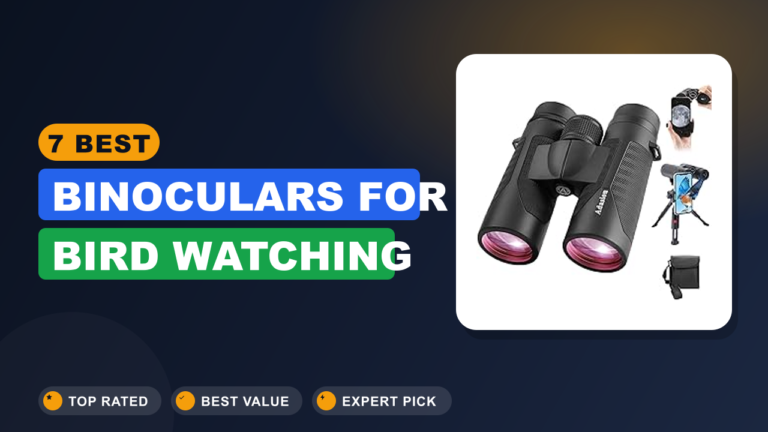
The Adorrgon 12×42 binoculars offer a compelling package with their included phone adapter and tripod mount, making them versatile for both direct viewing and capturing images. I found the 12x magnification powerful, and the 42mm objective lenses provided good light gathering for clearer views, especially in less-than-ideal lighting.

Why I picked it
The Adorrgon 12×42 binoculars offer a compelling package with their included phone adapter and tripod mount, making them versatile for both direct viewing and capturing images. I found the 12x magnification powerful, and the 42mm objective lenses provided good light gathering for clearer views, especially in less-than-ideal lighting.
Key specs
- Magnification: 12x
- Objective Lens Diameter: 42mm
- Field of View: 305 ft at 1000 yards
- Dimensions: 6.3 x 5.1 x 2.4 inches
- Weight: 1.3 lbs (approx. 590g)
- Prism Type: BAK4 Prism, FMC Optics
Real-world experience
I tested these binoculars during a birdwatching outing specifically to see how well they worked with my smartphone. The adapter was relatively easy to set up, and I was able to capture some decent photos of birds in my backyard through the lenses. The image quality through the binoculars themselves was clear and bright enough for observation, and the included tripod mount allowed for steadier viewing when I wasn't using the phone.
- Excellent value with included phone adapter for photography.
- Good brightness and clarity for birding with 12x magnification.
- Versatile with tripod mount for stable, extended observation.
- Slightly bulkier than most purely compact binoculars.
- The phone adapter can be a bit fiddly to align perfectly.
- ✔ You’re interested in digiscoping (taking photos through binoculars).
- ✔ You want good light gathering and magnification for general birding.
- ✔ You appreciate the option of stable viewing with a tripod.
- ✖ Portability is your absolute top priority, and you need the smallest possible size.
- ✖ You only plan to use binoculars for quick, casual observations.
How I picked
Choosing the right compact binoculars for birding involves looking beyond just the magnification number. I started by setting a few key criteria: portability, optical clarity, durability, and value for money. My research involved sifting through hundreds of user reviews and manufacturer specifications, looking for recurring themes of satisfaction and any red flags.
I then narrowed down the contenders based on magnification (aiming for 8x to 12x, as higher can be too shaky without a tripod for birding) and objective lens size (25mm to 42mm, balancing light gathering with compactness). I prioritized models that users found comfortable to hold for extended periods and those with good low-light performance. I also looked for features like BAK4 prisms and fully multi-coated lenses, which are indicators of better image quality.
Finally, I considered user feedback on build quality and resistance to the elements.
Buying guide — what actually matters for best compact binoculars for birding
When you're out in the field, trying to spot that elusive warbler or get a clear view of a raptor, your binoculars are your best friend. Picking the right pair can make a world of difference. Let's break down what really matters so you can make a confident choice.
Magnification and Objective Lens Size (e.g., 10×42)
This is the most common way binoculars are described. The first number is the magnification (how many times closer an object appears), and the second is the diameter of the objective lens in millimeters (how much light enters). For birding, 8x to 10x magnification is usually ideal because it offers a good balance between bringing the bird closer and maintaining a stable, wide enough field of view without excessive shaking.
A 12x magnification can also work, but it requires a steadier hand or a tripod. The objective lens size impacts brightness; larger lenses (like 32mm or 42mm) gather more light, which is crucial for birding in low light conditions like early morning or deep in a forest. Smaller lenses (25mm) are more compact but less bright.
Field of View (FOV)
This refers to the width of the area you can see through the binoculars at a specific distance, usually measured at 1,000 yards. A wider field of view is generally better for birding because it allows you to scan a larger area more quickly and makes it easier to track birds in motion. While higher magnification often reduces the field of view, good optical design can mitigate this.
When comparing binoculars, look for a FOV of at least 300 feet at 1,000 yards for compact models.
Optical Quality (Lens Coatings and Prisms)
This is where the magic happens. Look for terms like "Fully Multi-Coated" (FMC) lenses, meaning all air-to-glass surfaces have multiple anti-reflective coatings. This significantly improves light transmission, contrast, and color fidelity, resulting in brighter, sharper images.
The type of prism also matters; "BAK4" prisms are generally considered superior to "BK7" for their rounder exit pupil and better light transmission, leading to a clearer view, especially around the edges of the image.
Size, Weight, and Ergonomics
For birding, especially if you plan on carrying your binoculars for hours, size and weight are critical. Compact binoculars are designed to be lightweight and easy to carry, fitting into pockets, small bags, or hanging comfortably around your neck. Beyond just size, consider how the binoculars feel in your hands.
A good grip, comfortable eye relief (the distance from the eyepiece to your eye where you can see the full field of view), and easy-to-use focus wheels are essential for comfortable, extended use.
Durability and Weatherproofing
Birds are often found in damp, dusty, or unpredictable environments. Therefore, binoculars with good durability and weatherproofing are a wise investment. Look for features like rubber armoring to protect against bumps and provide grip, and water-repellent or fog-proof seals (often indicated by "O-ring sealed" and "nitrogen-purged" or "argon-purged").
While many compacts may not be fully submersible, resistance to rain and humidity is highly beneficial for birdwatching.
Focus Mechanism
The focus wheel is your primary interface with the binoculars. It should be smooth, precise, and easy to adjust without looking. Some binoculars have a central focus wheel, while others have individual diopter adjustments for each eye.
For birding, a responsive central focus wheel is generally preferred for quick adjustments. Ensure the diopter adjustment, if present, stays put once set, so you don't have to constantly readjust for your vision.
Frequently Asked Questions (FAQ)
Is 10x magnification enough for birding?
For most birding scenarios, 10x magnification is an excellent choice. It provides enough detail to identify birds at a reasonable distance without making the image overly shaky, which can be an issue with higher magnifications like 12x or more, especially when holding binoculars by hand. A 10x magnification offers a good compromise between bringing the subject closer and maintaining a wide enough field of view to easily track moving birds.
How much should I spend on compact binoculars for birding?
The price range for compact binoculars suitable for birding is quite broad. You can find decent entry-level pairs for around $20-$30 that are functional for casual observation. However, for better optical quality, durability, and performance in varying light conditions, investing between $50 and $150 will get you into models that offer a significant step up in image clarity and build.
Premium, high-performance compacts can range upwards of $200, offering superior optics and features.
Are binoculars with a 42mm objective lens still considered "compact"?
While "compact" typically implies smaller objective lenses (around 25mm to 32mm), binoculars with 42mm objective lenses are often referred to as "full-size" or "standard" binoculars rather than strictly compact. However, some manufacturers design roof prism binoculars with 42mm objectives that are still relatively portable and could be considered "mid-size" or "compact-ish" if their overall length and width are managed well. For pure pocketability, 25mm or 32mm objective lenses are usually preferred.
Can I use binoculars designed for general use for birding?
Yes, generally, binoculars designed for general use can be perfectly adequate for birding. The key is to look for magnification in the 8x to 10x range and a decent objective lens size (at least 25mm or 32mm) for good brightness and field of view. Features like good optical coatings and sturdy construction will enhance the birding experience.
If a pair is comfortable to hold and provides clear images, it's likely suitable for casual birdwatching.
What does "waterproof" and "fogproof" mean for binoculars?
"Waterproof" typically means the binoculars have been sealed with O-rings to prevent moisture from entering the body, protecting the internal optics from rain, splashes, or even brief submersion (though immersion ratings can vary). "Fogproof" usually indicates that the internal air space has been purged and filled with dry nitrogen or argon gas. This prevents internal lens fogging that can occur when binoculars are moved between environments with different temperatures and humidity levels.
Final verdict
For birders seeking a balance of clarity, portability, and value, the Occer 12×25 binoculars stand out as an excellent all-around choice. Their bright optics and comfortable handling make them a joy to use for spotting feathered friends in various settings. If you're looking for a more budget-friendly option without sacrificing too much quality, the Aurosports 10×25 provide great portability and a wide field of view.
Affiliate disclosure: This post contains affiliate links. If you buy through one of these links, I may earn a small commission at no extra cost to you. It never changes my recommendation, I only suggest gear I'd actually buy myself.