Biggest Birds in the World
Identifying the biggest birds in the world is a balancing act between height, mass, and wingspan. You cannot judge a species solely by one metric because evolution favors different survival strategies for land and sky.
As of 2026, researchers categorize these giants based on whether they thrive on solid ground or across vast ocean currents. This guide breaks down the physical reality behind these record-breaking birds.
Quick Answer
The Common Ostrich is the largest bird by weight and height. It stands up to nine feet tall. The Wandering Albatross has the widest wingspan.
It reaches twelve feet across. These birds represent different evolutionary paths.
The Three Ways We Define the Biggest Birds
We define bigness in the avian world through three distinct biological measurements. If you look only at height, you ignore the mass that defines a true heavyweight. If you focus only on wingspan, you miss the heavy-bodied birds that rely on power instead of lift.
- Height: Measured from the ground to the top of the head.
- Mass: Total body weight, usually measured in kilograms or pounds.
- Wingspan: The distance from one feather tip to the opposite tip.
The most practical way to classify them is by their primary environment. Terrestrial species trade flight for massive leg strength and heavy skeletons. Pelagic, or open-ocean, species trade body weight for specialized wing structures that prioritize gliding.
The Heavyweight Champions: Terrestrial Ratites
Ratites are a group of flightless birds characterized by a flat breastbone without a keel, the structure usually required for flight muscles. The Common Ostrich (Struthio camelus) remains the undisputed heavyweight of this group. These birds can weigh over 300 pounds and stand nearly 9 feet tall.
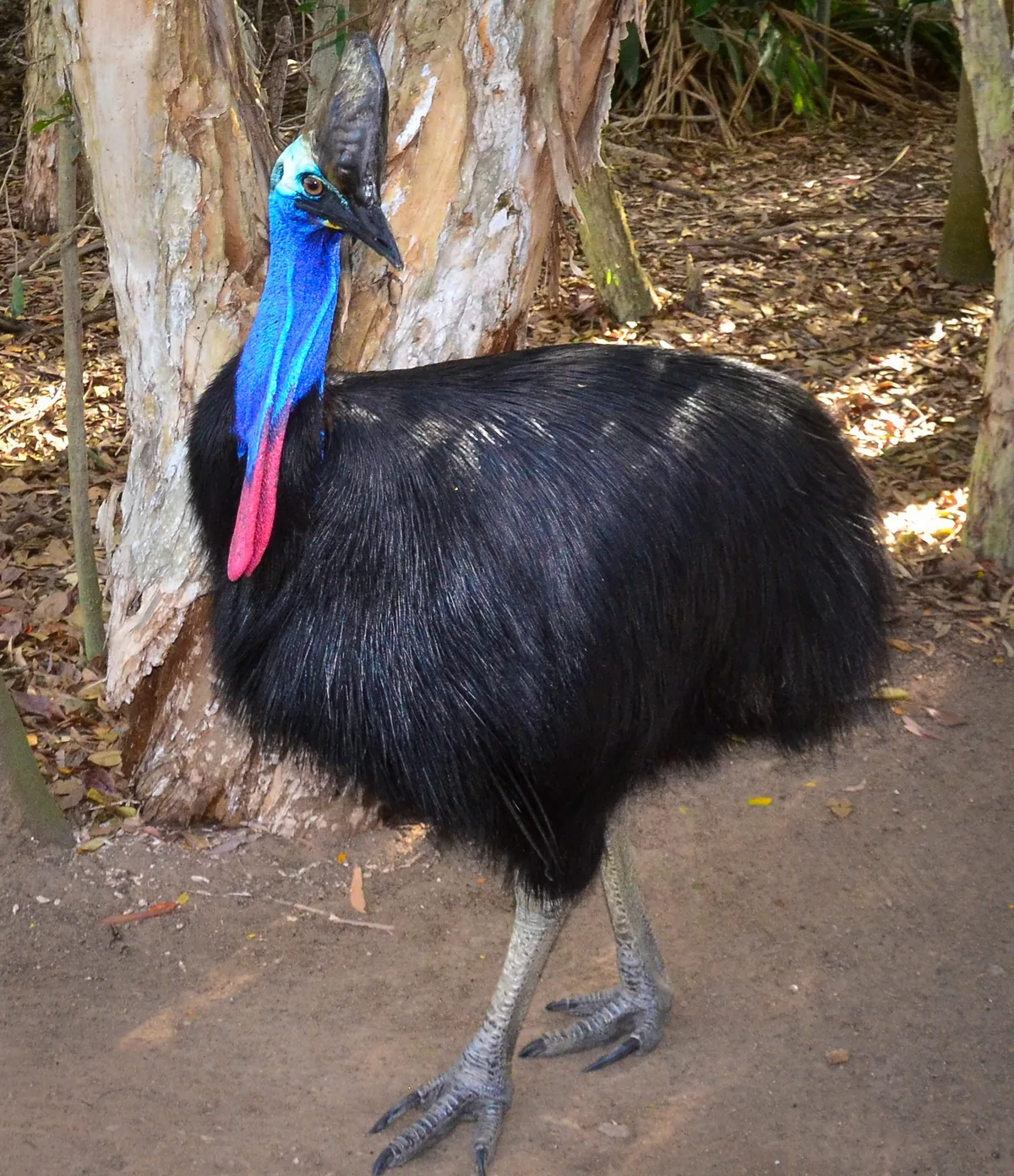
Image source: Web (Bing) / billabongsanctuary.com.au (Web image (fair-use with source credit))
The Southern Cassowary is also a massive presence in the rainforests of Northern Australia and New Guinea. While it stands shorter than an ostrich, its dense musculature and powerful legs make it a formidable creature. According to The Cornell Lab of Ornithology, these birds play a critical role as seed dispersers in dense tropical canopies.
They are built for navigating thick vegetation rather than sprinting across open plains.
The Aero-Engineers: Giants of the Open Ocean
The Wandering Albatross is the undisputed master of the Southern Ocean. It maintains the largest wingspan of any living bird. These wings can measure up to 12 feet across, which allows the bird to cover massive distances with minimal energy.
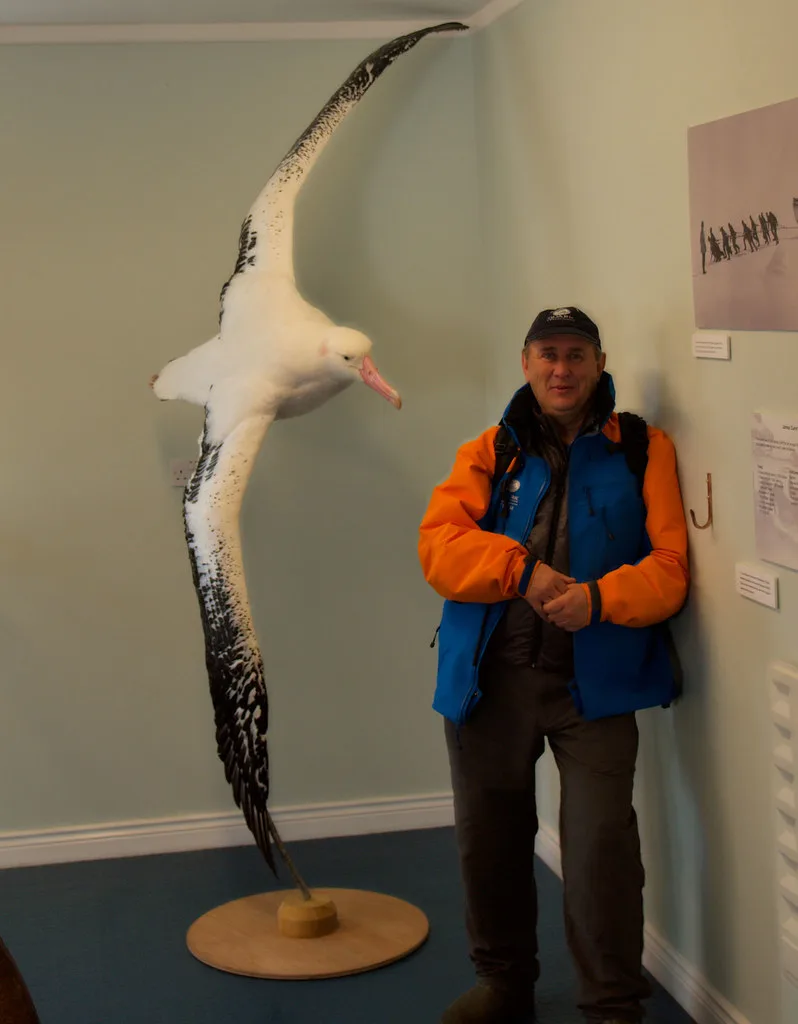
Image source: Bing (Web (fair-use with source credit))
They utilize a technique known as dynamic soaring to ride wind gradients near the ocean surface. By alternating between climbing and diving, they remain aloft for hours without a single wingbeat. This biological efficiency is a feat of engineering that terrestrial birds cannot replicate.
| Feature | Common Ostrich | Wandering Albatross |
|---|---|---|
| Primary Metric | Height / Weight | Wingspan |
| Flight Status | Flightless | Master Glider |
| Main Habitat | Arid Plains | Open Ocean |
| Speed Strategy | Sprinting | Energy Efficiency |
Comparing Scale: Height vs. Weight vs. Wingspan
Comparing an ostrich to an albatross is like comparing a heavy-duty truck to a glider plane. The truck, or ostrich, wins on sheer mass and physical output on the ground. The glider, or albatross, wins on aerodynamic surface area and the ability to travel thousands of miles without landing.
Most people struggle to conceptualize these birds because they never see them side-by-side. If you could see them together, the height of the ostrich would likely intimidate you more than the wingspan of the albatross. The albatross appears graceful and light, while the ostrich represents raw, concentrated power.
Understanding these differences helps you identify why each bird evolved to its specific size. A heavy bird on the ocean would sink, and a high-aspect-ratio winged bird on the savannah would struggle to escape terrestrial predators. Nature prioritizes survival, not just record-breaking statistics.
Real-World Encounters and Human Safety
If you ever find yourself in a position to observe these massive birds, you must prioritize your distance. Large ratites, specifically the Southern Cassowary, can react defensively if they feel their space is compromised. Their legs are equipped with sharp, dagger-like claws capable of inflicting serious injury.
Official guidance from environmental management agencies, such as those overseen by Queensland Government, emphasizes that you should never approach or attempt to feed wild cassowaries.
The same respect applies to larger, flighted species in the wild. When you are watching an Andean Condor or an Albatross, keep a significant buffer zone. Their size can be deceptive, and their movements are often faster than they appear.
Watching them through binoculars or a high-zoom camera lens is the safest and most effective way to appreciate their scale without risking a negative interaction. Always respect the boundaries established by park rangers or wildlife biologists in the field.
Common Misconceptions About Avian Size
A frequent mistake people make is assuming that all "big" birds are slow or sluggish. The Common Ostrich, for instance, can maintain speeds of up to 45 miles per hour for extended periods. This speed is a necessary adaptation to escape predators in their native savannah environment.
They are not simply large, lumbering statues; they are highly efficient, long-distance runners with incredible endurance.
Another misunderstanding involves the relationship between bone density and flight. People often assume that heavy birds must have solid, heavy bones. In reality, even the largest flying birds possess hollow or pneumatic bones to reduce weight.
This delicate balance allows them to maintain a massive wingspan while keeping their total mass low enough for lift. If their bones were as dense as those of a mammal, flight would be physically impossible.
Mistakes to Avoid When Evaluating Avian Size
You should avoid relying on anecdotal reports or low-quality photos for size comparisons. People often photograph large birds from angles that distort their height or wingspan. A photo taken from below can make a medium-sized bird appear massive, while a distant shot can minimize the true scale of a giant species.
Always check for verified biometric data rather than trusting visual impressions alone. Scientists measure height and wingspan under standardized conditions to ensure accuracy. If you are comparing species, look for data derived from peer-reviewed ornithological studies or reputable national wildlife inventories.
Misidentifying a juvenile bird for a different species is another common trap that leads to incorrect size assessments.
Final Recommendation on Understanding Giant Birds
You can appreciate these birds best by viewing them through the lens of ecological adaptation rather than just as a collection of records. If you want to understand why they are the size they are, look at the demands of their environment. The open ocean demands the efficient, long wings of the albatross, while the arid savannah favors the speed and power of the ostrich.
We suggest focusing your interest on how these physical traits enable their unique lifestyles. Read publications from institutions like The National Science Foundation if you want to understand the mechanics behind their evolution. This approach turns a simple fascination with "biggest" into a deeper grasp of biology.
You don't need to choose a favorite champion, but you should respect the specific engineering that keeps each giant thriving in its natural habitat.
Frequently Asked Questions
How does the size of modern birds compare to extinct megafauna?
Modern birds are generally smaller than extinct giants like the Elephant Bird of Madagascar or the Moa of New Zealand. Those extinct species reached heights of up to 10 or 12 feet and possessed much greater mass. We currently live in an era of smaller avian giants by comparison.
Can a Wandering Albatross land on the ground?
Yes, they land to breed and rest on remote oceanic islands. However, they are clumsy on land because their bodies are specifically adapted for the open ocean. Their wingspan is so vast that it makes walking or taking off from solid ground an extremely difficult, energy-draining process.
Why don't flightless birds just fly to escape predators?
Flightlessness is an evolutionary trade-off that allowed these birds to grow much larger. By not investing energy into the specialized flight muscles and complex wing anatomy required for lift, they could divert those resources into leg power and body size. They effectively traded the sky for the ground.
How much does an Ostrich egg weigh?
An ostrich egg is the largest of any living bird, typically weighing between 3 and 5 pounds. It is roughly equivalent to two dozen chicken eggs in terms of volume and mass. This massive investment supports the growth of a very large chick before it even hatches.
Are there any birds in the rainforests that rival the Ostrich?
The Southern Cassowary is the primary giant of the rainforest. While it is significantly shorter than an ostrich, it is remarkably heavy and dense. It remains the largest bird found in tropical forest ecosystems, occupying a niche that prohibits the tall, lanky structure of a savannah-dwelling ostrich.