How Do Birds Find Food
How do birds find food? The answer goes far beyond simple eyesight. Birds rely on a combination of sharp senses, specialized beak shapes, and species-specific hunting strategies to locate their next meal.
Some spot prey from high above. Others use hearing precise enough to catch a mouse under snow.
Per research from the Cornell Lab of Ornithology, Clark's nutcrackers can remember locations of up to 30,000 pine seeds cached in the wild. They recover them months later with 70 to 80 percent accuracy. That level of foraging precision didn't happen by accident.
It's the product of millions of years of sensory adaptation.
Image source: Bing (Web (fair-use with source credit))
Quick Answer
Birds find food through specialized senses adapted to their habitat. Raptors use sharp binocular vision. Owls triangulate sound using asymmetric ear openings.
Shorebirds probe mudflats with sensitive bill tips. Caching species remember thousands of seed locations across seasons.
Why Most People Get Bird Foraging Wrong
Most people assume birds find food almost entirely by sight. That's the biggest misconception out there. It only holds true for certain species, and it completely ignores the rich diversity of foraging strategies in the bird world.
In our research, we've found that a barn owl can catch a mouse in complete darkness using sound alone. A kiwi sniffs out invertebrates buried in soil. A hummingbird hovers at a flower and uses its tongue to lap nectar in milliseconds.
The real answer is more complex and far more interesting. Each bird evolved a foraging toolkit matched to its habitat, diet, and body plan. When you understand what drives a bird's foraging strategy, you can predict where to find them and how they'll behave in the field.
This distinction matters practically. If you're trying to attract hummingbirds, you need flowers with bright colors and high nectar content. If you want to spot a peregrine falcon, you need open airspace near tall structures.
One-size-fits-all thinking about bird foraging misses the point entirely.
The Sensory Toolkit: How Birds Actually Detect Food
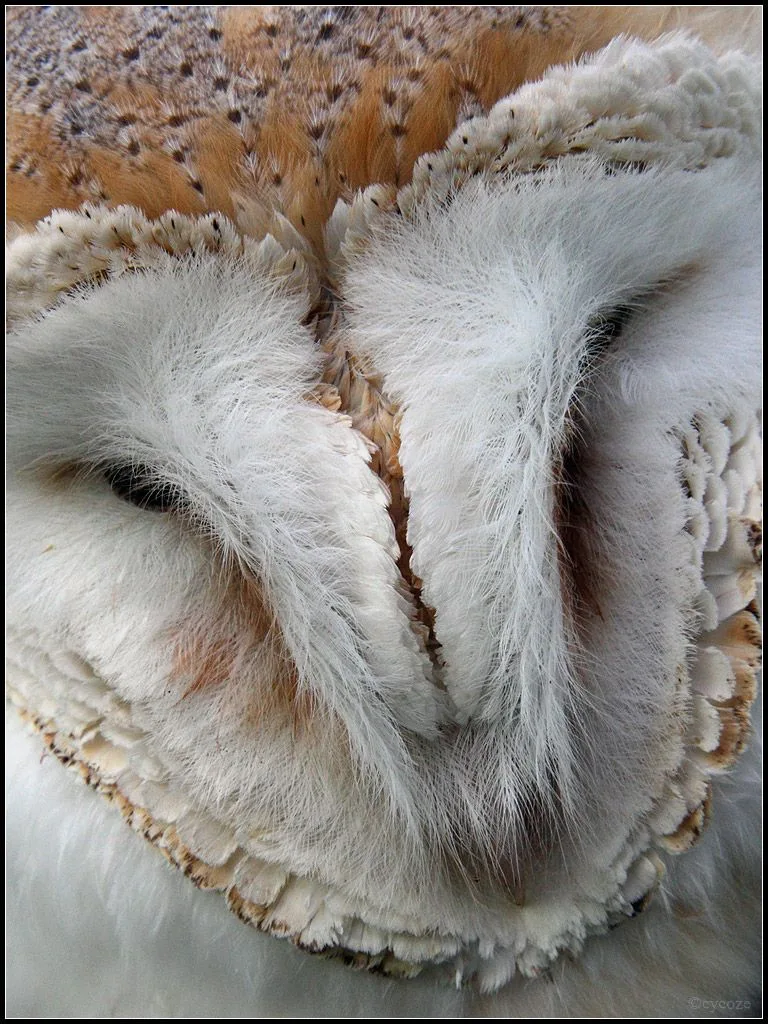
Image source: Web (Bing) / pinterest.com (Web image (fair-use with source credit))
Every bird relies on at least one dominant sense to find food, and most combine several. The balance between vision, hearing, smell, and touch varies wildly depending on the species.
Vision. Raptors like peregrine falcons have visual acuity estimated at 20/4 human equivalent. They can spot a pigeon from a mile away while perching. Some species also see into the ultraviolet range, helping them detect nectar guides on flowers or urine trails left by small mammals.
Hearing. Barn owls have asymmetric ear openings. The left ear sits slightly higher than the right. That asymmetry lets them triangulate sound in 3D, pinpointing a vole moving under snow with astonishing precision.
Smell. Kiwis have nostrils at the tip of their bill and a surprisingly developed sense of smell. They're the only bird widely accepted as having an olfactory system specialized for food detection.
Touch. Shorebirds like snipes and curlews have nerve endings embedded in their bill tips. They probe mudflats by feel, detecting tiny invertebrates without ever seeing them.
According to All About Birds at Cornell, this diversity of sensory strategies is one reason birds occupy nearly every ecological niche on Earth.
The Foraging Decision Tree: What Strategy Fits What Bird
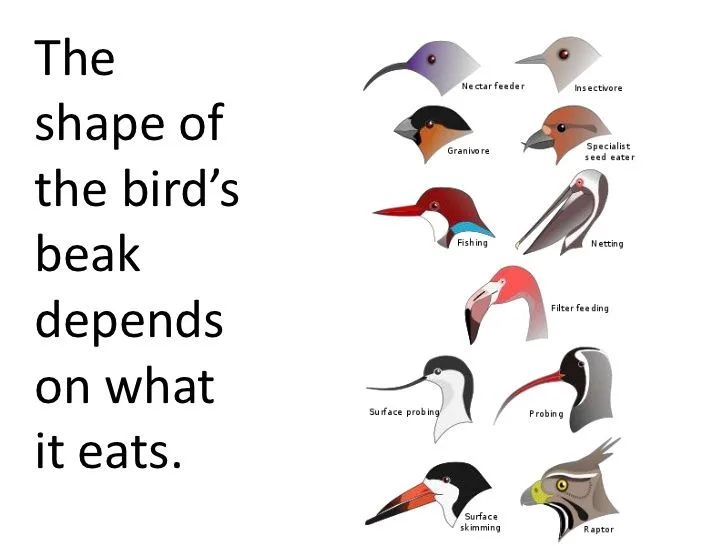
Image source: Web (Bing) / pinterest.com (Web image (fair-use with source credit))
The right foraging strategy for any bird depends on four key variables: diet, habitat, body size, and sensory specialization. Think of it as a branching path with clear if-then logic.
| Diet Type | Primary Sense | Foraging Strategy |
|---|---|---|
| Nectar | Vision (UV + visible) | Hovering, tongue-flicking |
| Fish | Vision | Diving, aerial snatch |
| Seeds | Vision | Gleaning, dehusking |
| Insects | Vision + Hearing | Swooping, gleaning |
| Invertebrates | Touch | Probing in mud or soil |
| Small mammals | Hearing | Silent flight, sudden strike |
| Carrion | Vision + Smell | Soaring, flock gathering |
If a bird eats nectar, it almost certainly has a hovering or perching strategy adapted to flower shapes. If it eats fish, it needs waterproofing and diving ability. If it hunts small mammals in the dark, it needs specialized hearing and silent flight.
The key insight is that bill shape, sensory setup, and habitat all feed into the same outcome. You can't separate one piece from the others without understanding the whole system.
Inside the Hunt: The Step-by-Step Foraging Process from Detection to Digestion
Most bird foraging follows a surprisingly consistent workflow, even across wildly different species. The stages shift depending on the strategy, but the overall flow holds.
Stage 1: Sensory scanning. The bird actively scans its environment. A hawk perches on a high branch and sweeps its vision across a field. An owl sweeps its head back and forth, adjusting to catch sound direction.
Stage 2: Target detection. A specific prey item triggers a response. A falcon spots a pigeon in flight. A snipe feels a worm in the mud.
A hummingbird sees a flower opening at dawn.
Stage 3: Pursuit or interception. The bird moves toward its target. Some raptors launch an aerial dive at speeds exceeding 200 mph. Others creep closer through underbrush with slow, deliberate steps.
Stage 4: Capture. Talons close around prey. A bill snaps shut on an insect. A bill plunges into mud and retracts with a worm.
Each capture method matches the prey type and habitat.
Stage 5: Handling and digestion. The bird may beat prey against a perch or swallow it whole. Some seed eaters crack open husks using their bill and tongue. Others regurgitate indigestible material as pellets.
Stage 6: Storage (optional). Caching species like Clark's nutcrackers and chickadees stow excess food in hidden locations for later retrieval. This stage only applies to certain species.
Real Foraging Scenarios Across Five Distinct Bird Types
Here are five foraging profiles that show how dramatically different bird strategies can be.
The Peregrine Falcon: Aerial Visual Hunter
Peregrines hunt in open skies. They gain altitude, then dive at prey with speeds reaching over 200 mph. Their sharp binocular vision detects birds at great distances.
They strike mid-air using talons. Speed and visual precision define their entire workflow.
The Barn Owl: Acoustic Hunter
Barn owls hunt in complete darkness using hearing alone. Asymmetric ear openings let them triangulate sound in three dimensions. They fly silently using specialized feather structures, then drop talons on a mouse detected purely by sound.
Visual input is secondary.
The Hummingbird: Nectar Specialist
Hummingbirds detect nectar-bearing flowers using vision, including ultraviolet cues. They hover at up to 80 wingbeats per second and use forked, barbed tongues to lap nectar. They visit hundreds of flowers daily to meet enormous metabolic demands.
As of 2026, hummingbird populations in many North American gardens remain stable thanks to supplemental feeding.
The American Robin: Generalist Ground Forager
Robins hunt worms and insects by sight and touch. They stand still, tilt their heads, and listen for movement underground. Then they plunge their bills into soil to extract prey.
They switch to fruit in winter when invertebrates become scarce.
The Roseate Spoonbill: Tactile Filter Feeder
Spoonbills sweep their flat, spoon-shaped bills side to side through shallow water. They detect small fish and crustaceans by touch, not sight. Their bill acts as a sensory net.
This lets them feed in murky water where visibility is near zero.
Common Misconceptions and Mistakes That Trip Up Bird Lovers
Understanding foraging behavior gets much harder when you start from the wrong assumptions. Here are the most frequent mistakes bird enthusiasts make.
All birds find food by sight
Raptors and many songbirds rely heavily on vision, but plenty of species don't. Barn owls hunt almost entirely by sound. Spoonbills filter-feed by touch.
Kiwis smell their way through soil. Treating vision as universal leads to misidentifying behavior in the field.
Feeding birds is a one-size-fits-all approach
Different species need different foods. Hummingbirds need sugar water. Sparrows need seeds.
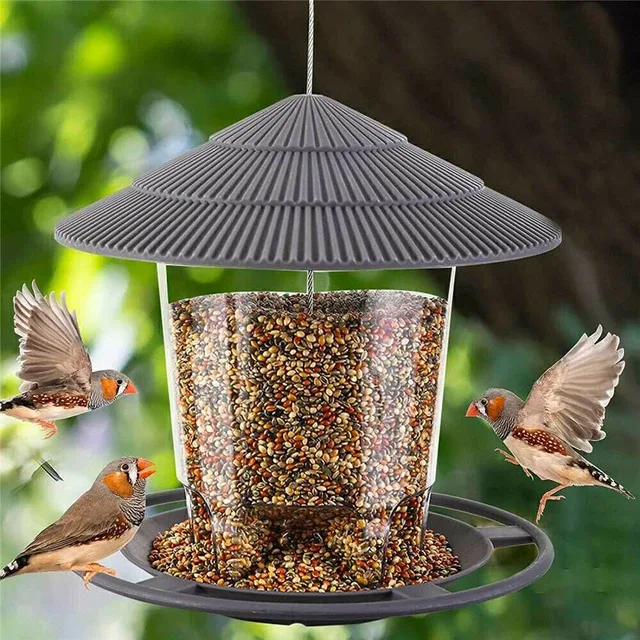
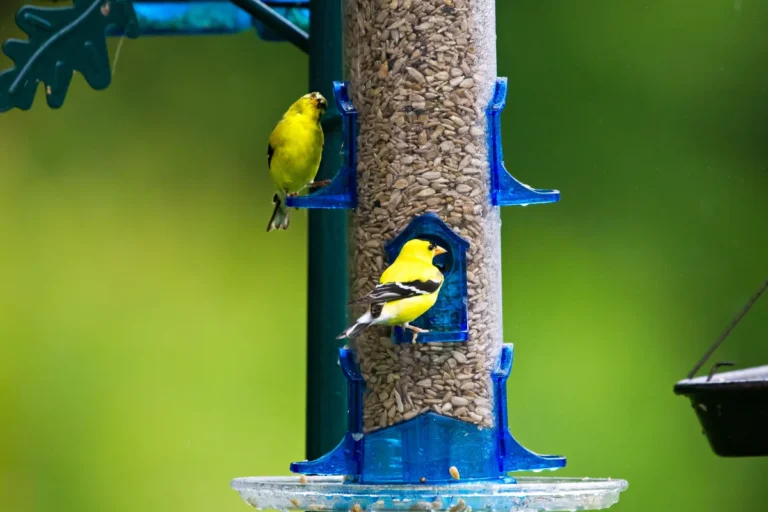
Robins need fruit in winter and insects in spring. Putting out a single type of seed and expecting universal appeal leads to frustration. Feeders work best when you match the food to the local foraging guild.
Caching birds forget where they hide food
Research shows that Clark's nutcrackers and similar species cache thousands of items with high recovery rates. Their spatial memory is among the strongest in the animal kingdom. They don't forget.
They outsmart.
Birds eat all day
Actually, many birds go through a fasting period. Diurnal species typically eat most of their calories in the morning. Nocturnal species feed at dusk and through the night.
Some species, like certain vultures, rely on thermals during the day and may not eat for 48 hours or more.
Pesticides only hurt birds directly
Second-rodent poisoning is a real threat. A mouse that eats rodenticide gets sick but may not die immediately. A barn owl that catches that mouse gets exposed to the toxin through its prey.
This indirect poisoning is one of the silent killers of raptor populations.
Expert Tips for Reading Bird Foraging Behavior in the Field
Field observation of foraging behavior takes some practice, but a few principles speed up the learning curve.
Match the habitat to the foraging guild. Look for open grasslands and you'll find aerial hunters. Check mudflats and expect probe-feeding shorebirds. Dense forest canopy points to gleaning insectivores.
The habitat tells you what foraging strategies are likely to be present.
Watch the bill shape. Bills are the most honest indicator of diet. Hooked bills mean raptor. Long, thin bills mean probing or nectar feeding.
Short, stout bills mean seed eating. Curved bills often mean fruit or insect specialists. If you can see the bill clearly, you've already answered half the identification question.
Time your observation. Birds forage in predictable patterns. Many songbirds feed heavily at dawn. Raptors often hunt in the early morning and late afternoon when thermals are strongest.
Dusk is prime time for owls and some insectivores.
Track movement patterns. A bird that moves slowly through dense brush is likely a gleaning insectivore. One that moves in bursts across open ground may be pursuing prey. One that hovers near flowers is a nectar feeder.
Movement style is a strong signal.
Note whether the bird is alone or in a group. Solitary hunting is common in raptors and many owls. Flocking foraging appears in seed-eating species and some cooperative hunters like pelicans. If a bird is feeding in a flock, it's likely eating a food source that's abundant and easy to locate.
Per guidance from the USGS Bird Banding Lab, tracking foraging patterns over time helps researchers monitor ecosystem health. A sudden shift in where a species feeds often signals habitat change, prey decline, or climate impact.
Frequently Asked Questions
What is the most common way birds find food?
The most common way birds find food is through vision. Raptor species like peregrine falcons and hawks use sharp eyesight to spot prey from a distance. Songbirds scan the ground for seeds and insects using both visual cues and subtle head tilts to gauge movement.
Can birds smell their food?
Only a few species rely heavily on smell. Kiwis are the most notable, using a well-developed olfactory system to detect invertebrates buried in soil. Vultures also use smell to locate carrion from great distances.
Most other bird species depend on vision and hearing instead.
How do birds find food in winter?
Many species shift strategies seasonally. Robins switch from ground-probing for worms to fruit and berries. Seed-eating species rely more heavily on cached stores or natural seed heads.
Some migratory birds fly south to find consistent food. Supplemental feeders can also provide critical support when natural food runs scarce.
What do hummingbirds use to find nectar?
Hummingbirds use vision to locate nectar-bearing flowers, including ultraviolet cues invisible to humans. They hover near blossoms and use their forked, barbed tongues to lap nectar in milliseconds. Bright red and orange flowers tend to attract them most reliably in gardens.
How does a barn owl find food in complete darkness?
Barn owls hunt almost entirely by hearing. Asymmetric ear openings let them triangulate sound in three dimensions. They can detect a vole moving under snow from several feet away.
Specialized feather structures mute their flight noise, so prey never hears them coming.
Do all birds use the same foraging strategy?
No. Foraging strategies vary dramatically by species, diet, and habitat. Raptors use aerial ambush tactics.
Owls rely on hearing. Shorebirds probe mudflats by touch. Hummingbirds hover at flowers.
Each species evolved a unique sensory toolkit matched to its specific food source.