Why Do Birds Migrate in Winter
Why do birds migrate in winter? The short answer is survival. Shorter days, colder temperatures, and dwindling food supplies make staying put a losing proposition for most species.
Migration isn't a lifestyle choice. It's an evolutionary strategy.
Per Cornell Lab of Ornithology research, roughly 40% of bird species worldwide are migratory, and some complete journeys spanning thousands of miles annually. Understanding this annual exodus means looking at the biology, the data, and the species that pull it off year after year.
Quick Answer: What Actually Drives Birds to Fly South for the Winter
Birds migrate in winter to find food and warmer climates. Shorter days trigger hormonal shifts that signal departure. Winter strips away insects, seeds, and nectar across their range.
Migrating south lets birds access resources they simply can't get at home.

Image source: Bing (Web (fair-use with source credit))
Core Explanation: The Biological Triggers Behind Migration
Migration isn't random. It's a finely tuned biological response to environmental change. Three forces drive most birds to leave: light cues, energy needs, and food scarcity.
Photoperiodism and Hormonal Shifts
Photoperiodism is an organism's response to changing day length. As autumn sets in, days shorten. This triggers a hormonal cascade in migratory birds.
The pineal gland senses the shift, signaling the hypothalamus to act. Corticosterone levels spike sharply.
That spike produces Zugunruhe, the scientific name for migratory restlessness. You'll see it in captive birds pacing anxiously on perches. In the wild, this restlessness drives departure.
Birds don't "decide" to migrate. Their endocrine system forces the move.
Fat Deposition and the Fuel-Up Phase
Before departing, birds pack on energy reserves. Bar-tailed godwits can double their lean body mass in fat. Some species reach up to 100% of normal weight in stored fuel.
They feed intensively on insects and seeds for weeks.
This pre-migration fattening is critical for flights that can last over a week without rest. Without those reserves, the crossing would be fatal.
Food Availability and Temperature as Driving Forces
Cold temperatures shut down insect activity and reduce plant-based food. Birds staying through winter would burn reserves faster than they can replace them. Migration solves this problem.
Birds move to regions where food remains accessible.
Some species exploit resources that haven't peaked yet. Others follow the food entirely across continents. Either way, the logic is the same: energy in, energy out, always.
According to BirdLife International, migratory species depend on the timing and availability of food across their entire range. When that timing breaks down, so does survival.
Real Species Cases: How Migration Plays Out in the Wild
Theory is one thing. The data behind actual migration routes tells the real story. Three species stand out for their extraordinary endurance and the research behind their journeys.
The Bar-Tailed Godwit: 7,000 Miles Nonstop
The bar-tailed godwit holds the record for the longest nonstop flight of any known animal. These birds travel roughly 7,000 miles from Alaska to New Zealand without resting. The entire flight lasts about 7 to 11 days, depending on wind conditions.
Some individuals cross altitudes above 20,000 feet.
Satellite telemetry studies show godwits depart with fat reserves that double their body weight. They burn through those reserves continuously over the crossing. Recovery takes weeks on the wintering grounds.
Per data compiled by the USGS, recovery time depends heavily on food availability at the destination site.

Image source: Web (Bing) / naturepl.com (Web image (fair-use with source credit))
The Arctic Tern's Ultimate Round Trip
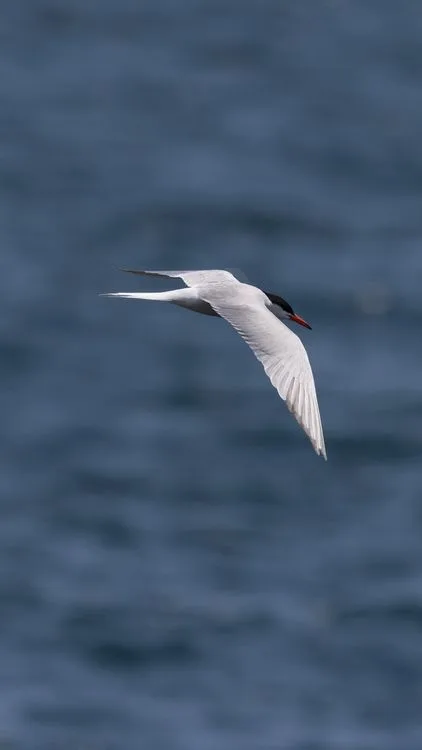
Arctic terns cover approximately 44,000 miles annually in a pole-to-pole round trip. They breed in the Arctic during summer, then fly to Antarctic waters for winter. Research published in The Auk estimates they spend up to 80% of their lives in flight.
That makes them the most traveled animal on the planet.
The Blackpoll Warbler's Ocean Crossing
Blackpoll warblers weigh less than half an ounce. Despite their small size, they cross the Atlantic Ocean in a roughly 1,800-mile overwater route. They depart from North America's northeastern coast and land in South America.
Banding recovery data from Cornell Lab of Ornithology confirms this route year after year.
Each species answers the same question differently. Birds migrate because staying put has become impossible. The strategies vary.
The pressure doesn't.
Common Misconceptions About Why Birds Migrate
Popular understanding of migration is full of shortcuts that miss the real science. Two misconceptions do the most damage.
"It's Just About the Cold"
The most common assumption is that birds flee cold weather. Temperature does play a role. But food availability matters far more.
Many tropical winters are just as resource-scarce as temperate ones.
A better way to think about it: migration is a resource strategy, not a temperature strategy. Birds track energy, not just warmth. Species that winter in the tropics still have to find insects, fruit, or nectar.
That's not guaranteed just because the temperature is higher.
Resident vs. Migratory: Not All Birds Take the Same Path
About 60% of North American bird species are permanent residents. Cardinals, chickadees, and blue jays stay put through winter. They've evolved different survival strategies.
Fat deposits, food caching behavior, and lower metabolic rates let them endure.
So if birds can survive winter in place, why don't all of them? The answer comes down to evolutionary trade-offs. Resident species compete harder for local resources.
Migratory species avoid that competition by leaving. Each strategy carries costs and benefits. Neither is universally better.
| Strategy | Example Species | Key Survival Mechanism | Trade-Off |
|---|---|---|---|
| Migratory | Bar-tailed godwit, Arctic tern | Long-distance flight to resource-rich areas | Energy cost of travel, predator exposure in transit |
| Resident | Cardinal, chickadee, blue jay | Fat reserves, food caching, lower metabolism | Competition for scarce winter resources |
Climate Change Is Rewriting the Migration Map
Warming temperatures are disrupting the timing and geography of bird migration. Two major shifts are underway as of 2026.
Phenological Mismatch and the Timing Problem
Phenological mismatch occurs when birds arrive at breeding grounds after their primary food source has already peaked. In temperate forests, caterpillars hatch based on temperature. Birds time their arrival based on day length.
As temperatures warm earlier, insects peak before migrating birds arrive. Chicks hatch into food shortages. Reproductive success drops.
Cornell Lab of Ornithology research documents this mismatch in multiple passerine species across North America. The trend has accelerated since 2010. Some populations are shifting migration dates by 10 to 14 days earlier than historical baselines.
Shifting Wintering Ranges and Vanishing Stopover Habitats
Stopover sites are critical refueling stations along migratory flyways. Wetlands, river deltas, and coastal marshes provide the food birds need to continue their journey. As of 2026, wetland loss continues to accelerate across Asia and North America.
The East Asian-Australasian Flyway has lost roughly 65% of its tidal flats since the 1970s. That loss forces birds to travel farther between fuel stops. Some species simply can't make the gap.
Red knot populations along this flyway have declined significantly as stopover sites disappear.
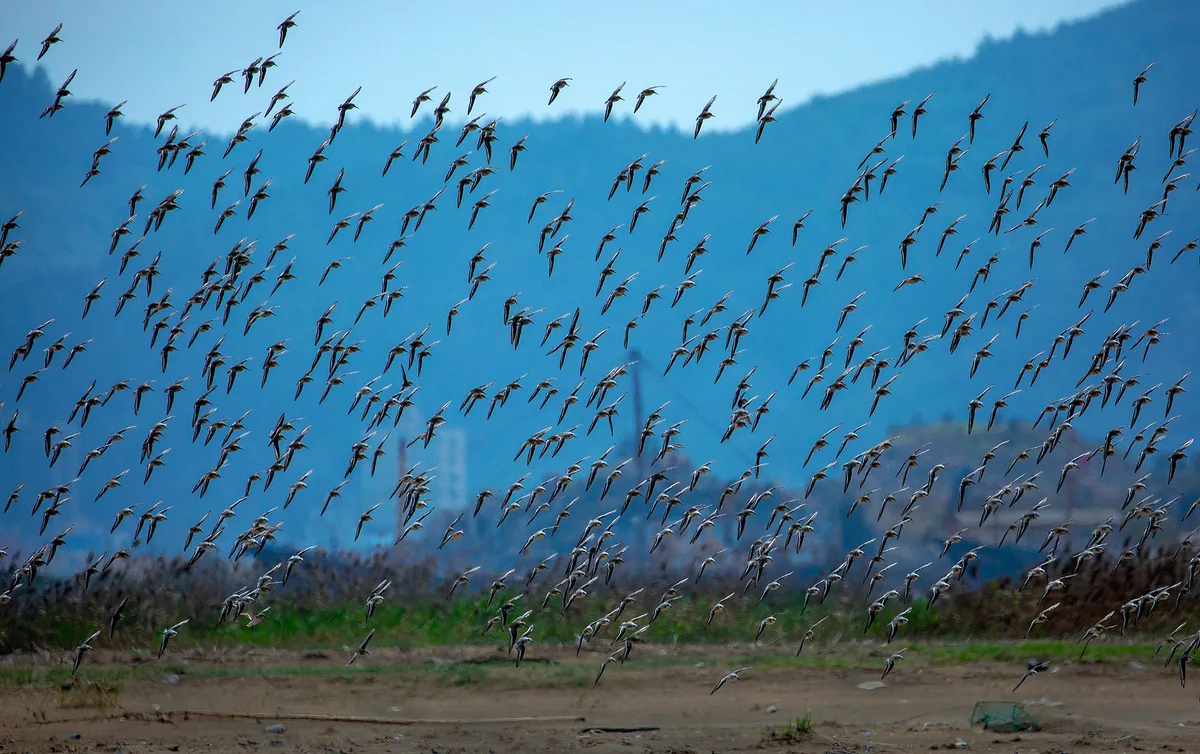
Image source: Web (Bing) / news.cgtn.com (Web image (fair-use with source credit))
Conservation groups are responding with targeted habitat restoration. But without coordinated action across national borders, the disruption will deepen.
Frequently Asked Questions
Why do birds migrate in winter instead of staying year-round?
Staying put means competing for food during its scarcest season. Migrating birds avoid that competition by moving to regions where resources remain available. It's an energy trade-off.
Flight costs energy. But wintering in resource-poor habitats costs more in the long run.
Do all birds migrate south for the winter?
No. Many species are permanent residents, like cardinals and chickadees. Others migrate north to Arctic breeding grounds in summer.
Migration direction depends on where the best seasonal food and breeding habitat are located. It's not always "south."
How do birds know when to migrate?
Photoperiod changes trigger hormonal shifts that drive migratory restlessness and departure. Some species also respond to temperature, food scarcity, and internal biological clocks tuned over generations. First-generation migrants learn routes by following experienced adults on their first flight.
What is phenological mismatch?
Phenological mismatch happens when migrants arrive at breeding grounds after their food supply has peaked. Warming temperatures cause earlier insect emergence. Birds still depart on their traditional schedule.
The result is chicks hatching into food shortages that reduce survival rates.
What threatens migratory bird populations?
Habitat loss, wind turbines, glass collisions, light pollution, and insect decline all contribute. Pesticide use reduces food availability for insectivorous migrants. Illegal hunting along migration corridors continues to impact some species.
Climate change compounds every threat by disrupting timing and resource availability.