Types of Ducks
Identifying the various types of ducks can be a rewarding challenge for any nature enthusiast. While their appearances change throughout the seasons, knowing a few simple behaviors makes identification much easier.
We have found that categorization helps observers make sense of the waterfowl they encounter in local wetlands. Research from the United States Fish and Wildlife Service indicates that these birds fall into two primary groups based on their feeding habits.
Quick Answer
There are two main types of ducks: dabblers and divers. Dabbling ducks feed at the surface. They tip their tails up in shallow water.
Diving ducks submerge completely to find food underwater. Both groups live in different water habitats. Each has unique physical traits for survival.
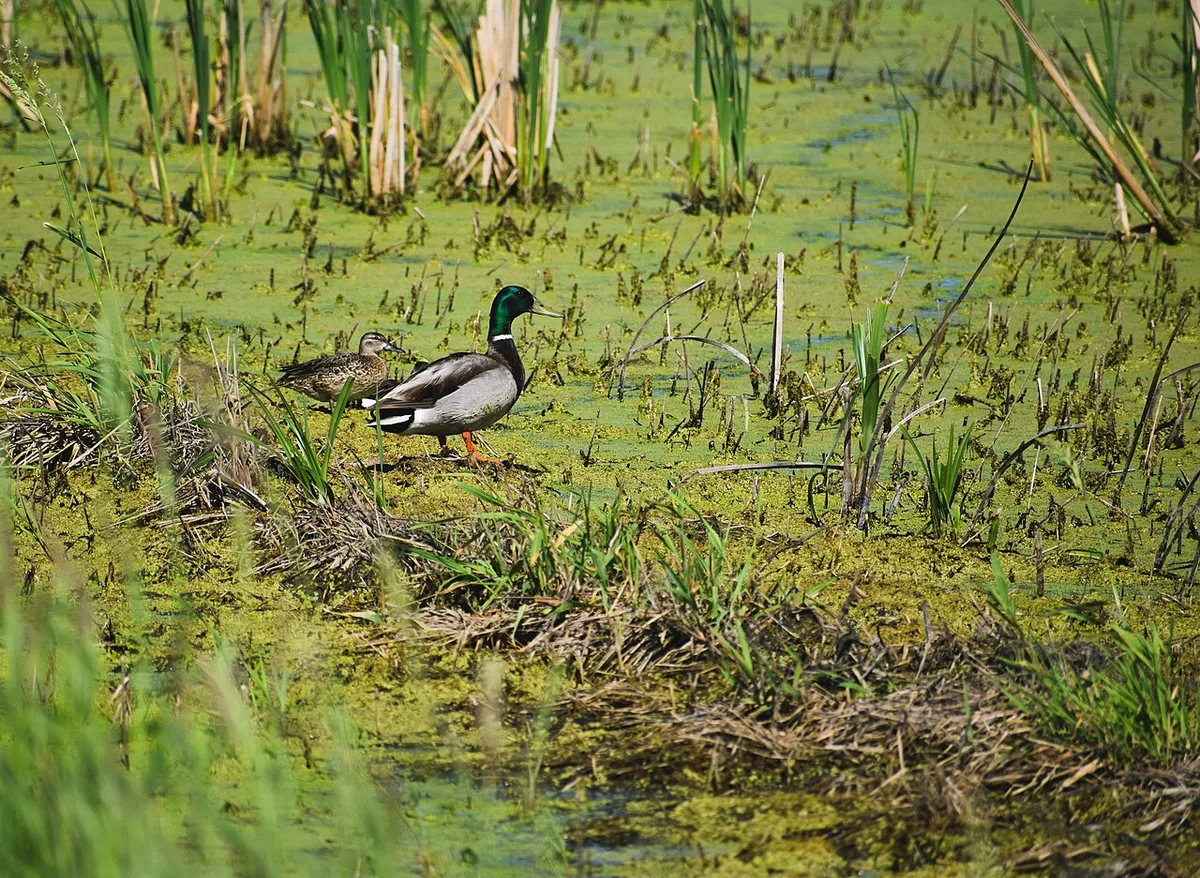
Image source: Wikimedia Commons / USFWS Mountain Prairie
The "Dabbler vs. Diver" Split: Understanding Duck Behavior
Most ducks you encounter belong to one of two functional groups. This classification relies on how the birds acquire their food. Understanding this split is the most effective way to identify a species from a distance.
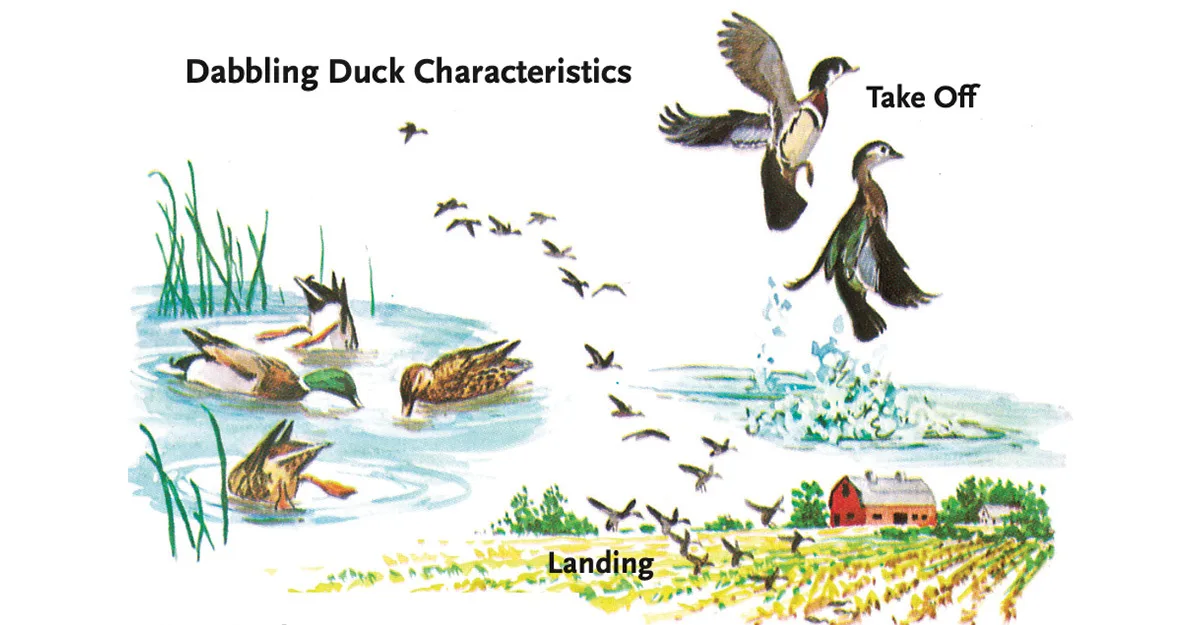
Image source: Bing (Web (fair-use with source credit))
Dabbling ducks, often called puddle ducks, forage in shallow water. They do not dive fully. Instead, they tip their tails toward the sky while their heads remain submerged to reach aquatic plants.
You will typically find them in marshes, ponds, and slow-moving streams.
Diving ducks are built for deeper environments. They submerge their entire bodies to hunt for fish or crustaceans. Because they need to swim deep, their feet are positioned further back on their bodies.
This makes them excellent swimmers but relatively clumsy when walking on land.
Visual Identification: How to Spot the Differences in the Field
When you are scanning a lake, look for the duck's silhouette. Dabbling ducks usually sit high on the water. They look like they are floating on top of the surface.
This high-riding posture helps them maneuver through thick vegetation.
Diving ducks sit much lower, often appearing as if they are partially submerged. Their bodies are more compact and rounded compared to the elongated shape of a dabbler. You will notice this effect immediately if you see the two groups swimming side by side.
Watch how they take flight. A dabbling duck can spring almost vertically into the air from the water. A diving duck needs a runway.
They flap their wings rapidly and patter their feet against the surface to build enough speed for takeoff.
Key Identifiers: Anatomy, Plumage, and Flight Patterns
Look closely at the bill to determine how a species eats. Dabblers have wider, flatter bills that act as strainers. They use these to filter seeds and small insects from the water surface.
Mergansers, a type of diving duck, have thin, serrated bills for gripping fish.
The speculum is another critical feature for identification. This is a bright, iridescent patch of color on the rear edge of the wing. It is often visible when the duck is resting or in flight.
Each species features a unique color pattern on this patch.
Consider the male and female differences. In many species, the male, known as a drake, is brilliantly colored for breeding. The female, or hen, is typically mottled brown.
This provides essential camouflage while she sits on a nest.
Behavioral Clues: Watching How They Feed and Move
Behavior is just as important as appearance. If you spot a duck bobbing its tail, it is likely a dabbler foraging for vegetation. They move through shallow water with ease and often stay close to the shore.
Diving ducks exhibit a different rhythm. They spend more time below the surface than above it. If a duck disappears for 15 to 20 seconds, it is almost certainly a diver.
They rarely tip up like dabblers.
Pay attention to their social interactions. Dabbling ducks, like Mallards, are often comfortable around human environments. Diving ducks, such as Canvasbacks, prefer open, quiet water.
They are more skittish and usually stay further from the bank.
Challenges in Identification: Eclipse Plumage and Hybridization
Identification gets tricky during the late summer. Many drakes go through a molt called eclipse plumage. They lose their bright breeding colors and start to look like the females.
This helps them stay hidden while they grow new flight feathers.
If you see a duck that looks like a female but has a male's behavior, it might be in this transition phase. Look for subtle cues. Check the bill color or the eye color, as these often remain distinct even when the feathers fade.
Hybridization is also a reality in nature. Mallards frequently breed with other species like American Black Ducks. This can produce offspring with mixed features.
Do not be discouraged if a bird does not fit a standard field guide perfectly. Variations are common in the wild.
Navigating Habitats: Where to Find Specific Duck Species
You can often predict which species you will see by looking at the water quality and surrounding landscape. Dabbling ducks, like the Northern Shoveler, thrive in nutrient-rich, shallow marshes where aquatic vegetation is abundant. They prefer quiet, calm water that does not flow too fast.
Diving ducks occupy a completely different ecological niche. Species like the Canvasback are typically found on large, deep lakes or expansive coastal bays. They require enough open water to build up momentum for their characteristic running takeoff.
If you are near a forest, keep an eye on nearby tree lines. The Wood Duck is a specialized species that prefers wooded swamps and slow-moving river corridors. They nest in tree cavities, so you will not find them in wide-open, treeless parks.
| Habitat Type | Typical Species | Identifying Feature |
|---|---|---|
| Shallow City Ponds | Mallards | Green-headed males |
| Deep, Open Lakes | Canvasbacks | Sloping forehead profile |
| Wooded Streams | Wood Ducks | Vibrant, patterned plumage |
| Coastal Bays | Buffleheads | Compact, energetic movement |
Expert Tips for Consistent Field Identification
The secret to better identification is practicing the scan and pause method. Start by scanning the entire group of birds with your naked eye to identify the general behavior. Once you notice a split in activity, use binoculars to focus on a single individual.
Pay close attention to the wing flash as birds move. Many ducks reveal bright, specific patterns on their wings only when they take off or stretch. These flashes are often the most reliable way to distinguish between species that look similar while sitting still.
Do not ignore the sounds they make. While ducks are often quiet, drakes and hens have distinct vocalizations. Males often produce whistles or soft grunts, while females are more likely to have the classic quack or rattling calls.
How to use identification tools effectively
- Use a dedicated birding app that allows you to filter by location and season.
- Focus on the shape and size before worrying about specific feather colors.
- Keep a simple notebook to record the date and the specific behavior you observed.
- Consult local guides from the Cornell Lab of Ornithology to see what is common in your specific region.
Frequently Asked Questions
Why do ducks have different bill shapes?
Ducks evolved different bill shapes to avoid competing for the same food sources. Dabblers have wide, flat bills with internal structures called lamellae that filter seeds and plants from the mud. Diving ducks, especially fish-eaters like mergansers, have thin, serrated bills that act like tweezers to catch slippery fish.
How do I tell a male from a female duck?
In most species, the male, or drake, displays vibrant, colorful plumage during the breeding season. The female, or hen, is almost always mottled brown, gray, or tan. This dull color acts as essential camouflage while she stays on the nest to protect her eggs and ducklings from predators.
Can ducks fly as soon as they hatch?
Ducks cannot fly immediately after hatching. Ducklings are precocial, meaning they can walk and feed themselves shortly after leaving the nest, but they rely on their mother for warmth and protection. They typically take 50 to 70 days to grow their flight feathers before they are ready for their first journey.
Why do ducks disappear under the water?
Diving ducks submerge themselves to reach food sources located at the bottom of the water column. They dive to find mollusks, small fish, and underwater tubers that dabbling ducks cannot reach. They can stay underwater for significant periods depending on the depth of the water and the species involved.
Is it harmful to feed ducks bread?
Feeding bread to ducks is a common mistake that causes long-term health issues. Bread is essentially empty calories that fill them up without providing necessary nutrition. It can lead to a condition called angel wing, where the feathers grow incorrectly, making it impossible for the birds to fly or survive in the wild.