American Robin Facts
If you’ve spent any time in your backyard this spring, you’ve likely encountered an American Robin. These birds are some of the most recognizable avian neighbors in North America, yet there is much more to learn about American robin facts beyond their famous red chests.
Scientists classify these birds as part of the thrush family, which includes some of nature’s most gifted songbirds. As of 2026, observations from the Cornell Lab of Ornithology confirm these birds remain one of the most widespread species across the continent.
Quick Answer
The American Robin is a common North American thrush. Adults possess a distinctive rust-colored breast. They feed primarily on earthworms and seasonal fruits.
You will often see them hopping across open lawns. They are highly territorial birds during their breeding season.
Spotting the American Robin: A Field Guide to Visual Cues
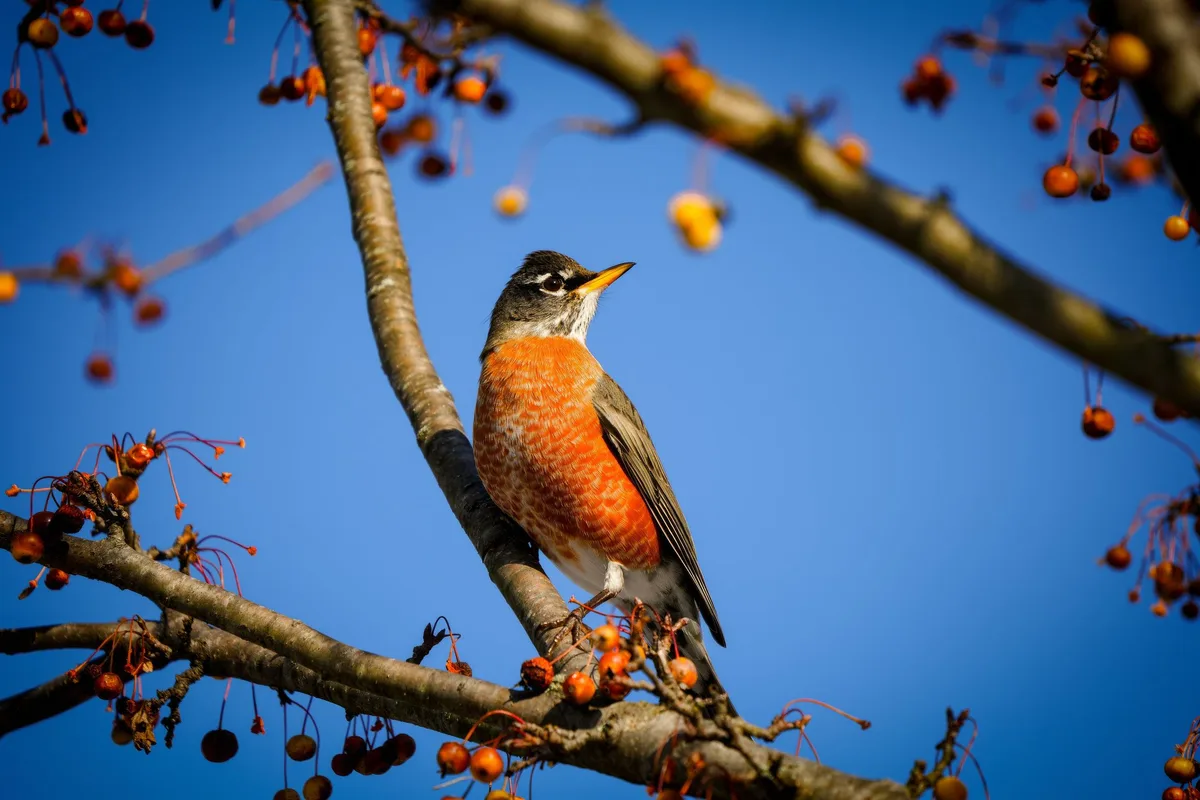
Image source: Bing (Web (fair-use with source credit))
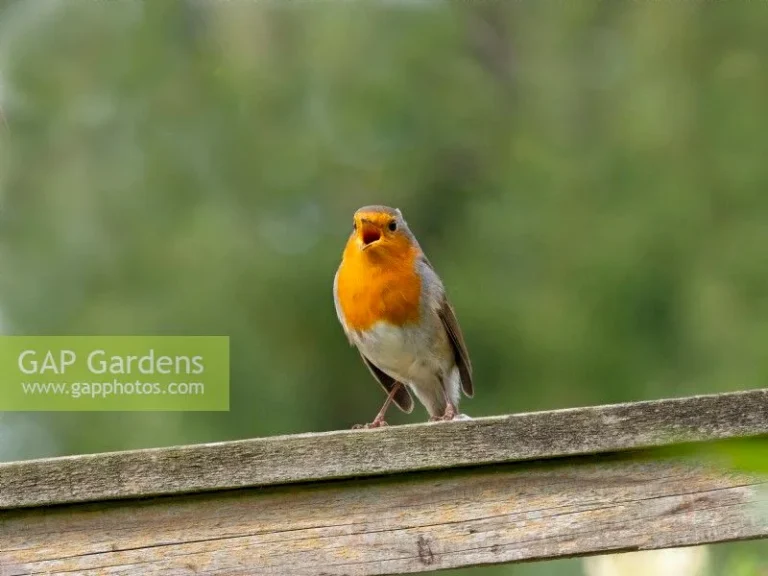
Identifying an American Robin is usually simple once you know which features to scan. The most striking identifier is the male’s vibrant, brick-red belly, which contrasts sharply against a slate-gray back. Females often look slightly duller, sporting paler orange underparts and a softer gray hood.
Look for the head closely. Both sexes feature a dark gray or blackish head with a thin, yellow-orange bill that is perfectly shaped for pulling worms. You will also notice a broken white eye ring circling the eye, which is a reliable way to distinguish them from other backyard thrushes.
| Feature | Key Visual Marker |
|---|---|
| Breast | Vibrant rust or brick-red |
| Back | Slate-gray feathers |
| Eye Ring | Broken, thin white circle |
| Bill | Sharp, yellow-orange color |
When you see them in flight, look for white patches on the underside of their wings. They fly with a rhythmic, steady wingbeat that distinguishes them from more erratic fliers. If you are ever unsure, listen for their dawn chorus, which is a clear, rising and falling "cheerily, cheerily" song.
The Biology Behind the Robin’s Distinctive Look
The vibrant color of the robin’s chest is more than a simple aesthetic trait. It is a direct reflection of the bird’s nutritional intake during the molt. A diet rich in carotenoids, natural pigments found in fruits and insects, results in a more intense red belly.
These birds are biologically optimized for terrestrial foraging. Their legs are muscular and long, allowing them to traverse mowed lawns with an efficient run-and-stop gait. They do not walk continuously like a pigeon.
Instead, they dash, pause to scan the ground, and dash again.
Their eggs are equally remarkable. The famous "robin's egg blue" is caused by biliverdin. Research indicates this pigment helps shield the embryo from harmful ultraviolet light while the egg sits in the nest.
It also provides a level of camouflage against predators, as the blue hue is difficult to spot in the mottled shade of a tree.
Nesting Habits and the Lifecycle of a Backyard Classic
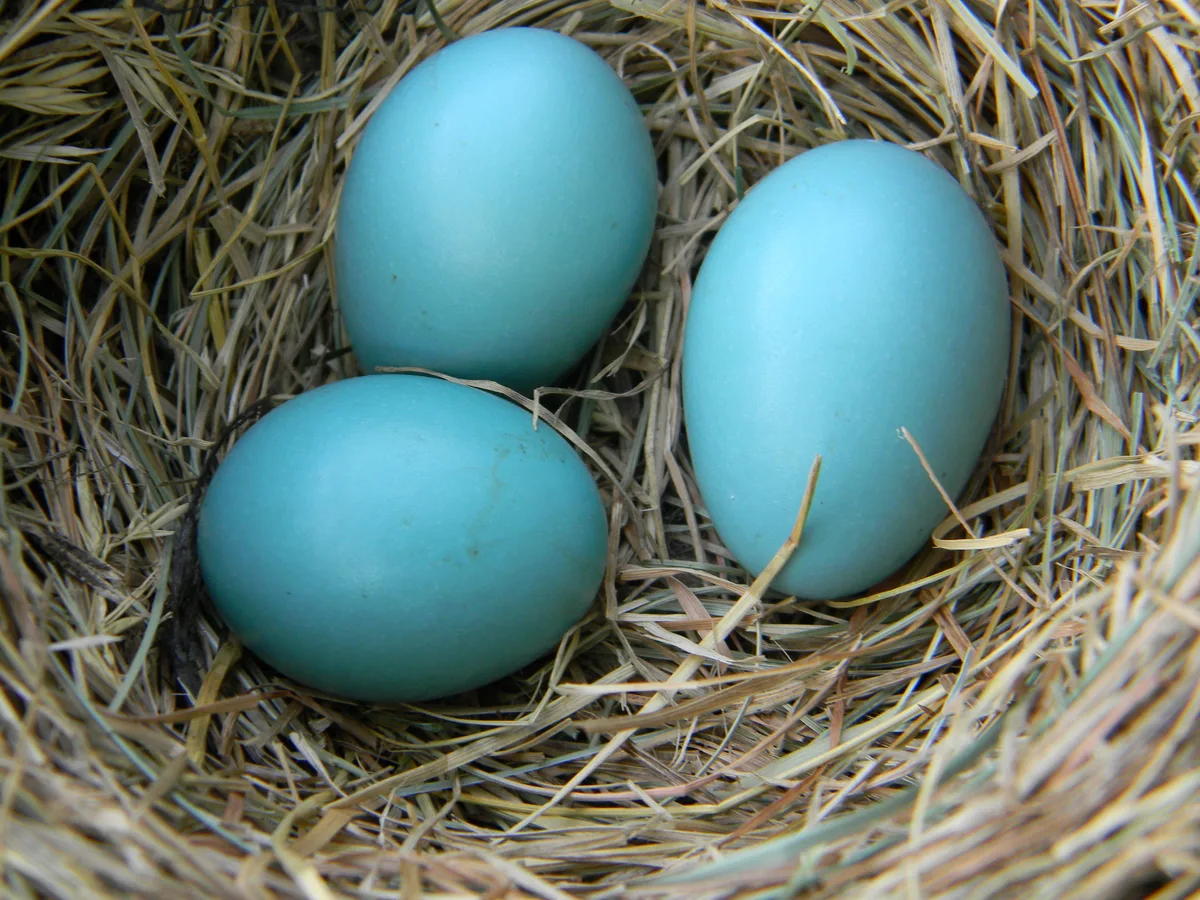
Image source: Web (Bing) / commons.wikimedia.org (Web image (fair-use with source credit))
Nesting begins as early as the first signs of spring. The female robin is the primary architect, constructing a sturdy, cup-shaped nest using a mix of twigs, dry grass, and fine rootlets. She incorporates mud into the middle layer to serve as a binding agent that hardens as it dries.
Once the mud is set, she lines the inner cup with fine, soft grass. The entire process takes anywhere from two to six days. You will often find these nests in the fork of a tree, on a sturdy porch light, or tucked into a shrub.
- Clutch size: Typically 3 to 4 eggs per nest.
- Incubation: Lasts about 12 to 14 days, performed mainly by the female.
- Fledging: Chicks leave the nest 14 to 16 days after hatching.
Parents are incredibly attentive during this window. Both the male and female work to feed the rapidly growing chicks a diet of protein-rich earthworms and insects. A single brood can keep parents busy for weeks, especially since robins often attempt two or three broods per season.
Decoding Robin Behavior: Why They Do What They Do
Image source: Bing (Web (fair-use with source credit))
The most common myth about robins is that they listen for earthworms moving underground. This isn't accurate. Robins are visual hunters, and their tilted head position allows them to use their eyes, positioned on the sides of their heads, to track movement on the surface of the grass.
They are also intensely territorial during the breeding months. If you’ve seen a robin attacking your window or a side mirror on your car, it is not acting out of malice. The bird sees its own reflection and interprets it as a rival intruder attempting to claim the territory.
This behavior is a standard survival mechanism. By defending a specific area, the pair ensures they have exclusive access to food resources like grubs and berries for their young. The aggression typically fades as soon as the nesting season concludes and the birds shift toward social, communal living for the winter.
Creating a Robin-Friendly Habitat in Your Own Yard
If you want to host more robins, you should prioritize natural food sources over standard bird feeders. Robins are primarily insectivores and frugivores, meaning they prefer a landscape rich in worms and fruit-bearing plants.
Avoid synthetic lawn chemicals. These pesticides can build up in the soil and eventually find their way into the earthworms that robins eat. Keeping your soil healthy and chemical-free is the single best way to ensure a consistent food supply for your backyard visitors.
- Install a water source: Use a wide, shallow birdbath with moving water to attract them.
- Plant native berries: Include plants like winterberry, serviceberry, or dogwood to sustain them in winter.
- Provide nesting platforms: Keep some areas of your yard slightly overgrown to provide safe spots for nest construction.
By leaving a patch of the lawn unmanaged, you also create a "thatch" layer where invertebrates thrive. This provides a natural, high-protein buffet for robins. When you combine this with fresh water, you turn your yard into a reliable stopover that supports their biological needs throughout the year.
Common Misconceptions and Mistakes to Avoid
The most frequent error people make is assuming robins need traditional bird feeders filled with sunflower seeds. Robins possess a specialized digestive system suited for soft items like insects and fruits, meaning they will almost always ignore standard tube or hopper feeders. If you want to assist them, stick to a shallow basin of water or scattered mealworms on the ground.
Another common mistake is excessive yard cleanup during the nesting season. While a tidy lawn looks nice, you are inadvertently removing the building materials robins rely on. They need access to patches of damp soil to gather the mud used in nest construction.
Clearing away every fallen twig or dried leaf leaves them with nothing to work with.
You should also watch for nest interference. If you find a nest in a low shrub, give it a wide berth to avoid attracting predators. Keeping cats indoors during the spring months is a simple way to prevent the most common cause of nest failure.
Remember, if you see a fledgling hopping on the ground, leave it alone. It is likely learning to fly, and the parents are almost certainly nearby watching over it.
Frequently Asked Questions About American Robins
Why do robins stay in my yard during the winter?
Robins are not strictly migratory, and many individuals choose to stay in northern climates throughout the winter. They shift their diet entirely from earthworms to wild fruits and berries. As long as they have access to crabapples, holly, or dogwood berries, they can survive harsh temperatures quite well.
How many broods can a robin have in one year?
Depending on the length of the growing season, a pair can successfully raise between one and three broods. A successful cycle from egg laying to fledging takes roughly four to five weeks. If a nest is destroyed by a storm or predator, they will often immediately start a replacement nest nearby.
Are American Robins dangerous to other birds?
Robins are generally peaceful but become highly territorial during the nesting phase. They will aggressively chase away other robins and competing bird species from their immediate nesting area to protect their food supply. This behavior is standard and serves to ensure there is enough nutrition for the current brood.
How long does a typical robin live in the wild?
Most robins have a short life expectancy, with many not surviving their first year due to predation and weather. However, a bird that makes it past its first season can live to be several years old. Data suggests that the average lifespan for an adult is about two years, though some have been recorded living much longer.
Why do robins bob their heads when they walk?
The head-bobbing motion is an evolutionary adaptation that improves their depth perception. By moving their head forward and back, they gain a clearer visual of their surroundings and potential threats. This movement also helps them stabilize their vision, which is essential for spotting small prey like insects moving through the grass.