Bird Diet
Your bird might be sick right now, and the culprit could be in its bowl. The bird diet most pet owners follow, a steady rotation of commercial seed, is one of the most common causes of serious health problems in companion birds. Fatty liver disease.
Calcium deficiency. Vitamin A deficiency. These aren't rare conditions, and they're almost entirely preventable.
The Association of Avian Veterinarians has been clear for years that seed-only diets fail to meet basic nutritional needs for most pet bird species. Getting the bird diet right takes a little knowledge and the right ingredients. Let's break it down.
Image source: Web (Bing) / pinterest.com (Web image (fair-use with source credit))
Quick Answer
A proper bird diet includes pellets, fresh produce, and very little seed. Pellets should make up 60 to 80 percent of the total diet. Fresh fruits and vegetables cover the remaining 20 to 40 percent.
Seed alone is not nutritionally complete for most pet bird species.
Why the Wrong Bird Diet Can Kill Your Bird — and Why Most Advice Gets This Wrong
Most bird owners don't know they're slowly harming their pets. Pet store advice is often simple: buy a seed mix and add some fresh fruit. It's also why so many pet birds develop preventable diseases.
Fatty liver disease, technically called hepatic lipidosis, is the most common diet-related illness in birds. Budgies and cockatiels are especially vulnerable. Their bodies store excess fat in the liver when fed a high-fat, seed-heavy diet for too long.
The liver becomes dysfunctional, and the bird gets sick.
Calcium deficiency is another killer. Laying hens need roughly 200 to 300 milligrams of calcium per day. Most seed-only diets deliver far less.
This causes egg-binding, a condition where a hen cannot lay an egg and can die within hours.
The problem isn't that owners don't care. It's that many commercial bird food brands, as of 2026, still market seed mixes as complete nutrition when they're not. The FDA oversees pet food safety, but gaps in avian-specific requirements remain.
Pet store staff rarely receive training in avian nutrition either.
Getting the bird diet right isn't complicated. It just requires knowing what the species actually needs.
What Every Pet Bird Actually Needs: Species-Specific Nutrition Requirements
Not all birds need the same thing. A cockatiel and a macaw have very different metabolic requirements. Protein needs range from about 12 to 25 percent depending on species and life stage.
Growing chicks and hand-fed babies need the highest protein. Around 20 to 25 percent of their diet should be protein during active growth. Adult parrots on average need 12 to 18 percent.

Image source: Bing (Web (fair-use with source credit))
Calcium is critical for egg-laying hens and young birds. Small birds like budgies need around 200 milligrams per day. Larger parrots like African Greys and macaws need 500 to 700 milligrams daily.
The calcium-to-phosphorus ratio should stay between 2:1 and 3:1.
Here's a quick reference for common pet bird dietary targets:
| Species | Protein | Fat | Calcium per day |
|---|---|---|---|
| Budgie | 12-16% | 4-5% | 200 mg |
| Cockatiel | 14-18% | 5-6% | 250 mg |
| African Grey | 12-16% | 4-6% | 500 mg |
| Macaw | 14-18% | 6-10% | 700 mg |
Different species have different fat tolerances. Budgies and cockatiels are prone to obesity on high-fat diets. Macaws actually need more fat because they've evolved to process palm nuts.
Eclectus parrots are a special case. They need a high-fiber, low-fat diet rich in fresh produce and are extremely sensitive to preformed vitamin A. Feeding them the wrong diet can cause liver and kidney failure quickly.
Always consult an avian veterinarian before changing your bird's diet, especially for egg-laying hens or birds with health conditions.
The Seed Diet Problem: Why Commercial Bird Seed Is Quietly Making Your Bird Sick
This is the section that makes most bird owners uncomfortable. The seed diet most pets are fed is essentially a bowl of potato chips every day. Seed is high in fat, low in protein, and lacking in essential vitamins.
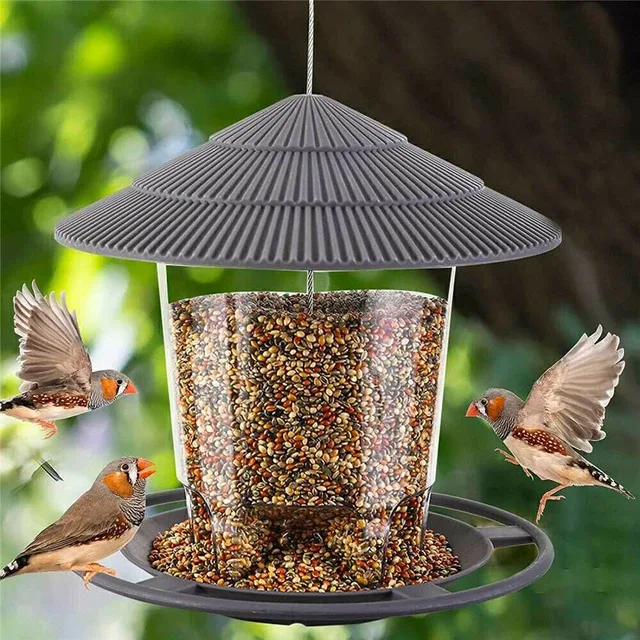
Most commercial seed mixes consist mainly of sunflower seeds, safflower, millet, and oats. Sunflower seeds alone are roughly 48 percent fat by weight. Millet, while safer, is mostly carbohydrates with minimal nutritional value.
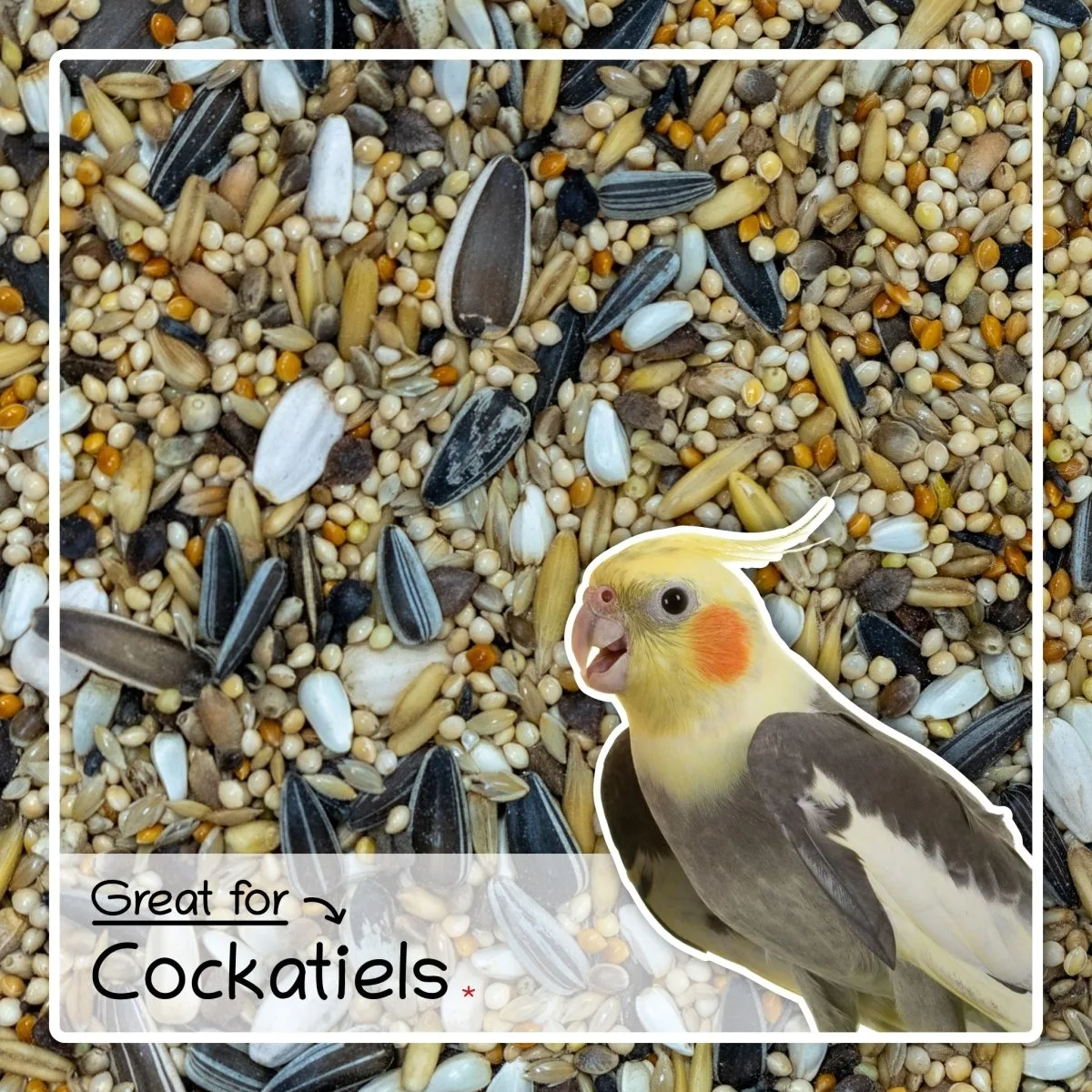
Image source: Web (Bing) / seedzbox.co.uk (Web image (fair-use with source credit))
The result is a bird that becomes selectively picky. It eats the high-fat seeds it prefers and tosses the rest. Over time, the bird ends up eating almost exclusively sunflower seeds.
That's when fatty liver disease develops.
Research from Cornell Lab of Ornithology and veterinary nutrition programs shows that over 60 percent of pet budgies and cockatiels fed exclusively on commercial seed mix show signs of hepatic lipidosis by middle age. Birds with this condition often present with lethargy, a distended abdomen, and bright yellow urates in their droppings.
Seed also fails to provide adequate vitamin A. Deficiency symptoms include respiratory infections, feather cysts, and compromised immune function. Calcium deficiency in seed-fed hens causes egg-binding, which can be fatal within hours.
The good news? Most of these problems are completely preventable with a properly balanced diet.
How to Build a Proper Bird Diet: Pellets, Fresh Foods, and the Right Balance
A balanced bird diet comes down to a simple framework. Pellets make up the bulk, fresh foods provide variety, and seed is a rare treat.
Here's the general breakdown most avian veterinarians recommend:
- Pellets (60-80% of diet): Formulated pellets provide balanced protein, vitamins, and minerals. Brands like Harrison's, Roudybush, and TOP's are commonly recommended by avian vets.
- Fresh produce (20-40% of diet): Dark leafy greens, bell peppers, carrots, broccoli, and berries offer real vitamins and fiber.
- Seed (under 10% of diet): Use seed sparingly as a training reward or enrichment, not as a staple.
Transitioning from seed to pellets takes patience. Start by mixing 25 percent pellets with 75 percent seed. Increase the pellet ratio every few days over four to eight weeks.
During the transition, offer fresh food daily to encourage your bird to explore new options.
What If My Bird Won't Eat Pellets?
Picky birds are common. Try offering pellets in a separate bowl from seed at the same time. Let the bird discover pellets on its own schedule.
Some birds take weeks, not days. During this process, never remove fresh food options to force the transition.
For hand-fed baby birds, use a commercial hand-feeding formula until the chick is weaning. Never feed a baby bird adult seed or pellets. Aspiration pneumonia from improper hand-feeding is one of the most common causes of baby bird death in captivity.
Prepared bird chop, a finely diced mix of vegetables, grains, and sometimes cooked legumes, works well as a fresh food component. Freeze individual portions to make daily feeding easy.
10 Human Foods That Can Kill Your Bird — Toxic Food Warning List
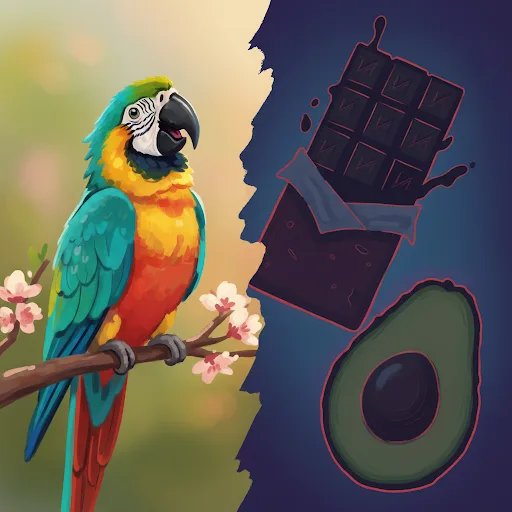
This is where the risk gets real. Several common household foods are toxic to birds, sometimes in small amounts.
| Food | Toxic Principle | Risk Level |
|---|---|---|
| Avocado | Persin compound | High (can be fatal) |
| Chocolate | Theobromine | High (cardiac arrest) |
| Caffeine | Methylxanthines | High (heart failure) |
| Alcohol | Ethanol toxicity | Extreme |
| Onion and garlic | Thiosulfate | Moderate to high |
| Xylitol (sugar-free products) | Insulin response | High (liver failure) |
| Rhubarb leaves | Oxalic acid | High (calcium binding) |
| Fruit pits (cherry, peach) | Cyanogenic glycosides | Extreme |
| Salt | Sodium chloride | Moderate (kidney damage) |
| Dairy in excess | Lactose | Low to moderate |
Most birds are lactose intolerant. Small amounts of yogurt occasionally won't hurt, but milk is a bad idea.
Alcohol is especially dangerous. Even a tiny amount can cause heart failure and death in small birds like budgies. Never offer any food or drink containing alcohol to a bird, no matter how small the quantity.
Caffeine is just as risky. A single sip of coffee or tea can trigger cardiac arrhythmia in a budgie within minutes.
Store-bought avian-safe produce is the safest option. Wash all fresh food thoroughly before offering it to your bird.
Red Flags Your Bird's Diet Is Wrong: Signs to Watch For and When to Call an Avian Vet
Catching diet problems early saves your bird's life. Most diet-related illnesses develop over months, not days. If you learn the warning signs, you can act before things escalate.
Here are the red flags that signal nutritional trouble:
- Changes in droppings: Bright yellow urates suggest fatty liver disease. Very loose droppings may indicate overfeeding fresh fruit. Very dry, dark droppings often mean dehydration.
- Weight changes: Sudden weight loss or gain on a consistent seed diet is a serious concern. Weigh your bird weekly on a gram scale with 0.1g precision to track trends.
- Feather condition: Dull, rough, or broken feathers often point to vitamin A deficiency. Excessive feather loss or plucking can signal underlying nutritional stress.
- Behavior changes: Lethargy, reduced talking or singing, and increased sleeping hours suggest the bird isn't getting adequate nutrition or may be ill.
- Appetite loss: A bird that refuses pellets, fresh food, or treats may have a dietary imbalance, an infection, or organ distress.
- Leg or beak deformities: These in young birds often indicate calcium or vitamin D3 deficiency during growth.
- Egg-laying difficulties: A hen straining, lethargic, or producing soft-shelled eggs needs immediate calcium intervention.
Contact an avian veterinarian if you notice weight loss exceeding 10 percent of body weight. Also watch for repeated egg-binding episodes, persistent fluffed posture, or any sudden behavioral shift lasting more than 24 hours.
The Association of Avian Veterinarians maintains a directory of certified avian vets. Finding one in advance is worth it. You don't want to be searching at 2 a.m. when your hen is egg-bound.
Bird Diet FAQs
Can birds survive on seeds alone?
Technically yes, but they won't thrive. Seed-only diets are high in fat and low in essential vitamins. Research from avian nutrition programs shows this diet shortens lifespan and causes fatty liver disease, especially in budgies and cockatiels.
Pellets and fresh produce are far better options.
How long does it take to switch a bird from seed to pellets?
Expect four to eight weeks for most birds. Start with a 25/75 pellet-to-seed mix and increase the pellet ratio gradually every few days. Offer fresh food during the transition to keep the bird nourished.
Some picky birds take longer.
Is it safe to feed a bird bread?
No. Bread offers almost no nutritional value for birds and fills the stomach so the bird eats less of what it needs. It also contributes to malnutrition and digestive issues.
Skip bread entirely and offer seeds, pellets, or fresh vegetables instead.
Do pet birds need vitamin supplements?
Most birds get adequate vitamins from a balanced pelleted diet combined with fresh foods. Supplements aren't usually necessary unless a veterinarian recommends them. Over-supplementing causes problems too, particularly vitamin D3 and calcium excess.
Ask your avian vet before adding anything.
How often should I offer fresh food to my bird?
Daily, ideally at least once a day. Fresh produce provides moisture, vitamins, and variety that pellets alone can't. Offer a rotating selection of safe vegetables and fruits.
Remove uneaten fresh food after two to three hours to prevent spoilage.