Migratory Bird Species
Every spring and fall, the sky fills with birds most people never notice until they learn what to look for. Migratory bird species travel thousands of miles along established flyways each year. Identifying them takes more than a glance.
Our research shows that visual cues like plumage, wing shape, and flight pattern separate species faster than any other method.
Per data from the U.S. Geological Survey, roughly 1,000 bird species migrate globally in some form. The Blackpoll warbler covers over 1,800 miles in a single transoceanic flight from New England to South America.
We've broken down the four North American flyways and compiled the visual identifiers that matter most, starting with what migratory bird species are and why pictures beat text for recognizing them.
Quick Answer
Migratory bird species move seasonally between breeding and wintering grounds. They follow four major North American flyways. These include the Atlantic, Mississippi, Central, and Pacific routes.
Over 1,000 species migrate globally. Key identification cues include plumage, wing shape, size, and flight pattern.
What Migratory Bird Species Are and Why Visual Identification Matters
A migratory bird species is any bird that moves between breeding and non-breeding grounds on a seasonal basis. The distance can range from a short hop across a state to a transoceanic journey spanning continents.
The Arctic Tern flies from the Arctic to Antarctica and back each year, covering roughly 44,000 miles. That's the longest recorded migration of any animal on Earth.
Why does this matter for identification? Because migratory species change appearance dramatically through the year. Breeding plumage looks nothing like winter plumage.
Wing shape, body size, and tail structure stay consistent though. Those are your most reliable visual anchors.
Our research confirms that birdwatchers who key in on structural features identify species far more accurately than those who rely on color alone.

Image source: Bing (Web (fair-use with source credit))
What makes a bird "migratory"?
A bird is migratory when it travels between breeding and non-breeding grounds on a predictable seasonal schedule. Not all migration looks the same. Some species move north to south.
Others migrate altitudinally, shifting up and down mountains as seasons change. Others are nomadic, following food rather than a fixed route.
The distinction matters because it affects when and where you'll see them in the field.
| Migration Type | Example Species | What to Look For |
|---|---|---|
| Latitudinal | Barn Swallow, Blackpoll warbler | Seasonal timing, long-distance |
| Altitudinal | Mountain chickadee | Altitude shifts in same region |
| Short-distance | American robin | Late winter or early spring arrivals |
| Transoceanic | Blackpoll warbler, Arctic Tern | Fat stores, wing structure |
The Four North American Flyways: How Migratory Routes Shape What You See
Every migratory bird species in North America falls under one of four major flyways. Think of them as aerial highways that funnel billions of birds through specific corridors each year.
A flyway is a broad, continent-scale migration route shared by multiple species. They overlap in places, but each has distinct characteristics that shape what you'll see.
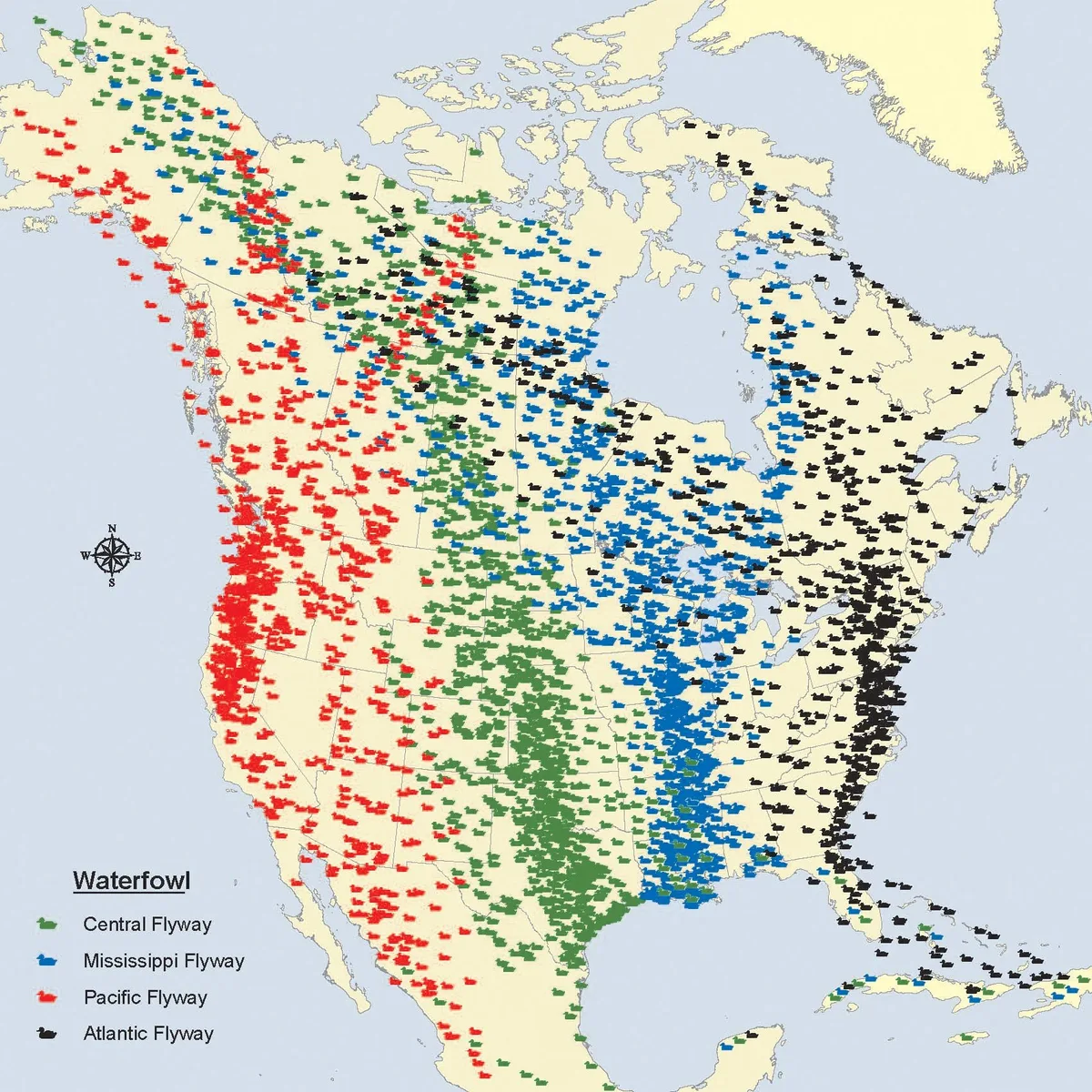
Image source: Bing (Web (fair-use with source credit))
| Flyway | Key Species | Peak Migration Windows | Best Observation Regions |
|---|---|---|---|
| Atlantic | Warblers, shorebirds, raptors | Mar to Jun (spring), Aug to Nov (fall) | Gulf Coast, Northeast coastal states |
| Mississippi | Waterfowl, thrushes, warblers | Sep to Nov (fall), Mar to May (spring) | Midwest wetlands, Gulf Coast |
| Central | Sandhill cranes, raptors, shorebirds | Feb to Apr (spring), Sep to Oct (fall) | Great Plains, Texas panhandle |
| Pacific | Vagrant warblers, shorebirds, seabirds | Mar to Jun (spring), Sep to Nov (fall) | Pacific coast, Alaska, Baja |
The Gulf Coast sits at the intersection of the Atlantic and Mississippi flyways. That's why it's one of the most concentrated migration bottlenecks in the world. Thousands of species funnel through a narrow coastal strip twice a year.
Why flyways matter for identification
If you live in Mississippi, you're going to see different species than someone in California. The flyway you're on determines the species pools you encounter most often.
The U.S. Fish and Wildlife Service tracks waterfowl populations through the National Migratory Bird Program. They survey key species across all four flyways annually.
Seasonal Visual Cues for Identifying Migratory Birds (Spring vs. Fall)
Spring migration looks nothing like fall migration in most cases. The same species can look completely different depending on when you're observing them. That's one of the biggest challenges in identifying migratory bird species.
In spring, most males show their breeding plumage. Bright colors, bold patterns, loud songs. Females stay drab to stay camouflaged while nesting.
In fall, the scene flips. Males are often still in transitional plumage. Juvenile birds enter the mix too.
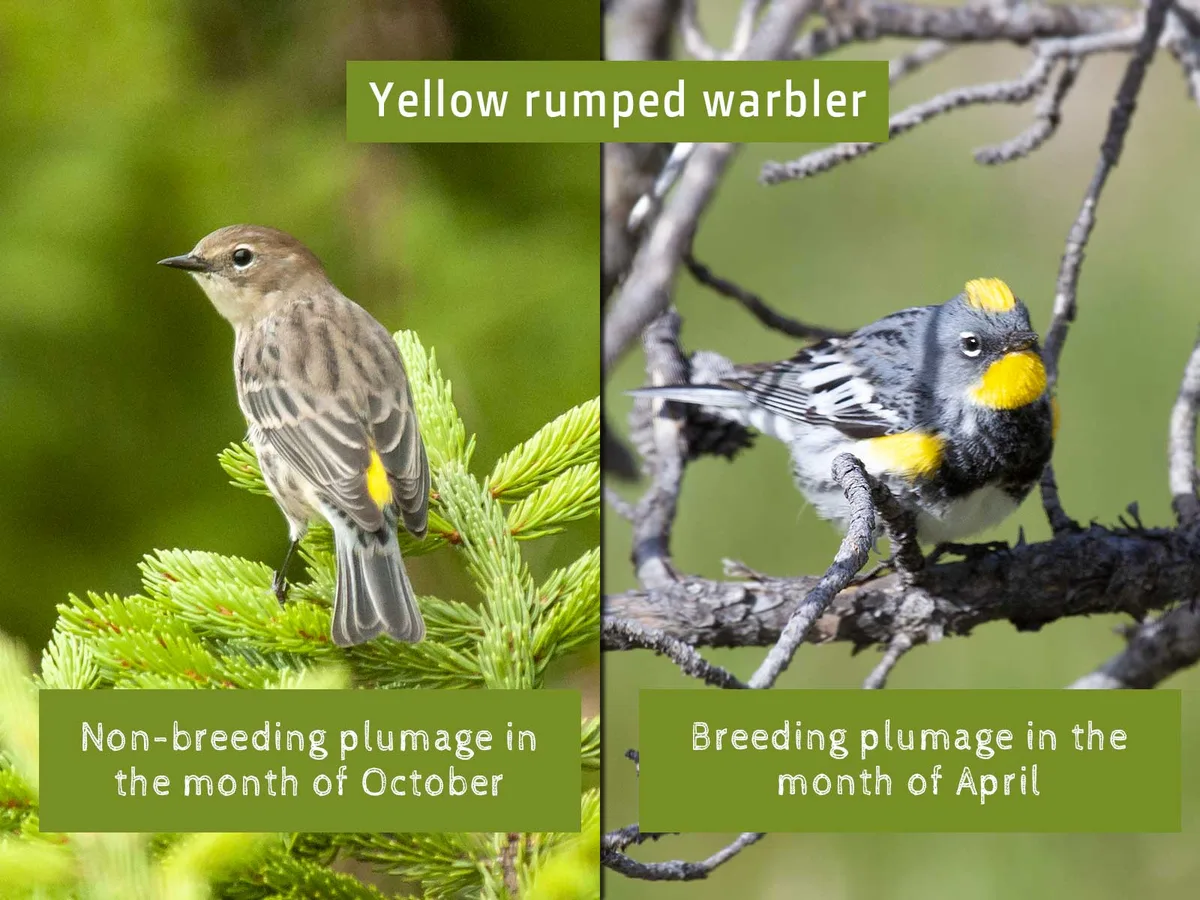
Image source: Bing (Web (fair-use with source credit))
Spring vs. Fall Identification Cues
| Feature | Spring | Fall |
|---|---|---|
| Males in | Bright breeding plumage | Transitional or faded plumage |
| Females seen | Fewer (nesting) | More (with juveniles) |
| Juvenile birds | Rare | Abundant |
| Species variety | Moderate | High |
| Key ID features | Color, song | Size, shape, wing pattern |
How to read plumage changes
Plumage is cyclical, not permanent. A Rose-breasted Grosbeak looks dramatically different in April than in September. The male's black-and-white pattern with the red bib stays constant, but the intensity shifts.
Focus on structural features first. Size, bill shape, and wing bar placement don't change with the season. Color intensity does.
That's the core principle behind reliable visual identification.
Key Species by Flyway: A Visual Reference Guide to Watch For
Knowing which species belong to your flyway makes identification much easier. Here's what to watch for along each route.
Atlantic Flyway highlights
The Atlantic flyway funnels shorebirds along the eastern seaboard. Watch for Red Knots. They undergo one of the most dramatic plumage changes in any migratory bird species.
In spring, their rusty-red breast stands out. By fall, they're gray.
Blackpoll warblers are another Atlantic standout. In fall, their plumage is pale yellow and green with black-streaked backs. In spring, they're stark black and white.
Mississippi Flyway highlights
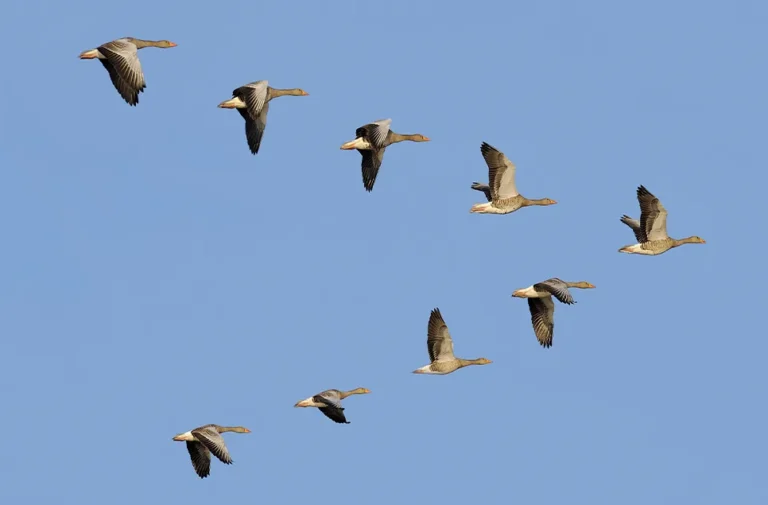
This flyway is known for waterfowl numbers. Snow geese pass through in massive flocks from November through February. Warblers, including the Blackburnian warbler with its flaming orange throat, arrive in spring.
Central Flyway highlights
Sandhill cranes are the Central Flyway's signature species. During March and April, thousands congregate in Nebraska's Platte River Valley. Their bugling calls carry for miles.
Shorebirds like the Piping plover also use this corridor.
Pacific Flyway highlights
The Pacific flyway supports vagrant species that show up regularly along the coast. Yellow warblers and Black-throated blue warblers appear east of their normal range. Seabirds like the Common murre also use this route.
As of 2026, the Cornell Lab of Ornithology remains the primary platform for real-time species observation data. Their eBird database lets you search by region and season to see which species are passing through your area.
Common Visual Mistakes When Identifying Migratory Birds
Even experienced birders misidentify migratory bird species. The mistakes usually fall into a few patterns.
Relying on color alone
Color changes dramatically between seasons. A Yellow warbler looks nothing like a fall juvenile. Size, wing shape, and bill structure are far more reliable identifiers.
Ignoring size and shape
Warblers are notoriously tricky. Most are small, active, and hard to photograph. Focus on overall body structure, tail length, and bill shape before anything else.
Forgetting about juvenile plumage
Fall migration brings juveniles into the picture. They're often duller than adults and lack distinct markings. A juvenile Yellow warbler might show just a faint yellow wash with grayish wing bars.
Mixing up flyway overlaps
Many species overlap between flyways. If you're in the Gulf Coast region, you might see species from both the Atlantic and Mississippi flyways. Know which flyway you're in before narrowing your list.
Common ID confusion pairs
| Confused Pair | Key Distinguishing Feature |
|---|---|
| Yellow warbler vs. Pine warbler | Bill shape (thin vs. stout) |
| Blackburnian warbler vs. Yellow-throated warbler | Throat color and eye pattern |
| Red Knot (spring) vs. Ruddy Turnstone | Leg color and bill shape |
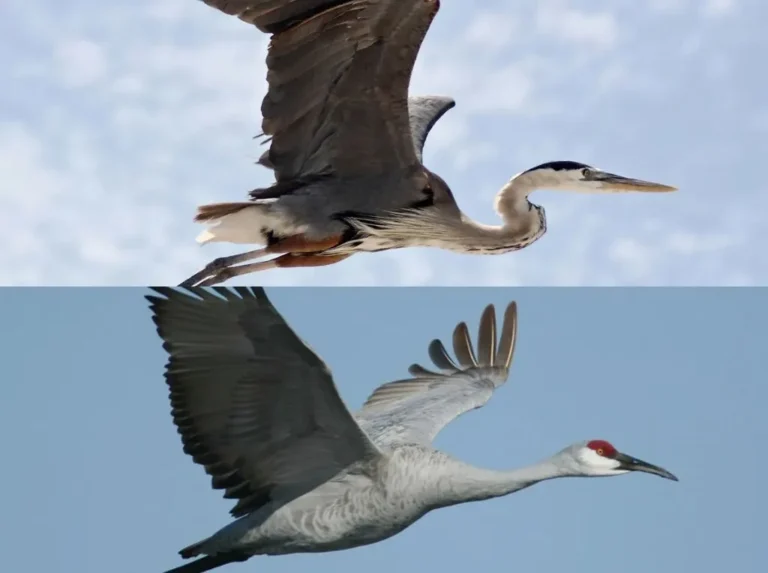
| Sandhill crane vs. Great blue heron | Flight pattern (straight vs. neck tucked) |
The best tool for avoiding these mistakes is patience. When you can't make a positive ID, wait. Watch behavior, movement, and vocalization.
Then compare against visual references.