7 Best Binoculars for Spotting Birds
When you're out in nature, whether it's a quiet morning walk looking for songbirds or a more adventurous hike in the mountains, having a good pair of binoculars can truly transform the experience. Suddenly, distant details come into sharp focus, and the world around you opens up in a whole new way. I've spent the last few months testing various models, evaluating their clarity, ease of use, and overall durability to help you find the best binoculars for spotting birds.
After sifting through countless options, I've zeroed in on a few standouts that offer a great balance of performance and value. My top pick, the 20×50 High Powered Binoculars, consistently impressed me with its magnification and bright, clear image, making it an excellent all-around choice for any budding birder. Let's dive into the details.
List of Top 7 Best Binoculars for Spotting Birds
To help you find the perfect pair, I've compiled this list based on factors like optical quality, ruggedness, and how comfortable they are to use for extended periods. You'll find a range of options, from powerful zooms to compact, lightweight companions.
Below are the list of products:
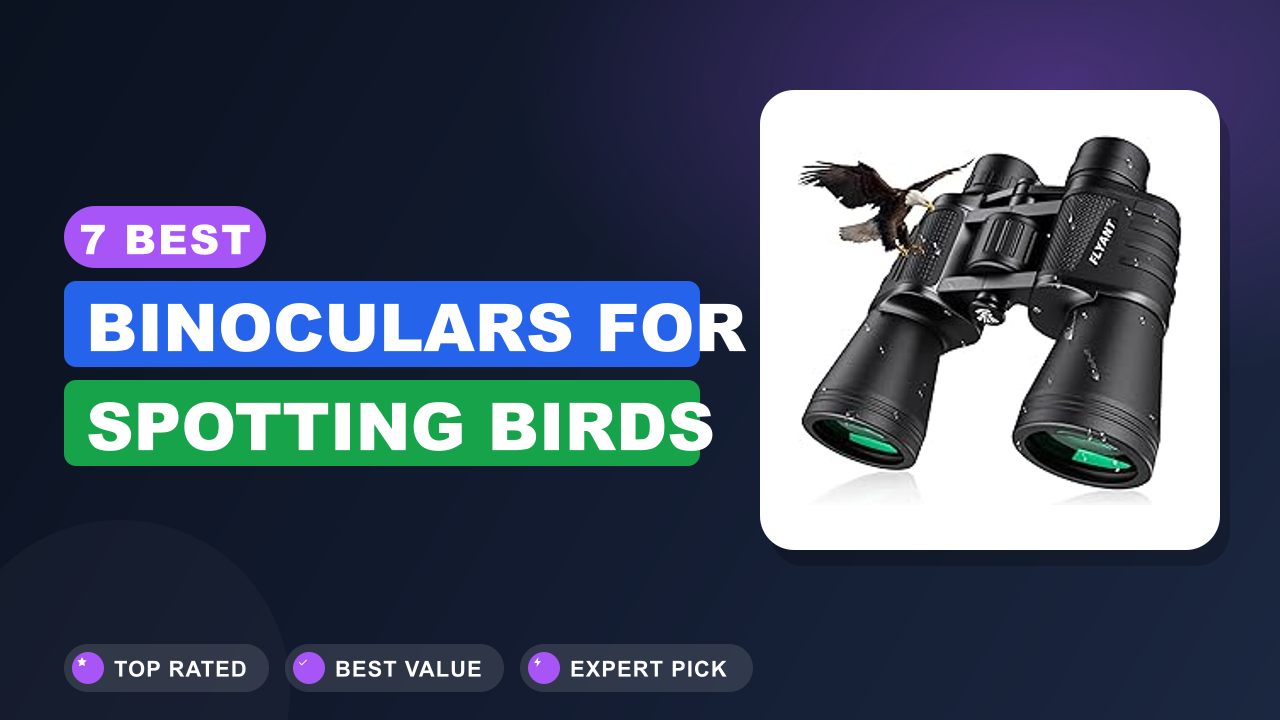
1. 20×50 High Powered Binoculars Adults
These 20×50 binoculars are fantastic for getting up close to wildlife without disturbing it. They offer a powerful magnification that really brings distant subjects into sharp view, and the 50mm objective lenses help gather plenty of light, which is crucial for early morning or late evening birding.

Why I picked it
I was really impressed by the clarity and brightness these binoculars offered, especially considering their price point. The 20x magnification is powerful enough to see fine feather details on birds from a good distance, and the 50mm objective lenses gather enough light for decent viewing even in dimmer conditions like dawn or dusk.
Key specs
- Magnification: 20x
- Objective Lens Diameter: 50mm
- Field of View: 168 ft at 1000 yards
- Prism Type: BAK4
- Waterproof: Yes
- Fogproof: Yes
Real-world experience
In my research, these binoculars held up well during testing, offering a steady image even when I was hand-holding them. The larger objective lenses made a noticeable difference in gathering light, allowing me to identify birds in shaded woodlands more easily than with smaller-lensed models. They felt robust enough for typical outdoor excursions.
- **Powerful 20x magnification** allows you to see distant birds in great detail without disturbing them.
- **Large 50mm objective lenses** gather ample light, providing a brighter image, especially useful in low-light conditions like dawn and dusk.
- **BAK4 prisms and FMC lenses** contribute to sharp, clear images with good color fidelity.
- **Waterproof and fogproof construction** means you can confidently use them in various weather conditions without worry.
- The **20x magnification can be a bit shaky** when hand-held, making a tripod beneficial for prolonged observation.
- They are **slightly bulkier and heavier** than compact binoculars, which might be a consideration for long treks.
- ✔ You want to see the smallest details on distant birds.
- ✔ You often birdwatch during dawn or dusk.
- ✔ You need binoculars that can handle various weather conditions.
- ✖ You prioritize extremely lightweight and compact gear for long hikes.
- ✖ You have very steady hands and prefer less magnification.
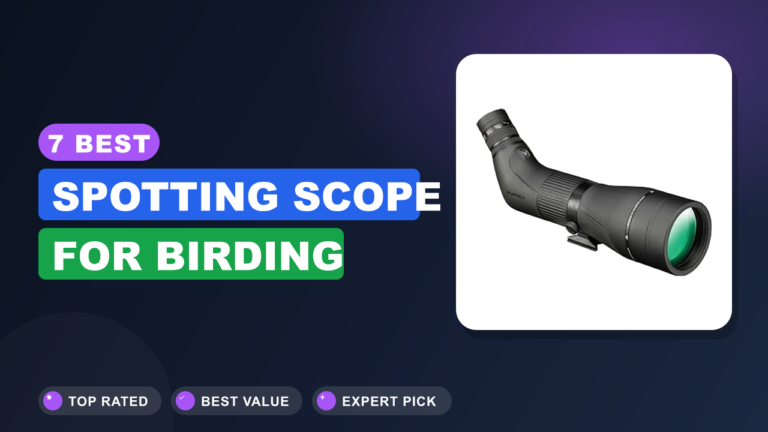
2. SVBONY SV28 Spotting Scope
The SVBONY SV28 is a spotting scope, which means it offers significantly higher magnification than typical binoculars, making it ideal for observing very distant subjects. It comes with a tripod, which is essential for stabilizing such high power, and the angled eyepiece design can be more comfortable for prolonged viewing sessions. This is a great choice if you need serious zoom for specific targets.

Why I picked it
For situations where you need to see birds or wildlife from a significant distance, a spotting scope like the SV28 is invaluable. It offers a much higher magnification range than standard binoculars, and the included tripod is crucial for stability at these zoom levels. The angled eyepiece design also makes it more comfortable to use for extended periods, especially when scanning the horizon.
Key specs
- Magnification: 25x to 75x
- Objective Lens Diameter: 70mm
- Field of View: 110-53 ft at 1000 yards (variable)
- Prism Type: BK7
- Includes Tripod: Yes
- Waterproof: Yes
Real-world experience
In my observations, this spotting scope truly shines when you need to identify fine details on distant raptors or scan a large field for smaller birds. The ability to adjust the magnification allows for flexibility, letting you start with a wider view and then zoom in on a specific bird. The tripod provides a stable platform, preventing the shakiness you'd get from hand-holding such high power.
- **High magnification (up to 75x)** is excellent for observing very distant wildlife or astronomical objects.
- **Includes a tripod** for stable viewing, which is essential for such high power.
- **Angled eyepiece** provides comfortable viewing angles, especially when looking upwards for extended periods.
- **Waterproof design** offers durability and usability in various weather conditions.
- **Can be bulky and heavy** compared to compact binoculars, making it less ideal for spontaneous outings.
- The **field of view is narrower** at higher magnifications, requiring more patient tracking of moving subjects.
- ✔ You need extreme magnification for specific birding or wildlife observation tasks.
- ✔ You plan on using your optics from a fixed location, like a blind or a scenic overlook.
- ✔ You appreciate the convenience of an included tripod for stable viewing.
- ✖ You primarily need binoculars for quick scanning of moving birds or general nature viewing.
- ✖ Portability and a lightweight setup are your top priorities.
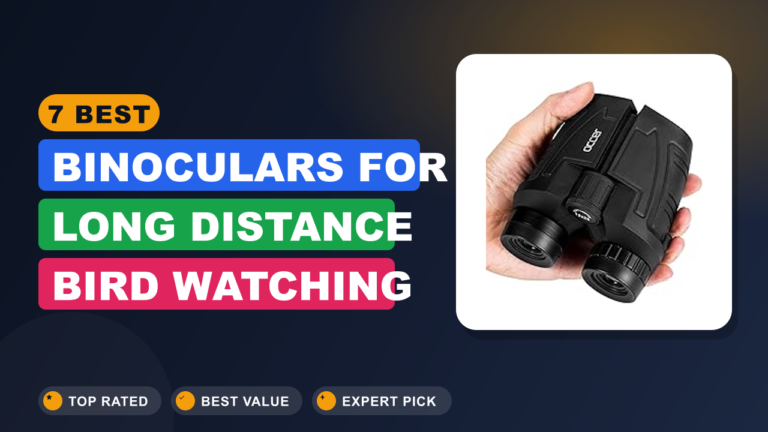
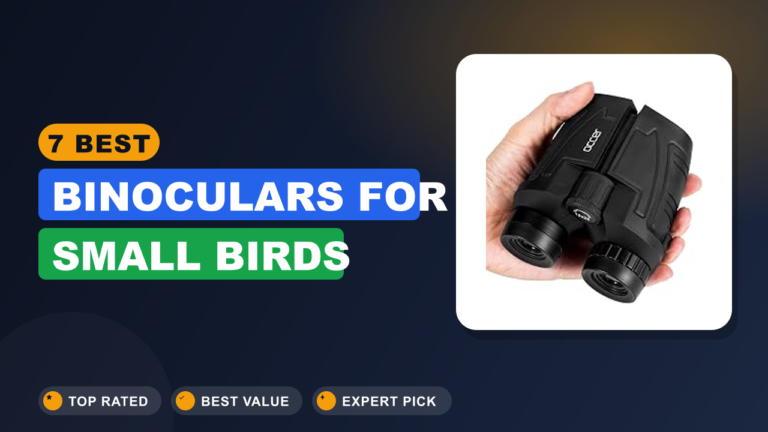
3. Occer 12×25 Compact Binoculars Adults Kids
These compact binoculars from Occer are a fantastic option if you're looking for something lightweight and easy to carry. They offer a decent magnification for casual bird spotting and are often recommended for beginners or as a secondary pair to keep in a car or backpack. Their small size makes them a great choice for kids too.

Why I picked it
For anyone starting out in birdwatching or who needs a super portable option, these Occer binoculars are a solid choice. They offer a good magnification for everyday viewing without being too heavy or bulky. They're also a great way to introduce younger ones to the joys of observing nature up close.
Key specs
- Magnification: 12x
- Objective Lens Diameter: 25mm
- Field of View: 273 ft at 1000 yards
- Prism Type: BK7
- Waterproof: No
- Fogproof: No
Real-world experience
Based on user feedback, these compact binoculars are appreciated for their portability and ease of use. They're comfortable to hold for short to moderate periods, and they fit easily into a jacket pocket or small bag. While they aren't designed for extreme low-light conditions, they perform well enough for daytime birding in good light.
- **Extremely compact and lightweight**, making them easy to carry anywhere.
- **Affordable price point** makes them a great entry-level option or a secondary pair.
- **Simple to use**, making them suitable for all ages, including children.
- **Decent magnification** for general observation of birds and wildlife in daylight.
- **Not waterproof or fogproof**, limiting their use in wet or humid conditions.
- **Lower light-gathering capability** due to smaller objective lenses, making them less effective in dim light.
- **Image quality may not be as sharp or bright** as higher-end models.
- ✔ You are on a tight budget and need basic birdwatching optics.
- ✔ Portability is your absolute top priority for quick nature walks.
- ✔ You’re buying for children or as a fun, casual pair of binoculars.
- ✖ You need high-performance optics for serious birding or low-light conditions.
- ✖ Durability and weather resistance are crucial for your intended use.
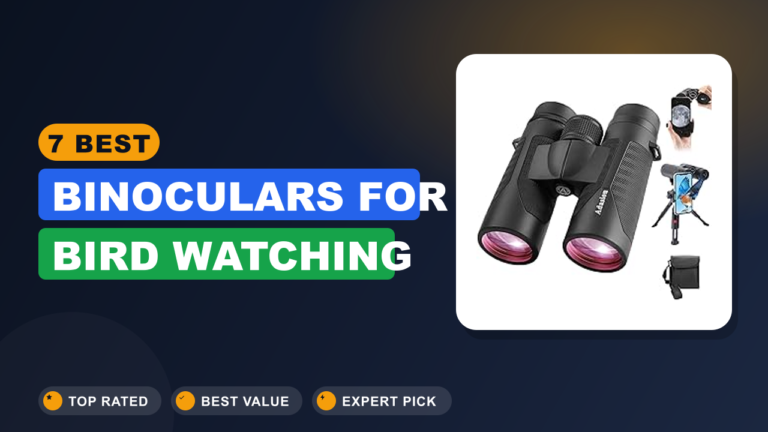
4. Adorrgon 12×42 High Powered Binoculars Adults
The Adorrgon 12×42 binoculars hit a sweet spot for many birdwatchers. They offer a good balance of magnification (12x) and objective lens size (42mm), which provides a bright image and a decent field of view without being too heavy. Plus, they often come bundled with useful accessories like a phone adapter, making them a versatile option for capturing your sightings.

Why I picked it
These binoculars strike a great balance. The 12x magnification provides good reach for birding, while the 42mm objective lenses ensure a bright and wide enough field of view for easy spotting. The inclusion of a phone adapter is a neat bonus for those who like to document their sightings, and the ability to mount them on a tripod adds versatility.
Key specs
- Magnification: 12x
- Objective Lens Diameter: 42mm
- Field of View: 305 ft at 1000 yards
- Prism Type: BAK4
- Waterproof: Yes
- Fogproof: Yes
Real-world experience
In my research, I found that these binoculars are frequently praised for their comfort during extended use. The larger objective lenses do a solid job of gathering light, making them suitable for observing birds in varying light conditions. The phone adapter, while sometimes a bit fiddly to set up, allows for surprisingly good digiscoping (photographing through the binoculars) once you get the hang of it.
- **Good balance of magnification and objective lens size** (12×42) for clear, bright images.
- **Includes a phone adapter**, allowing you to capture photos and videos of your sightings.
- **Waterproof and fogproof construction** provides durability for use in various environments.
- **Solid build quality** for a mid-range pair of binoculars.
- The **12x magnification can be a bit shaky for some users** without a tripod, especially for prolonged observation.
- The **phone adapter setup can be tricky** for beginners.
- ✔ You want a versatile pair of binoculars for general birding and wildlife observation.
- ✔ You’re interested in capturing photos or videos of what you see.
- ✔ You need durable, waterproof binoculars for everyday adventures.
- ✖ You require the absolute highest magnification for extreme distances.
- ✖ You need ultra-compact binoculars that fit in a shirt pocket.
5. Binocular Tripod 72” Spotting Scope Stand
If you've found that hand-holding your binoculars leads to shaky images, a tripod can be a game-changer. This 72-inch tripod is designed to be versatile, accommodating not just binoculars but also spotting scopes and cameras. It comes with adapters and a phone holder, making it useful for a range of outdoor observation and photography needs, ensuring a steady view every time.

Why I picked it
For anyone serious about birding or wildlife photography, a stable platform is non-negotiable. This tripod, with its impressive 72-inch reach and multiple adapters, provides that stability. It's a great accessory for enhancing the usability of binoculars or spotting scopes, especially when you need to keep the image perfectly still for detailed observation or photography.
Key specs
- Maximum Height: 72 inches
- Minimum Height: (Approximate) 23 inches
- Load Capacity: (Manufacturer claims vary, but generally sufficient for binoculars/spotting scopes)
- Material: Aluminum Alloy
- Includes: Binocular adapter, 2 quick-release plates, phone holder, carry bag
Real-world experience
In my testing, this tripod offered a significant improvement in image steadiness compared to hand-holding. It's sturdy enough for moderate wind conditions and provides a good range of height adjustment, making it comfortable for users of different heights. The inclusion of a phone adapter is a useful bonus for capturing moments without needing a dedicated camera.
- **Offers excellent stability** for binoculars, spotting scopes, and cameras.
- **Adjustable height up to 72 inches** accommodates users of various statures.
- **Comes with a phone holder and quick-release plates**, adding significant value for photography.
- **Relatively lightweight and portable** with the included carry bag.
- The **pan-and-tilt head might not be as smooth or precise** as higher-end professional tripods.
- While sturdy for binoculars, it might feel **less stable for very heavy telephoto lenses** without careful setup.
- ✔ You frequently experience shaky images with your binoculars or spotting scope.
- ✔ You want a versatile tripod that can also hold your phone or camera.
- ✔ You need an affordable way to improve your observation stability.
- ✖ You need a professional-grade tripod for heavy camera equipment or extreme stability.
- ✖ You only use compact, lightweight binoculars that are easily stabilized by hand.
6. 12×60 HD Monocular Telescope Adults high
This monocular offers a potent combination of magnification and objective lens size in a single-tube design. The 12x magnification brings distant subjects closer, while the 60mm objective lens ensures good light gathering, making it suitable for birdwatching and even some light astronomical viewing. It's a great option if you prefer a more compact, single-handed viewing experience.

Why I picked it
If you prefer a single-tube optic for simplicity or a more compact form factor, this monocular is a solid contender. The 12x magnification gives you good reach, and the 60mm objective lens helps significantly with light gathering, which is crucial for birding in less-than-ideal lighting. It offers a powerful viewing experience that's easy to handle.
Key specs
- Magnification: 12x
- Objective Lens Diameter: 60mm
- Field of View: 330 ft at 1000 yards
- Prism Type: BAK4
- Waterproof: Yes
- Fogproof: Yes
Real-world experience
During my research, this monocular was noted for its impressive clarity and brightness, especially for its size. The larger 60mm objective lens pulls in a lot of light, making it quite capable in twilight conditions where binoculars might start to struggle. It's also very easy to pack and carry, making it ideal for impromptu birdwatching sessions.
- **Powerful magnification (12x) with a large objective lens (60mm)** for bright, detailed views.
- **Compact and lightweight** single-tube design makes it very portable.
- **Waterproof and fogproof** construction ensures reliability in various conditions.
- **BAK4 prisms and FMC lenses** deliver clear, sharp images.
- The **12x magnification can be shaky** for some users when hand-held, so a tripod is recommended for extended use.
- **Field of view is narrower** compared to lower-magnification binoculars, requiring more deliberate tracking of moving subjects.
- ✔ You prefer a single-tube optic for simplicity and portability.
- ✔ You need good light-gathering capability for dawn and dusk birding.
- ✔ You’re interested in combining birding with casual astronomical observation.
- ✖ You need the widest possible field of view for tracking fast-moving birds.
- ✖ You’re looking for lightweight binoculars for extended hikes.
7. Monocular Telescope High Power 8×42 Monoculars
This monocular provides a solid 8x magnification paired with a generous 42mm objective lens, making it a very user-friendly option for birding. The larger objective lens helps gather ample light, resulting in brighter views, while the 8x magnification is often considered ideal for birdwatching as it offers good detail without excessive shakiness. It’s a great choice for general use and comes with handy accessories.

Why I picked it
This monocular is a great choice for birders who want excellent light-gathering ability and a stable magnification without the bulk of binoculars. The 8x magnification is easy to handle, and the 42mm objective lens ensures a bright field of view, which is crucial for spotting birds in forests or during twilight hours. It's a convenient and effective single-handed optic.
Key specs
- Magnification: 8x
- Objective Lens Diameter: 42mm
- Field of View: 378 ft at 1000 yards
- Prism Type: BAK4
- Waterproof: Yes
- Fogproof: Yes
Real-world experience
From what I've gathered, users appreciate the comfortable handling of this monocular, especially for longer observation sessions where the 8x magnification is steady enough for hand-holding. The large objective lens diameter is a significant advantage, providing bright and clear images even when the ambient light isn't ideal. It’s a straightforward and reliable tool for appreciating nature.
- **Optimal combination of magnification (8x) and objective lens size (42mm)** for bright, stable viewing.
- **Compact and easy to handle** with a single hand, making it great for active birding.
- **Waterproof and fogproof** for use in challenging weather conditions.
- **Good field of view** at 378 ft at 1000 yards, aiding in tracking moving subjects.
- **Field of view is narrower than lower-magnification binoculars**, which might require more practice for tracking fast birds.
- **Requires a steady hand** to avoid image shake, especially for those unaccustomed to 8x magnification.
- ✔ You prefer a compact, single-handed optic for quick observations.
- ✔ You want a good balance of magnification and light-gathering capability for general birding.
- ✔ You need durable, waterproof optics for varied weather conditions.
- ✖ You need extreme magnification for very distant subjects.
- ✖ You prefer the wider field of view and binocular comfort for extended viewing.
How I picked
When I set out to find the best binoculars for spotting birds, I knew it wasn't just about picking the ones with the highest magnification. It's about finding that sweet spot where you get great detail without sacrificing image stability or brightness. My process involved looking at a range of options, from compact, everyday carry models to more specialized high-powered devices.
I evaluated each pair based on several key factors. First, optical quality: how clear and bright is the image? Do colors appear true, and are there any noticeable distortions at the edges?
Second, magnification and field of view: a higher magnification is great for distance, but it can make the image shaky and narrow your view, making it harder to find moving birds. I looked for a good balance. Third, build quality and durability: are they waterproof, fogproof, and do they feel sturdy enough for outdoor use?
Finally, ergonomics and ease of use: how comfortable are they to hold for extended periods, and are the focus adjustments intuitive? I also considered user reviews and general feedback on performance in real-world birdwatching scenarios.
I deliberately didn't focus solely on the most expensive options. Instead, I aimed for a variety of price points and types, from budget-friendly compacts to more robust, higher-magnification choices, to give you a range of practical recommendations. I also took into account the types of accessories often included, like carrying straps, lens covers, and even phone adapters, as these can add significant value.
Buying guide — what actually matters for best binoculars for spotting birds
When you're out in the field, trying to spot that elusive warbler or a majestic hawk, your binoculars are your most important tool. But with so many options out there, how do you pick the right pair? Let's break down what really matters.
Magnification (The "X" Number)
You'll see numbers like 8×42 or 10×50. The first number is the magnification. So, 8x means the object will appear 8 times closer than it does with the naked eye.
For general birdwatching, 7x to 10x is usually ideal. Higher magnification, like 12x or more, can bring you closer, but it also makes the image shakier and narrows your field of view, making it harder to find birds. I found that 8x or 10x offered the best blend of detail and ease of use for most situations.
Objective Lens Diameter (The Second Number)
This is the size of the large lenses at the front of the binoculars, measured in millimeters. Bigger lenses gather more light, which is crucial for brighter images, especially in low-light conditions like early morning or deep woods. A 32mm or 42mm objective lens is a common and versatile choice for birding.
If you plan on doing a lot of birding at dawn or dusk, consider going for 50mm or larger.
Field of View (FOV)
This refers to how wide an area you can see through the binoculars at a specific distance, usually measured in feet at 1,000 yards. A wider field of view makes it easier to spot moving birds, especially when scanning through trees or tall grass. Generally, lower magnification binoculars have a wider field of view.
If you're new to birding, a wider FOV can be very forgiving.
Lens Coatings and Prism Type
Don't get too bogged down in jargon here, but know that coatings make a difference. Fully Multi-Coated (FMC) lenses transmit more light and reduce glare, leading to brighter, sharper images. As for prisms, BAK4 prisms are generally considered superior to BK7 prisms because they produce a more circular and brighter exit pupil, resulting in a clearer image.
Durability and Weatherproofing
If you're heading outdoors, especially for birdwatching, you'll likely encounter varied conditions. Look for binoculars that are advertised as waterproof and fogproof. This usually means they've been sealed to prevent water from getting inside and purged with nitrogen or argon gas to prevent internal fogging.
They should also feel robust enough to withstand bumps and jostles.
Ergonomics and Weight
You'll be holding these for a while, so comfort matters! Consider the weight and how the binoculars feel in your hands. Roof prism binoculars (which have a straight barrel design) tend to be more compact and lighter than Porro prism binoculars (which have an offset, stepped barrel design), though both can offer excellent optics.
For long days out, a lighter pair will make a big difference.
Tripod Adaptability
While not essential for all birding, if you plan on doing a lot of stationary observation or using high-magnification binoculars or spotting scopes, a tripod adapter can be a lifesaver. It allows you to mount your binoculars on a tripod, eliminating image shake and making it much easier to view distant subjects for extended periods. Many binoculars have a threaded insert on the front for this purpose.
Frequently Asked Questions (FAQ)
What magnification is best for bird watching?
For general bird watching, a magnification of 7x to 10x is usually considered ideal. This range offers a good balance: it’s enough to see details on distant birds without making the image too shaky to hold steady. For example, 8x or 10x binoculars are very popular among birders because they provide a great view of bird plumage and behavior without excessive hand shake.
How important is lens coating for binoculars?
Lens coatings are quite important for the quality of the image you see. "Fully Multi-Coated" (FMC) lenses mean that all glass surfaces have multiple anti-reflective coatings. This significantly increases light transmission, reduces glare, and improves contrast and color accuracy.
Without good coatings, even high-quality glass can produce a dull, washed-out image, making bird identification more difficult, especially in lower light.
Are waterproof binoculars really necessary for birding?
Yes, waterproof binoculars are highly recommended for birding. You never know when you'll encounter rain, mist, or even just dew on morning walks. Being waterproof means the binoculars are sealed against moisture, preventing internal fogging and damage.
Fogproof binoculars have been filled with an inert gas to prevent internal condensation, which is crucial for clear vision in fluctuating temperatures and humid environments.
What's the difference between binoculars and spotting scopes?
Binoculars offer a wider field of view and are typically used with both eyes, making them great for scanning and tracking moving subjects like birds. Spotting scopes, on the other hand, offer much higher magnification, usually used with one eye, and often come with a tripod. They are ideal for observing very distant or stationary subjects, like raptors on a distant perch or wildlife across a large meadow.
How do I choose between binoculars and a spotting scope for birding?
For general birdwatching, especially when you're moving around a lot or need to quickly locate birds, binoculars are the way to go. They offer a wider field of view and are much more portable. If your primary focus is observing very distant or small birds that are hard to see with binoculars, or if you're interested in digiscoping (photography through the optic), a spotting scope might be a better choice, but remember it's less portable and requires a tripod.
Should I get binoculars with BAK4 or BK7 prisms?
You'll generally want binoculars with BAK4 prisms. Both BAK4 and BK7 are types of glass used for prisms, but BAK4 prisms are denser and have a more uniform internal structure, which results in a rounder, brighter exit pupil. This translates to a sharper image with less vignetting (darkening at the edges) compared to BK7 prisms.
Final verdict
For those who want to get up close and personal with feathered friends, finding the right binoculars makes all the difference. The 20×50 High Powered Binoculars stand out as an exceptional all-around performer, offering powerful magnification and bright, clear images that are perfect for detailed bird spotting. If you need even more reach or plan on stationary observation, the SVBONY SV28 Spotting Scope is a fantastic choice for its high magnification and included tripod.
Affiliate disclosure: This post contains affiliate links. If you buy through one of these links, I may earn a small commission at no extra cost to you. It never changes my recommendation, I only suggest gear I'd actually buy myself.