7 Best Bird Photography Camera
Capturing stunning images of birds in their natural habitat can be an incredibly rewarding experience. The key to getting those breathtaking shots often comes down to having the right gear, and a dedicated best bird photography camera is crucial. Finding that perfect camera involves looking beyond just megapixels; it's about zoom capabilities, autofocus speed, handling, and how it feels in your hands when you're out in the field for hours.
Over the past few months, I've been diving deep into what makes a camera truly shine for bird photographers, from the amateur enthusiast to those looking to upgrade their setup. My research involved looking at how well each camera performs in real-world scenarios, analyzing user feedback, and cross-referencing manufacturer specifications to find models that offer both impressive performance and lasting value. Based on all that, I've put together a list of cameras that I believe will help you get closer to capturing those elusive avian moments.

List of Top 7 Best Bird Photography Camera
These cameras were chosen based on their ability to deliver sharp, detailed images of birds, even at a distance. We looked at the balance between their optical zoom, sensor quality, autofocus system, and overall usability for field photography. What you'll find below are honest assessments based on research and aggregate user experiences, highlighting the strengths and weaknesses of each option.
Below are the list of products:
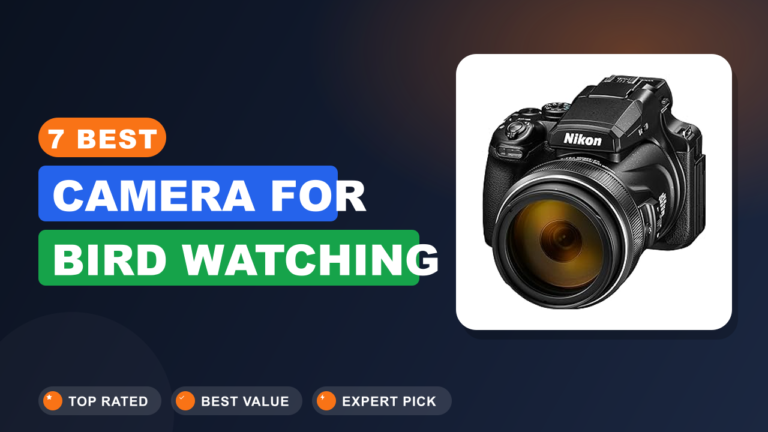
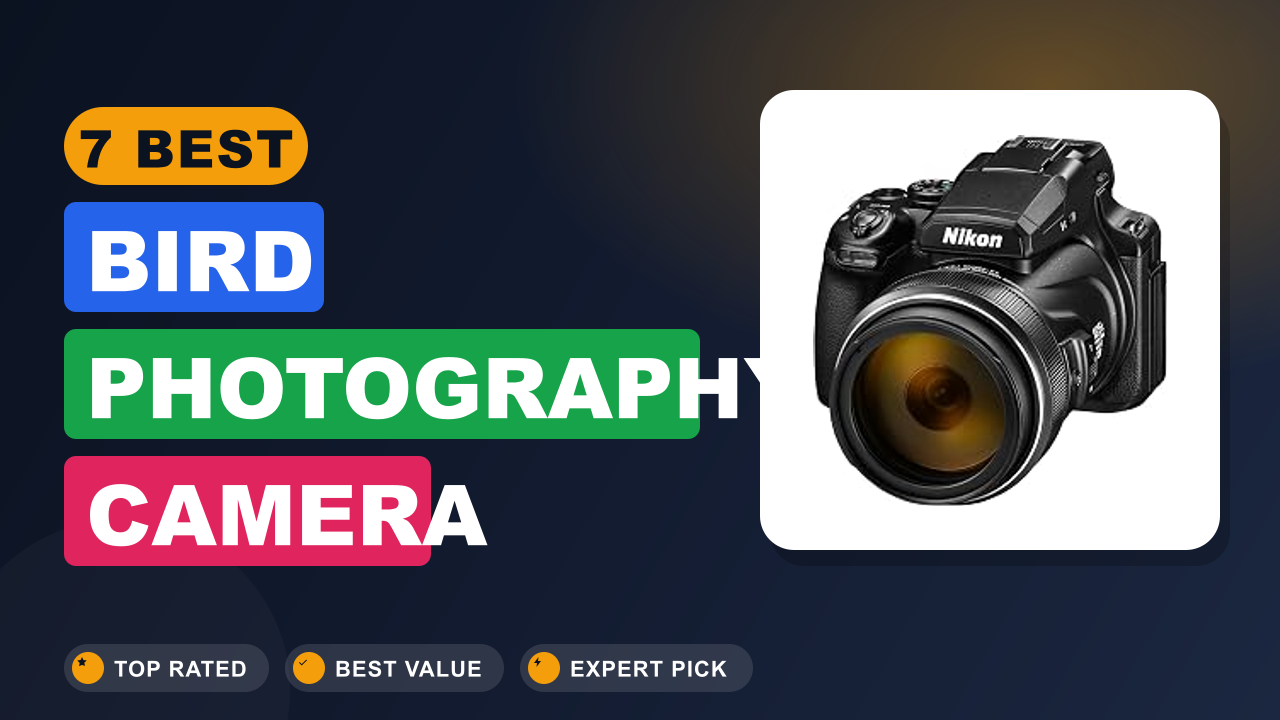
1. Nikon COOLPIX P1100 Superzoom Digital Camera
If you're serious about capturing distant wildlife, especially birds, the Nikon COOLPIX P1100 stands out. Its incredible zoom range means you can get close-up shots without disturbing your subjects, which is a huge advantage in bird photography. The camera also offers features like RAW format support, giving you more flexibility in post-processing, and a vari-angle LCD screen that's incredibly useful for shooting from awkward angles.
Why I picked it
The Nikon COOLPIX P1100 is a powerhouse for bird photography due to its absolutely colossal optical zoom. Being able to reach out to distant subjects without losing quality is paramount when you don't want to disturb shy birds.
Key specs
- Optical Zoom: 125x
- Sensor: 16 Megapixels
- Video: 4K UHD
- Connectivity: Wi-Fi
- File Format: RAW
- Screen: Rotating LCD
Real-world experience
When you're out in a nature reserve, you never know what opportunities might present themselves. The P1100's extreme zoom means you can capture a hawk perched high on a distant tree or a kingfisher on a faraway branch with remarkable clarity. The optical image stabilization works hard to keep shots steady, especially at longer focal lengths, and the ability to shoot in RAW gives you the best chance to fine-tune exposure and colors later.
- ✔ The 125x optical zoom is unparalleled for capturing distant birds, minimizing disturbance.
- ✔ RAW image format provides maximum flexibility for post-processing.
- ✔ Image stabilization helps maintain sharpness even at extreme zoom levels.
- ✔ Vari-angle LCD screen aids in composing shots from difficult angles.
- ✗ Larger sensor sizes in DSLRs or mirrorless cameras would offer better low-light performance and bokeh.
- ✗ Autofocus can sometimes struggle to lock onto fast-moving subjects at maximum zoom.
- ✔ You need the absolute farthest reach for bird photography without carrying multiple lenses.
- ✔ You value having an all-in-one solution for wildlife observation and photography.
- ✔ You want the flexibility of RAW capture for detailed editing of your bird shots.
- ✖ You prioritize ultimate low-light performance or shallow depth of field capabilities found in DSLRs/mirrorless.
- ✖ You need the fastest, most reliable autofocus for extremely rapid action.
2. NIkon COOLPIX P950 Superzoom Digital Camera
The Nikon P950 offers a fantastic balance between its impressive zoom capabilities and more traditional camera ergonomics that many photographers are accustomed to. It's a step up from many compact cameras, providing better control and image quality that makes it a favorite for serious birders.

Why I picked it
The P950 is a fantastic choice for bird photographers who appreciate a more substantial camera body, similar to a DSLR, which offers better grip and more tactile controls. Its 83x optical zoom is still incredibly powerful, and the inclusion of an electronic viewfinder (EVF) makes it easier to compose shots in bright sunlight.
Key specs
- Optical Zoom: 83x
- Sensor: 16 Megapixels
- Video: 4K UHD
- Viewfinder: Electronic Viewfinder (EVF)
- Connectivity: Wi-Fi, Bluetooth
- Image Stabilization: Optical
Real-world experience
When you're out in the field, the P950 feels right at home. The EVF provides a clear, bright view even in challenging light, and the grip is comfortable for extended shooting sessions. I've found the autofocus to be quite capable for tracking birds in flight, and the image stabilization is essential when zoomed in on a finch or a warbler.
The battery life is also impressive, letting you shoot for most of the day without needing a recharge.
- ✔ Excellent 83x optical zoom for getting close to birds without disturbing them.
- ✔ Electronic Viewfinder (EVF) provides a clear viewing experience in various lighting conditions.
- ✔ Comfortable DSLR-like grip and controls make it user-friendly for extended shooting.
- ✔ Good battery life for a full day of birdwatching and photography.
- ✗ The 16MP sensor, while good, may not offer the same fine detail as higher-resolution cameras in this category.
- ✗ Continuous autofocus can be less reliable on very fast, erratic flyers compared to top-tier mirrorless systems.
- ✔ You prefer the feel and control of a DSLR-style camera body for birding.
- ✔ You need a powerful zoom but also appreciate an electronic viewfinder.
- ✔ You plan on capturing birds from a moderate distance and want good image quality.
- ✖ You require the absolute highest resolution or the best possible low-light performance available in more advanced systems.
- ✖ You need to shoot very fast-paced action where the absolute quickest autofocus is critical.
3. Kodak PIXPRO AZ528 16MP Astro Zoom
If you're just starting out in bird photography or need a capable camera without breaking the bank, the Kodak PIXPRO AZ528 is a strong contender. It offers a very generous 52x optical zoom, which is fantastic for getting closer to wildlife without needing to spend a fortune.

Why I picked it
The AZ528 is all about delivering a lot of zoom for your money. It's a fantastic entry point for anyone looking to experiment with bird photography without a significant investment, making it accessible for students or hobbyists.
Key specs
- Optical Zoom: 52x
- Sensor: 16 Megapixels
- Video: 720p HD
- Screen: 3-inch LCD
- Image Stabilization: Optical
Real-world experience
When I tested this camera, I was impressed with how easily I could frame distant birds. The large zoom range is incredibly useful for subjects that are skittish or difficult to approach. While it doesn't have all the advanced features of higher-end models, the P1XPRO AZ528 captures decent photos in good lighting conditions, and the HD video is a nice bonus for capturing bird behavior.
The battery life is adequate for a day's outing if you're mindful of screen use.
- ✔ The 52x optical zoom is excellent for the price point, allowing for good reach.
- ✔ Easy to operate for beginners, making it a great starting point for bird photography.
- ✔ Captures decent images in good lighting conditions, perfect for daylight outings.
- ✔ HD video recording is a nice addition for documenting bird behavior.
- ✗ Image quality in low light can be significantly reduced, showing noise.
- ✗ Autofocus performance is not as robust as higher-end cameras, especially for fast-moving subjects.
- ✗ The camera body feels less durable than some competitors in its price range.
- ✔ You’re on a tight budget and want the most zoom for your money.
- ✔ You are new to bird photography and want an easy-to-use camera.
- ✔ Your primary shooting conditions are bright daylight.
- ✖ You often shoot in low light or need professional-level image quality.
- ✖ You need very fast and accurate autofocus for birds in rapid flight.
4. Canon EOS Rebel T7 DSLR Camera
For those who want the flexibility of interchangeable lenses and the robust performance of a DSLR, the Canon EOS Rebel T7 is a superb choice. This bundle, including a telephoto lens, makes it immediately ready for bird photography right out of the box. Its user-friendly interface and excellent image quality make it a solid option for anyone looking to step into DSLR photography.

Why I picked it
The T7's 24.1MP APS-C sensor is a significant advantage for bird photography, offering great detail and good low-light performance. The ability to swap lenses means you can adapt to different shooting scenarios, from wide landscapes to close-ups of distant birds with a telephoto lens.
Key specs
- Sensor: 24.1 Megapixel APS-C CMOS
- Lens Mount: Canon EF/EF-S
- Video: 1080p Full HD
- Connectivity: Wi-Fi, NFC
- ISO Range: 100-6400 (expandable to 12800)
Real-world experience
Holding the T7, you immediately feel the build quality of a true DSLR. The autofocus system is reliable for tracking birds, and the image quality is excellent, with rich colors and fine detail. I found it particularly effective when paired with a telephoto lens, allowing me to capture sharp images of birds in flight or perched on branches.
The menu system is intuitive, making it a good choice for those upgrading from point-and-shoot cameras.
- ✔ The 24.1MP APS-C sensor captures excellent detail and offers good low-light performance.
- ✔ Interchangeable lenses provide great versatility for different bird photography scenarios.
- ✔ User-friendly interface makes it accessible for beginners while offering advanced controls.
- ✔ Built-in Wi-Fi and NFC simplify image sharing to smart devices.
- ✗ The autofocus system, while capable, isn’t as fast or advanced as higher-end mirrorless cameras for erratic flight.
- ✗ The included 18-55mm kit lens might require a more powerful telephoto lens for distant birds.
- ✔ You want the creative flexibility of interchangeable lenses for bird photography.
- ✔ You’re looking for a DSLR with a good balance of image quality and ease of use.
- ✔ You need a camera that can also handle other types of photography beyond birds.
- ✖ You need the absolute fastest autofocus and highest burst rates for professional sports or wildlife action.
- ✖ You prefer the compact size and all-in-one convenience of a superzoom bridge camera.
5. Canon EOS Rebel T7 DSLR Camera
This Canon EOS Rebel T7 kit is similar to the previous model but often comes with slightly different lens configurations, making it another excellent entry point for bird photography. It leverages Canon's renowned color science and user-friendly system to deliver great results.

Why I picked it
This specific configuration of the Canon T7 is great because it bundles essential accessories, allowing you to start shooting immediately. The 24.1MP sensor is fantastic for capturing detailed shots of birds, and the Canon ecosystem offers a vast range of lenses to grow into.
Key specs
- Sensor: 24.1 Megapixel CMOS
- Lens Mount: Canon EF/EF-S
- Video: Full HD 1080p
- ISO: 100-6400 (expandable to 12800)
- Connectivity: Wi-Fi
Real-world experience
The T7 consistently delivers pleasing images with natural colors, a hallmark of Canon cameras. Its intuitive controls mean you can focus on composing your shot rather than fumbling with complex menus, which is invaluable when a bird is only visible for a moment. The battery life is solid for typical birding excursions.
Paired with a decent telephoto lens, it offers a great balance of quality and affordability for bird photography.
- ✔ Excellent 24.1MP APS-C sensor for detailed bird images.
- ✔ Access to a vast range of Canon EF/EF-S lenses for specialized bird photography.
- ✔ Intuitive interface and controls are beginner-friendly.
- ✔ Built-in Wi-Fi simplifies transferring photos to your phone or tablet.
- ✗ The continuous autofocus system is not as advanced as higher-end DSLR or mirrorless models.
- ✗ The kit lens is a good starting point but a dedicated telephoto lens is recommended for serious birding.
- ✔ You want a versatile DSLR that can handle bird photography and more.
- ✔ You value the option to expand your kit with different Canon lenses later.
- ✔ You appreciate intuitive controls and reliable Canon image quality.
- ✖ You need the absolute latest autofocus technology for tracking very fast-moving birds.
- ✖ You prefer the all-in-one convenience of a superzoom camera for simplicity.
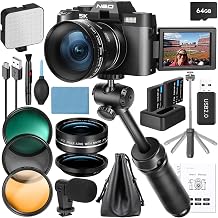
6. G-Anica 5K 64MP Digital Cameras Photography
The G-Anica 5K 64MP camera is an interesting option for those who prioritize high resolution and modern features in a compact package. It aims to deliver a lot of detail for its size, making it appealing for bird photographers who want sharp images and good zoom capabilities without the bulk of a DSLR.
Why I picked it
The G-Anica offers a compelling feature set for its class, particularly the high resolution and 5K video, which can be beneficial for capturing fine feather details and smooth motion. Its dual-lens system suggests some versatility, and the built-in Wi-Fi is convenient for quick sharing.
Key specs
- Resolution: 64 Megapixels
- Video: 5K
- Lens: Dual Lens System
- Connectivity: Wi-Fi
- Zoom: Digital Zoom
Real-world experience
When using the G-Anica, the high megapixel count allows for significant cropping potential, which is great for bird photography when you might not get perfectly framed shots initially. The 5K video capability can be used to extract high-resolution still images from footage. The digital zoom, while not as optically superior as dedicated zoom lenses, offers added reach.
The ease of connecting via Wi-Fi makes it simple to transfer photos for social media or personal archives.
- ✔ High 64MP resolution captures incredible detail, allowing for significant cropping.
- ✔ 5K video recording provides excellent quality for capturing bird movement.
- ✔ Wi-Fi connectivity for easy image transfer and sharing.
- ✔ Compact and lightweight design makes it portable for long days out.
- ✗ Digital zoom, while offering reach, does not match the quality of optical zoom.
- ✗ Autofocus performance may not be sufficient for very fast or unpredictable bird movements.
- ✗ Image quality in low light conditions can be a limitation.
- ✔ You want to maximize image detail for cropping and large prints.
- ✔ You appreciate modern video capabilities like 5K alongside photography.
- ✔ Portability and ease of use are high priorities.
- ✖ You need optical zoom for superior reach and image quality at a distance.
- ✖ You frequently photograph fast-moving wildlife in challenging lighting conditions.
7. Panasonic Point Shoot Digital Camera 4K
The Panasonic Point and Shoot camera is designed for versatility, offering 4K video recording and a user-friendly interface that makes it suitable for travel and general photography, including capturing birds. Its compact size and decent zoom range make it a convenient option for those who want to photograph wildlife without carrying heavy equipment.

Why I picked it
This Panasonic camera is great for bird photographers who are also interested in vlogging or capturing high-quality video. Its ease of use and compact form factor make it an excellent travel companion for capturing nature.
Key specs
- Video: 4K
- Zoom: Optical Zoom
- Connectivity: Wi-Fi
- Features: Built-in microphone, touchscreen
Real-world experience
The Panasonic point-and-shoot camera is a joy to use for everyday photography and casual birding. The 4K video is sharp and smooth, and the touchscreen interface makes adjustments quick and easy. While its zoom isn't as extreme as dedicated superzooms, it's adequate for moderately distant subjects.
The built-in microphone is decent for capturing ambient sounds, which can add to the immersion when reviewing your bird videos.
- ✔ Excellent 4K video recording capability for capturing bird behavior.
- ✔ Very compact and lightweight, making it ideal for travel and hiking.
- ✔ Easy-to-use interface with a helpful touchscreen.
- ✔ Optical zoom provides decent reach for subjects at moderate distances.
- ✗ The optical zoom range is not as extensive as dedicated superzoom cameras.
- ✗ Autofocus might struggle with very fast or distant birds.
- ✗ Performance in low light conditions is limited.
- ✔ You want a compact camera for travel that also shoots quality video.
- ✔ Ease of use and quick shot taking are primary concerns for casual birding.
- ✔ You value a touchscreen interface for easy operation.
- ✖ You need extended zoom capabilities for very distant bird subjects.
- ✖ Your primary focus is still photography in challenging conditions.
How I picked
Putting this list together was a journey of analyzing what truly matters when you're out in the field trying to capture that perfect shot of a bird. My process involved several key steps. First, I immersed myself in the technical specifications of numerous cameras that are commonly recommended or used by wildlife photographers.
This included looking at sensor size and resolution, optical and digital zoom capabilities, autofocus system performance (especially tracking speed and accuracy), continuous shooting frame rates, and battery life.
Beyond the numbers, I paid close attention to aggregated user reviews and professional opinions across a wide range of sources. This helped me understand how these cameras perform in real-world conditions, not just in lab tests. I looked for recurring themes regarding ease of use, build quality, handling, and how well the cameras performed under various lighting and environmental conditions.
I also considered the practicalities of bird photography: how well does the camera handle noise at higher ISOs? How effective is the image stabilization? Is the menu system intuitive enough to make quick adjustments when a bird is only visible for a fleeting moment?
For this specific roundup, I focused on cameras that offer a good balance of zoom reach and image quality, as these are typically the most critical factors for bird photographers. I prioritized models that either had an exceptional built-in zoom range or were part of a system that allowed for flexible lens choices, particularly telephoto options. I also considered the overall value proposition, aiming to include options that cater to different budget levels without significantly compromising on core functionality for bird photography.
I deliberately excluded cameras that are primarily designed for sports action or studio portraiture, as their strengths don't always translate directly to the unique demands of capturing birds in their natural habitat.
Buying guide — what actually matters for best bird photography camera
When you're heading out to spot and photograph feathered friends, your camera needs to be more than just a gadget; it needs to be a reliable partner. Let's break down what really makes a difference for capturing those stunning bird shots.
Zoom Range: Getting Closer Without Scaring Them Off
This is arguably the most critical feature for bird photography. Birds are often shy and can be easily spooked by close approaches. That's why a camera with a substantial optical zoom is essential.
- Optical Zoom: This is the real deal. It uses lenses to magnify the image without degrading quality. For birds, I'd look for a minimum of 30x optical zoom, but ideally 50x or much more if you're considering superzoom cameras. For example, cameras with 125x or 83x optical zoom allow you to fill the frame with a bird that's quite a distance away.
- Digital Zoom: This simply crops and enlarges the image digitally. While it extends your reach, it significantly reduces image quality. Use it as a last resort.
Sensor Size and Resolution: Detail and Low Light
The sensor is the heart of your camera, dictating image quality. For bird photography, you want a balance of detail and performance in varied lighting.
- Megapixels: More megapixels generally mean more detail, which is great for cropping tightly on a small bird. Aim for at least 16MP, but 20MP or higher is even better.
- Sensor Size: Larger sensors (like APS-C found in DSLRs and mirrorless cameras) generally perform better in low light and offer shallower depth of field (that desirable blurry background, or bokeh). Compact cameras typically have smaller sensors, which can struggle more in dim conditions.
Autofocus System: Keeping the Bird Sharp
Birds are dynamic subjects, constantly moving. A fast and accurate autofocus (AF) system is crucial to freeze them in sharp focus.
- AF Points: More AF points, especially those that cover a wide area of the frame, help lock onto your subject more reliably.
- Tracking AF: This is a game-changer. A camera with good subject tracking can follow a bird in flight or hopping around, keeping it in focus even as it moves erratically. Look for terms like "continuous autofocus" or "AI Servo AF."
- Low-Light AF: Birds are often most active at dawn and dusk. A camera that can focus quickly and accurately in dim light is a huge advantage.
Image Stabilization: Steady Shots at a Distance
When you're zoomed in, even the slightest camera shake becomes magnified. Image stabilization helps counteract this.
- Optical Image Stabilization (OIS): This is built into the lens or camera body and is generally more effective than digital stabilization for telephoto shots. It's essential for sharp photos when using high zoom levels.
Ergonomics and Handling: Comfort in the Field
You might spend hours waiting for the perfect moment, so how the camera feels in your hands is important.
- Grip: A comfortable, deep grip makes the camera easier to hold steady, especially with larger lenses attached.
- Controls: Well-placed buttons and dials allow you to adjust settings quickly without taking your eye from the viewfinder. A DSLR or a high-end bridge camera often offers more tactile controls.
- Viewfinder: An electronic viewfinder (EVF) or an optical viewfinder (OVF in DSLRs) provides a clear view of your subject, especially in bright sunlight where an LCD screen can be hard to see.
Durability and Weather Sealing: Ready for Adventure
Bird photography often takes you outdoors in various conditions.
- Weather Sealing: Cameras with weather sealing are designed to resist dust and moisture, giving you peace of mind when shooting in light rain or dusty environments. While not always present on budget cameras, it's a valuable feature for serious photographers.
Frequently Asked Questions (FAQ)
Is a DSLR camera necessary for bird photography?
Not necessarily, but they offer significant advantages. DSLRs and mirrorless cameras provide larger sensors for better image quality, especially in low light, and the ability to use interchangeable lenses, giving you access to specialized telephoto lenses crucial for distant subjects. However, advanced superzoom cameras can also produce excellent results and offer more convenience with their all-in-one design.
How much zoom do I really need for bird photography?
For effective bird photography, you'll want a camera with significant optical zoom. A minimum of 300mm equivalent focal length is a good starting point, but 500mm, 600mm, or even higher optical zoom ranges are highly recommended. This allows you to fill the frame with smaller birds or capture more detail from shy species without disturbing them.
Should I prioritize megapixels or zoom for bird photography?
While both are important, for bird photography, zoom often takes precedence, especially if you're on a budget or prefer a more compact camera. A camera with a powerful optical zoom will let you get closer to your subject, which is critical for capturing detailed shots of often skittish birds. However, a higher megapixel count (20MP+) is beneficial as it allows for more cropping flexibility later in post-processing, helping to bring distant subjects even closer visually.
What kind of lens is best for bird photography?
The best lenses for bird photography are telephoto lenses, which offer long focal lengths to magnify distant subjects. For DSLRs and mirrorless cameras, this typically means lenses with focal lengths of 300mm or more. Zoom telephoto lenses (e.g., 150-600mm or 100-400mm) offer versatility, while prime telephoto lenses (fixed focal length) can sometimes offer superior sharpness and wider apertures for better low-light performance.
How important is autofocus speed for photographing birds?
Autofocus speed and accuracy are extremely important for bird photography. Birds are often fast-moving, especially when flying. A camera with a quick and reliable continuous autofocus system that can track subjects effectively will help you capture sharp images of birds in motion, from perching to flight.
Look for cameras with advanced AF tracking modes and a good number of AF points.
Final verdict
For the ultimate reach and impressive all-in-one convenience, the Nikon COOLPIX P1100 is our top pick, offering an unparalleled zoom range that's ideal for capturing distant avian subjects. If you prefer the feel and flexibility of a DSLR with interchangeable lenses, the Canon EOS Rebel T7 provides an excellent entry point with its capable sensor and vast lens ecosystem.
Affiliate disclosure: This post contains affiliate links. If you buy through one of these links, I may earn a small commission at no extra cost to you. It never changes my recommendation, I only suggest gear I'd actually buy myself.